
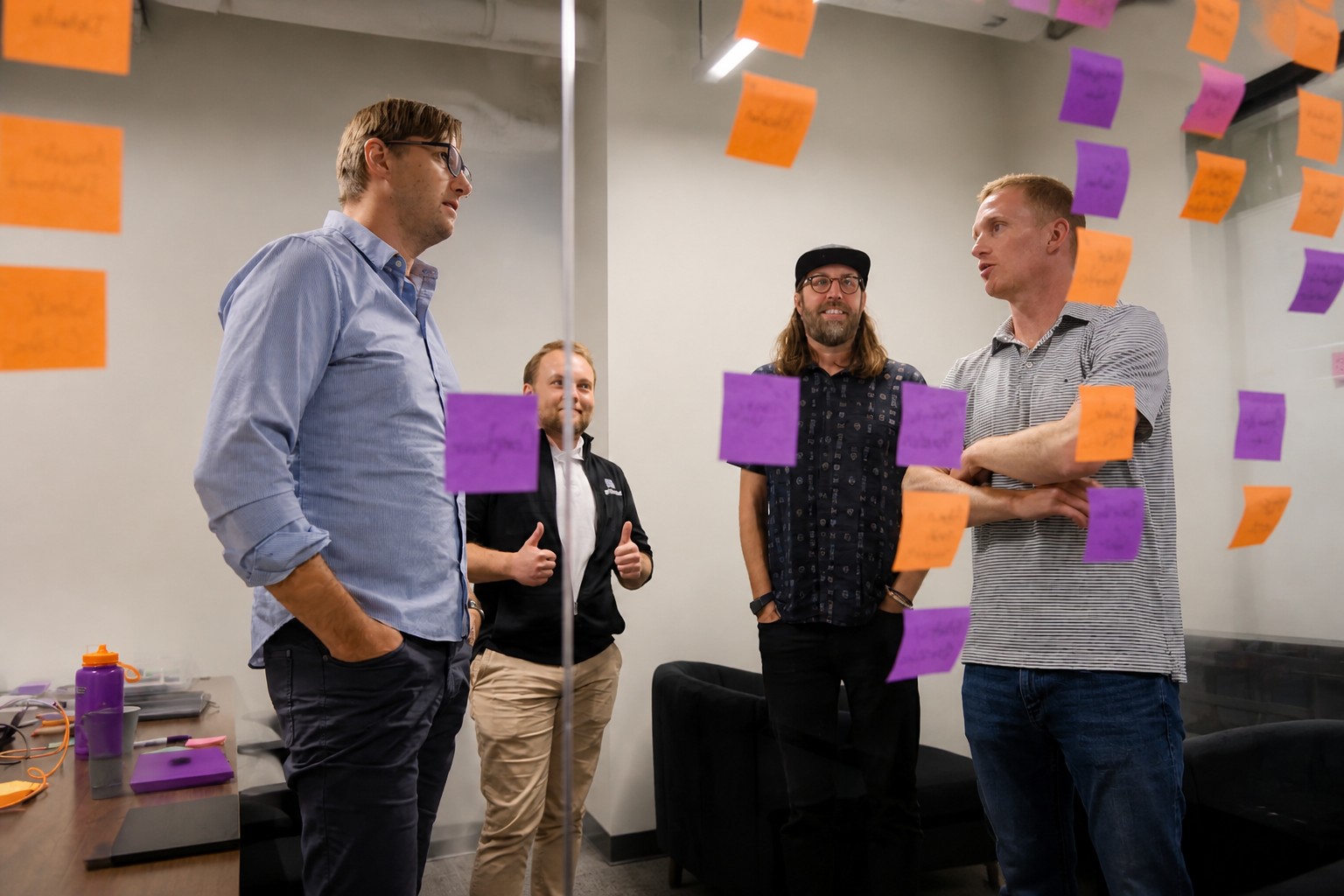
The most valuable AI engineers may no longer be the people who build models. OpenAI and Anthropic are assembling businesses around the harder final mile: placing engineers inside customer organizations, connecting models to existing systems, and turning demonstrations into working applications. OpenAI’s planned acquisition of Tomoro, Anthropic-linked Ode’s acquisition of Fractional AI and Casper Studios, and the expansion of deployment teams across the industry all point to the same commercial problem: companies can buy access to powerful models long before they know what to do with them.
These engineers are often called field deployment engineers, or FDEs. The role combines software development, business-process analysis, systems integration and customer-facing work. Until recently, it was a relatively obscure part of enterprise technology. It is now becoming central to how AI companies intend to sell and retain customers.
The reason is straightforward. A model generates revenue only when a customer keeps using it. That requires more than a capable API. Corporate data is fragmented, important processes are poorly documented, security controls vary, and the rules that govern exceptions may exist only in the memory of experienced employees. An FDE is expected to find a useful task, connect the model to the relevant systems, document the operating rules and get a production system running.
OpenAI is turning that capability into a separate commercial structure. In May 2026, it announced OpenAI Deployment Company, backed by initial investment of more than $4 billion from 19 investment firms, consulting companies and systems integrators. At the same time, it announced an agreement to acquire Tomoro, an applied-AI consultancy with about 150 engineers and deployment specialists.
In July, OpenAI Deployment Company announced an agreement to acquire Northslope, another applied-AI company with experience deploying technology in complex enterprise environments. The stated aim is to put engineers directly into customer organizations and connect AI models to proprietary information, existing applications, security controls and business workflows.
Anthropic is pursuing a similar structure through Ode with Anthropic, an AI enterprise-services company created with Blackstone, Hellman & Friedman and other investors. Ode was introduced in July 2026, built around Fractional AI, which it acquired in May. In August, Ode acquired Casper Studios, adding expertise in embedding Claude into applications and workflows that companies already use.
The underlying strategy is not really about selling consulting. It is about reducing the distance between a model vendor and the customer’s operating environment. A deployment team can identify a use case, build the integration and learn what business problems the model is actually being asked to solve. That knowledge can improve sales as well as implementation.
Ace Waves, a startup based in Kaunas, treats deployment as part of the sale rather than as a service added after a customer has signed. The company builds AI agents for handling customer requests at large companies serving mass-market customers.
Those agents do more than answer basic questions. They can cancel a subscription, change customer-account details, retrieve information from payment systems and carry out operations through existing support channels.
The business rules differ sharply from one customer to the next. One subscription service might instruct an agent to offer a cheaper plan before canceling an account. Another might require immediate cancellation when the risk of a payment dispute exceeds a predetermined threshold. The underlying AI technology may be similar, but the integrations, safeguards and decisions are not.
Antanas Bakshis, founder of Ace Waves, said roughly one-third of the company’s employees work on customer-side deployment. A project normally receives a dedicated engineer supported by other members of the team. The target is to launch the first working system within the first month, then refine and expand it.
The engineers join before the contract is signed. Bakshis said FDEs sit within the sales department, allowing the company to show potential customers what its technology can do inside their actual working environment rather than asking them to buy mainly on the strength of a demo or a list of promised capabilities.
Ace Waves expects to automate 80% of support work and turn customer service from a cost center into a source of revenue. A working pilot offers a way to test that claim against the customer’s real systems and procedures.
The company also says it is building contracts around successfully resolved customer requests, tying revenue to the performance of its AI agents. A results-based contract gives the vendor a reason to understand the customer’s operation before implementation becomes expensive. It also changes the incentive from billing for hours or project scope to making the system work.
Gritmind, another software company in Kaunas, takes a less committed view of the FDE model. It works with enterprise customers on building and modernizing applications, including AI projects. Its engineering team is in Lithuania, while sales, business development and commercial expertise are in the United States.
Gritmind’s partner and engineering lead, Ramunas Zavistanavicius, acknowledged demand for deployment engineers but questioned whether customers need a dedicated deployment organization or individual engineers permanently assigned to them. The company does not want to give key engineers to one customer without a broader delivery structure.
Instead, Gritmind temporarily sends small teams to customers. They investigate business problems, run workshops, define technical requirements and decide which applications deserve further investment. The company sees this as a continuation of its traditional consultative sales process, not as a reason to create a separate AI deployment business.
The team starts with the customer’s business problem rather than a predetermined AI solution. That discipline is familiar to experienced consultancies. What AI changes is the speed with which the initial investigation can produce something persuasive.
In the past, early customer discussions might have produced project documentation, workflow diagrams or clickable prototypes. Generative AI and so-called vibe-coding tools now allow Gritmind’s engineers to create functional prototypes with working interfaces and real outputs in a much shorter cycle.
In one corporate-invoice-checking project, Gritmind built a small prototype using an actual invoice and contract. The demo helped explain the proposed solution before the customer approved a larger development effort. Company representatives said Gritmind won the project against three other vendors, with the functional prototype among the factors that helped it win.
That changes the sales boundary. Customers can increasingly try an application before buying a full development project, and some arrive with working prototypes of their own. The vendor still needs to understand the business and choose the right technology, but the first proof of value is arriving earlier and at lower cost.
The more interesting question is what the prototype reveals once the demo ends. Both Ace Waves and Gritmind identify the same obstacle: organizations often rely on undocumented knowledge. Ace Waves calls this customer-service debt; Gritmind calls it tribal knowledge.
Rules may be scattered across internal documents. Employees may handle exceptions differently. Critical conditions may exist only in the memory of experienced support staff. An AI agent cannot reliably execute a process that the organization itself has never described with sufficient precision.
The risk rises when the agent is allowed to act rather than merely provide information. A wrong answer creates one kind of problem. Canceling the wrong subscription, issuing an unauthorized refund or changing a customer account creates another.
Ace Waves’ deployment engineers help customers find these inconsistencies, document decision rules and connect the necessary systems before automation expands. Gritmind encountered a similar issue in invoice verification, where experienced employees relied on supplier contracts, historical transactions and internal rules. Existing documentation did not always capture the details needed to make a correct decision.
The resulting system may combine AI with conventional software, human approval and deterministic rules. That is an important corrective to the idea that every enterprise problem should be solved by adding a model. A deployment project succeeds when the business problem is resolved, not when the customer consumes more AI services.
FDEs are not new. Palantir made the model visible through engineers who worked closely with customers and adapted software to complex operational requirements. Generative AI gives the role greater commercial importance because the same advanced models can be applied to contract analysis, customer service, software development, procurement, financial reconciliation and internal research.
That breadth creates a sales problem. Customers may understand that AI can do many things without knowing which use case deserves investment first or how to turn it into a dependable application. An FDE can combine technical development with business investigation, test feasibility and determine whether the resulting system produces a measurable financial return.
OpenAI’s February 2026 announcement of Frontier Alliances with Accenture, Boston Consulting Group, Capgemini and McKinsey reflects the same shift. The initiative combines OpenAI’s engineering expertise with the consultancies’ experience in organizational change, systems integration and enterprise transformation.
Forrester later described major investments by Amazon Web Services and Microsoft in deployment-engineering teams. Taken together, these moves suggest that the industry is investing in the ability to implement AI, not only in the models themselves.
My reading is that deployment is becoming a form of distribution. A company may purchase AI subscriptions for thousands of employees and still see little operational effect if the technology remains disconnected from its core processes. A vendor that can redesign those processes has a more direct path to recurring revenue and a stronger relationship with the customer than one that merely supplies model access.
But that advantage may be difficult to scale. Ace Waves combines its software with a substantial services organization, allowing engineers to reuse technical components and operating knowledge across customer projects. Even so, every new customer brings unfamiliar systems, undocumented procedures and exceptions that require investigation.
Gritmind faces the same problem from the other direction. AI tools let its teams build applications faster, potentially shortening projects and changing the economics of traditional hourly services. Sending paid engineers to a customer without a clear prospect of future work can be risky, particularly when the customer may implement the solution independently or use another vendor.
That is the tension the deployment market has not resolved. The closer an AI company gets to the customer’s operations, the more useful its technology can become—and the more it starts to resemble a consultancy with expensive, people-intensive delivery. The next advantage may therefore belong not to the vendor with the most deployment engineers, but to the one that turns their accumulated business knowledge into reusable systems without losing the judgment that made the first deployment work.
Daily AI news
Every day we pick what actually matters in AI and explain it plainly — no hype, no filler. Subscribe if you want to follow where the industry is going.
Only what matters — every day
Follow on X