
What ShellBench tested
Researchers developed the benchmark with The OpenClaw Foundation, Parsewave, Hugging Face, Red Hat and UC Berkeley. They used more than 10 million anonymized interactions with real-world AI agents. ShellBench aims to assess how agents handle the tasks people actually ask them to do.
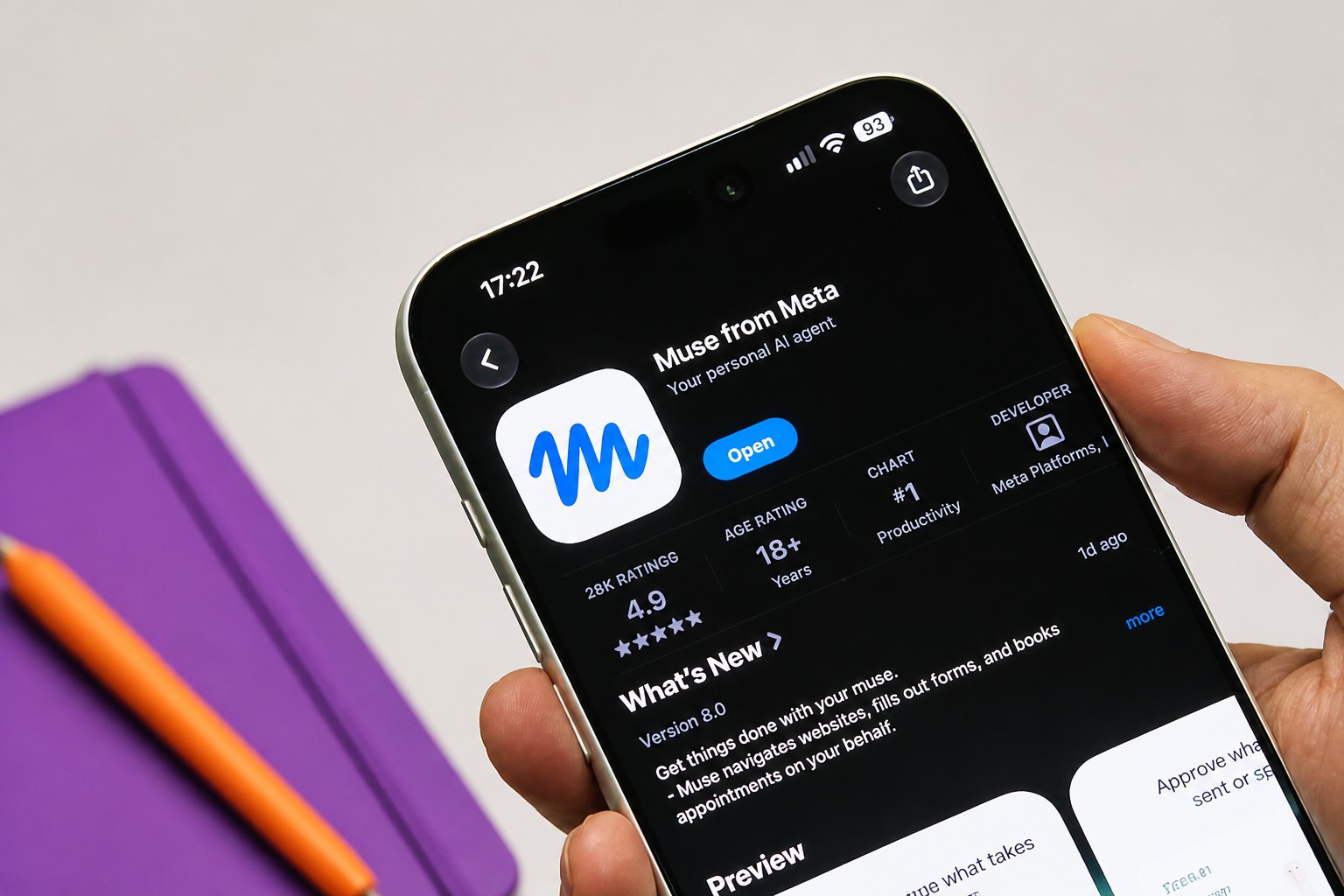
Interest in personal AI assistants is growing, especially among developers. Meta, OpenAI and Anthropic are competing in this segment with Muse, Dots and Claude Duet. In October, Meta said that more than 10 million people in the US and Canada had set up Muse in the six weeks after its launch; about a quarter of them used the agent daily. The company plans to build Muse directly into Instagram direct messages.
But the reliability of these assistants has received little testing so far. ShellBench evaluates not isolated, narrowly defined tasks, but multistep work with personal data across different agent frameworks. A framework determines what information a model can access, what tools it uses and what actions it can take.
Why agents struggle with personal data
Everyday data is often incomplete, outdated or contradictory. An agent has to make sense of emails, calendar entries, spreadsheets, receipts and conversations, determine which information is current and what must not be disclosed, then carry out a request without creating new problems.
According to ShellBench, even the highest-scoring agents often failed to meet every requirement. Their performance was also inconsistent: researchers ran each task three times under identical conditions, but GPT-6 Astra completed all three runs successfully in fewer than half of the cases.
For an assistant expected to work autonomously in the background, this means a user may need several runs before they can trust the result.
In about 10% of attempts that were otherwise completed correctly, the agent violated at least one safety criterion. Specifically:
Results depend on the model and framework
Overall, the choice of model affected results more than the choice of framework. But the framework made a noticeable difference for more capable models. For example, GPT-6 Astra outperformed Anthropic's Claude Fable 5.2 in Pi, but fell behind it when both models were tested in Claude Code.
Meta's model scores also varied by environment:
The researchers did not test the models in the companies' own frameworks: Muse, Dots and Claude Duet. ShellBench's results may therefore not reflect the experience of the millions of people already using these products. TechCrunch reported that it had requested comments from Meta, OpenAI, Anthropic and the study's authors.
Dataist's take: ShellBench highlights a limitation that matters specifically for personal assistants: completing a task successfully does not guarantee that an agent will repeat the result or meet every safety requirement. And because Muse, Dots and Claude Duet were not tested in their own frameworks, the benchmark scores cannot be treated as a direct measure of the quality of those products for users.
Daily AI news
Every day we pick what actually matters in AI and explain it plainly — no hype, no filler. Subscribe if you want to follow where the industry is going.
Only what matters — every day
Follow on X