
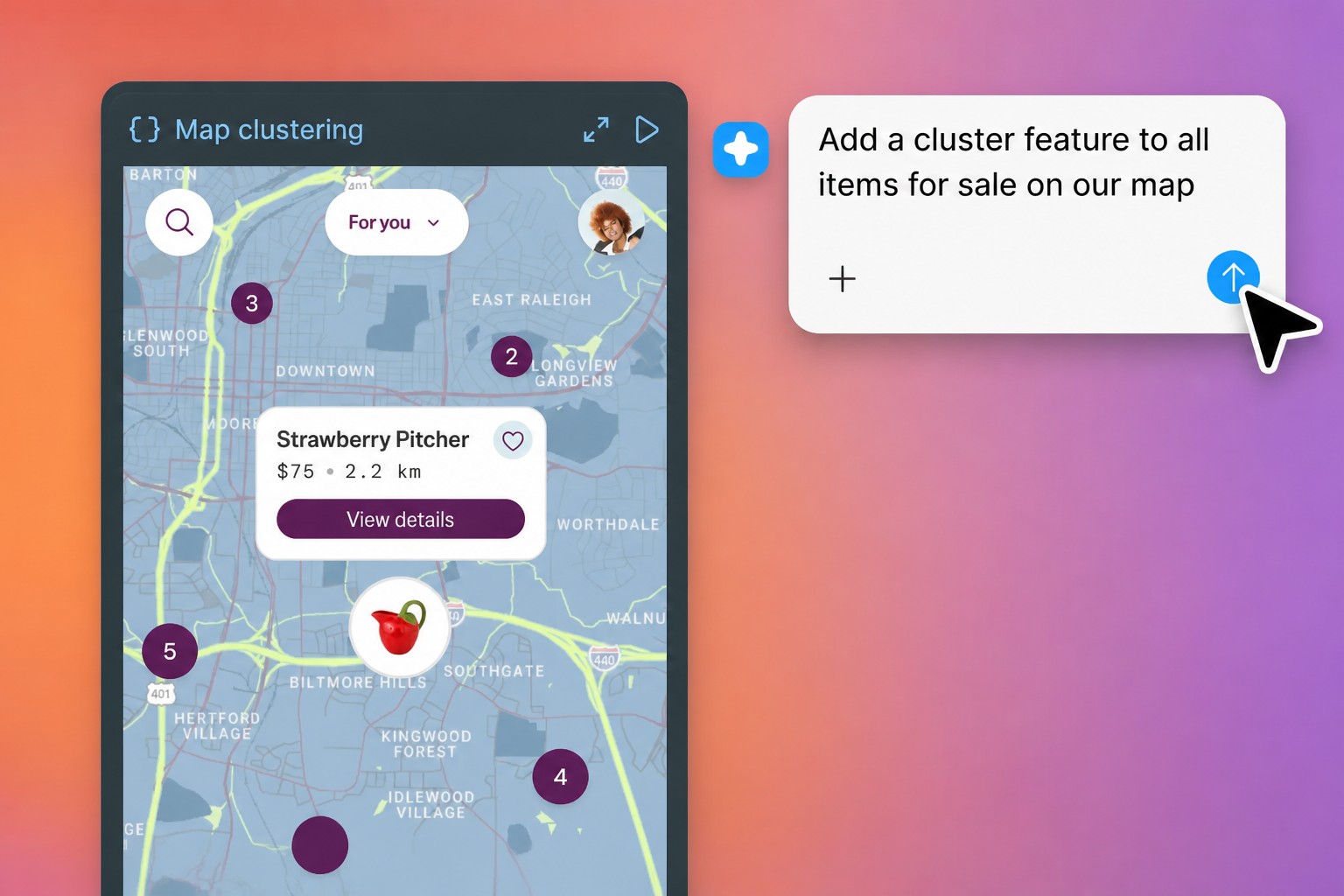
A rulebook inside the workspace
Figma Specs lets teams describe their design language in Markdown. The document can serve as a reference for both employees and agents, stored separately or placed directly on the canvas.
It can link to other Figma elements, including canvas objects, and embed FigJam diagrams, code layers and mockups. Teams can also add design and code libraries, along with guidance for managing their design system, to the shared context available to agents.
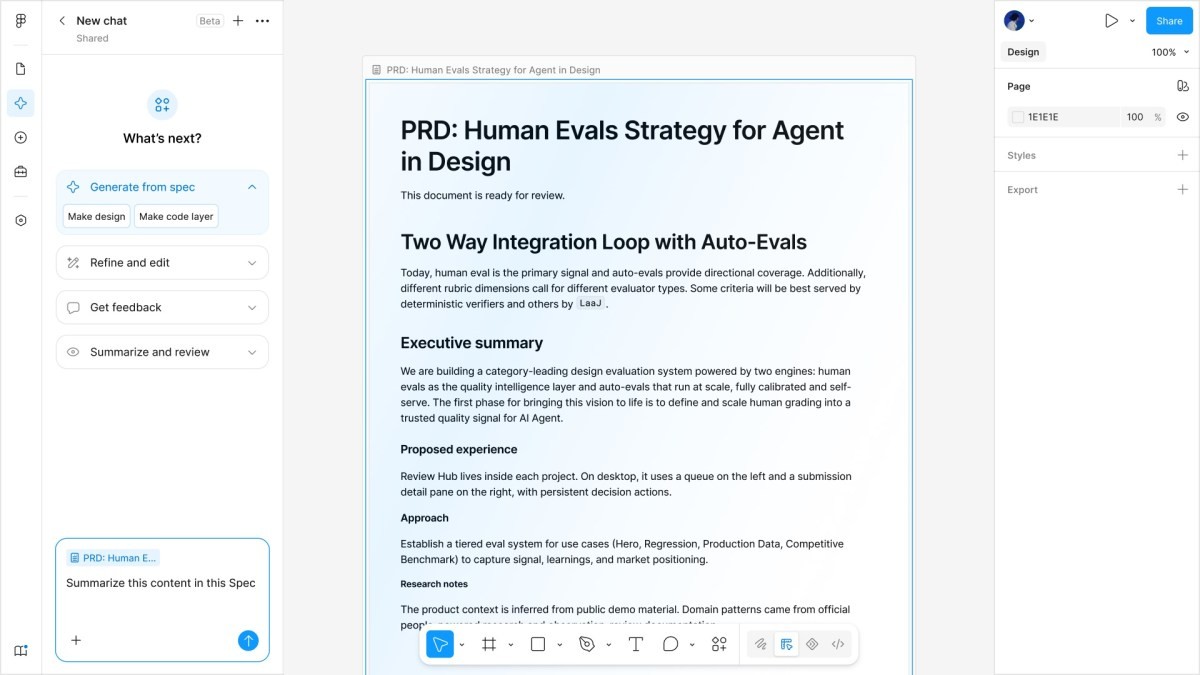
Source: techcrunch.com
Figma opened its canvas agent to a wider audience last week. Specs follows that expansion: the company is adding a way to shape agent behavior as more people use it, rather than relying on the agent to infer each team’s rules from a prompt.
More code, not many more releases
Code layers are now in public beta, after Figma first introduced them in a closed beta in June. The feature lets users add code to canvas designs and build more interactive prototypes. They can also ask an agent to turn a design into code or edit part of the code to refine a prototype.
Figma design director Loredana Crisan said development teams come to Figma to decide what to build and ship. She said AI has expanded what developers can produce: 17 times more lines of code are being created than before, while releases have increased only 1.3 times. Much of that code, she said, is used to explore and work through a design rather than to ship a product.
I think the gap between code produced and releases is the more revealing part of the announcement. Figma is positioning its canvas as a place to explore what could be built, not just prepare what will ship. But Specs and code layers do not, by themselves, show whether agents can follow a team’s rules reliably. The announcement leaves that outcome unmeasured.
More tools, and a larger Indian footprint
Figma said it now supports more than 20 new tools through MCP, including Open Code, Dia, Grok Bot and Indian AI startup Sarvam.
The company is also integrating Payload, the open-source content management system it acquired last year, with Figma Make, its product for building dynamic websites and managing content directly. Figma says Payload downloads have grown sixfold over the past 12 months.
Figma opened its first office in India late last year, with teams in sales, partnerships, go-to-market and product support. India is its largest market by user count outside the US, and Figma says 40% of the 100 largest companies listed on the Bombay Stock Exchange use its platform.
That reach gives Figma a large audience for tools that connect design, code and content. The harder test is whether a shared rulebook can make agent-generated work predictable enough for teams to trust it.
Daily AI news
Every day we pick what actually matters in AI and explain it plainly — no hype, no filler. Subscribe if you want to follow where the industry is going.
Only what matters — every day
Follow on X