

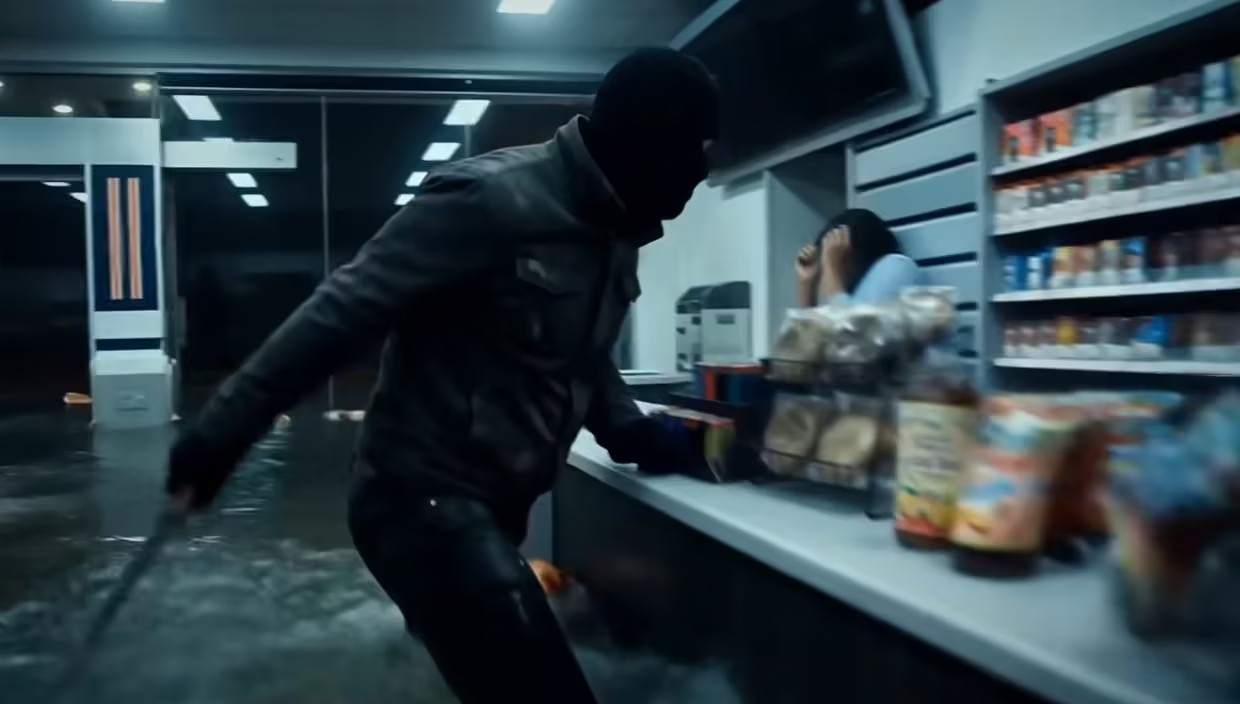
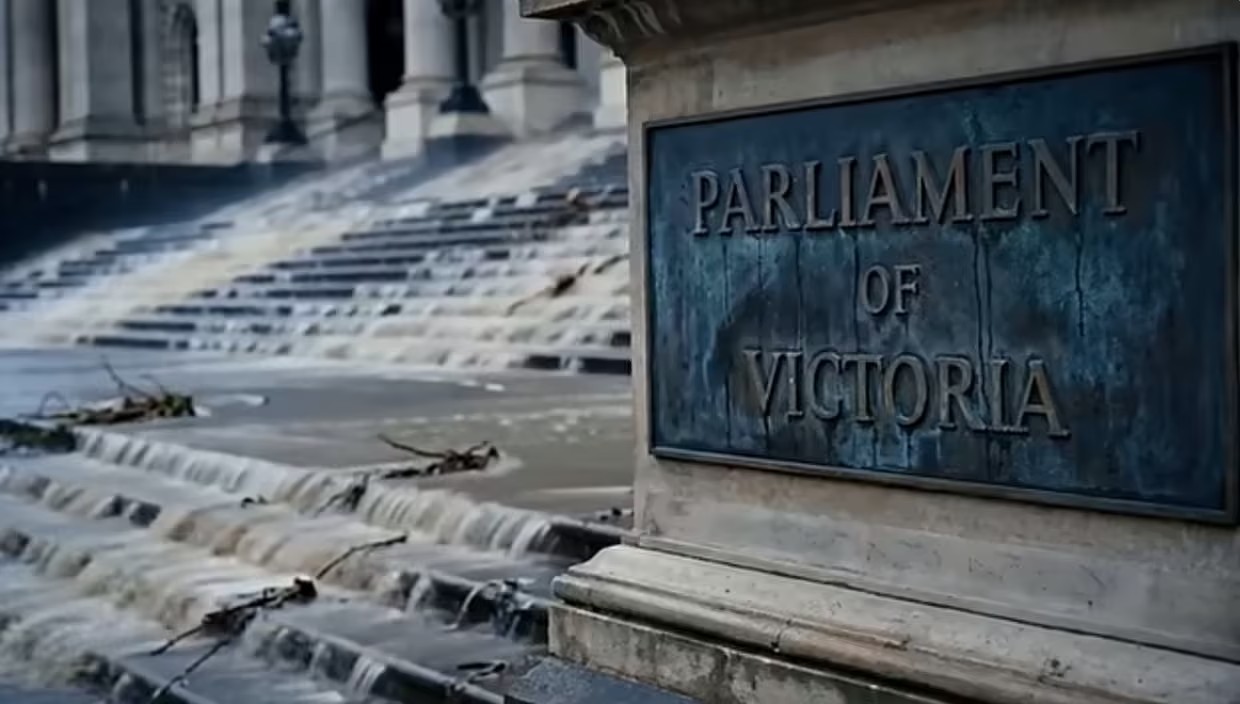
With less than 100 days until Victoria's state election, the two heaviest political advertisers in the state are not parties. Fix Victoria and Better Victoria, campaign groups registered a month apart and running ads since early August, spent more on Google and Meta in August than any other candidate or party in the race, according to tracking by the agency Populares. Their material is AI-generated: a man in a balaclava threatening a service station worker with a machete and then setting the building alight; a woman giving birth on the roadside after ambulance delays and enormous potholes stopped her reaching hospital; a torrent of water, standing in for a Victorian debt projected to reach $199bn over the next four years, pouring down the steps of parliament toward a frightened child. Neither group has to disclose who is paying for any of it.
The ads have already collected thousands of views. Better Victoria's short videos set Labor initiatives, including the multibillion-dollar Suburban Rail Loop, against spending on roads, schools and hospitals. Fix Victoria's 30-second spot argues that the state's debt tsunami is draining resources from police, so criminals tied to the illicit tobacco trade earn billions, recruit vulnerable children and make streets unsafe.
Fix Victoria is run by experienced political operatives who previously held senior roles at the Institute of Public Affairs, the conservative think tank that has spent years attacking Labor governments. Corporate filings show Deborah Henderson registered the organisation with ASIC in early August; until June she was the IPA's deputy executive director. Andrew Hudgson became communications director after holding the same title at the IPA until earlier this year. Gideon Rozner, head of public campaigns, spent six years at the IPA before moving to an investment firm. The organisation is separate from the IPA, and its staff describe the overlap of three careers as coincidence.
Rozner told his social media followers in November that he had rejoined the Liberal party to support its new leader, Jess Wilson. Asked by Guardian Australia whether he remains a member, he declined to answer, saying he has been in politics a long time and that his views and affiliations are well known. He describes Fix Victoria as an organisation concerned with issues rather than politics, working to tell the state's leaders that ordinary Victorians expect a plan for getting out of the current situation. Its three issues are crime, corruption and debt — which are also the opposition parties' three central talking points.
Preparation began in May, when people sympathetic to the project started recruiting paying members who could fund the operation and the ads.
The reason voters may never learn who ultimately financed those ads is a gap in Victoria's electoral law. Organisations running political advertising during a campaign are not required to register as third-party campaigners unless they expressly urge support for or rejection of a party or candidate. Catherine Williams, executive director of the Centre for Public Integrity, says Victoria's laws are drafted more narrowly than the federal rules: an organisation that does not meet the definition of a third-party campaigner simply falls outside the disclosure requirements.
The federal contrast is instructive. During the federal election campaign, mandatory donation disclosure by one third-party group revealed that the coal lobby was funding it, while the group attacked Labor, the Greens and independent candidates.
Clancy Moore, chief executive of Transparency International Australia, assesses that Fix Victoria does not meet the statutory threshold for a third-party campaign while its ads plainly attempt to influence the vote. Moore says Victorians need to know who is behind campaigns like these and what political connections their organisers have, and that third-party and astroturf campaigns have long used gaps in electoral law to shape elections. Rozner says Fix Victoria has invested significant resources in strict compliance with all relevant laws, particularly Victorian electoral law, and that it takes the security and privacy of its members and supporters seriously. Both statements can be true at once: by never naming a party or a candidate, the organisation keeps its funders out of public view unless it decides otherwise.
Better Victoria is more opaque still. It appeared a month after Fix Victoria and placed its first Facebook ads in early August, publishing political content under the organisation's own name rather than any named officeholder. Consumer Affairs Victoria records its secretary as Ronald Holzer, a lawyer from Caulfield North in Melbourne, who says he performs only administrative functions and referred Guardian Australia to an unnamed Better Victoria spokesperson. That spokesperson declined to say who runs the organisation, said it had taken independent legal advice and is confident of full compliance with Victorian electoral law, and said it has no links to any political party and is funded entirely by member donations. Those donors' names will also stay hidden, the spokesperson said, because the membership includes people from a range of professions and social groups who have exercised their right to privacy.
Ed Coper, who worked with Climate 200 and several independent candidates at the 2025 federal election, says both groups are spending heavily. His agency, Populares, tracked the spending through open data. Fix Victoria's August outlay was just under $100,000, roughly a quarter of all election-related advertising spend in the state; Better Victoria's was about $40,000. On social media advertising, the two organisations outspent the Liberal party, the teal independents and One Nation. On 28 August, Fix Victoria also bought time during the Western Bulldogs–Collingwood AFL wild card round broadcast on Seven, a placement Coper puts in the tens of thousands of dollars. The content, he says, closely resembles how a political operative frames messaging during an election campaign.
An advertising agency head says Fix Victoria spent just under $100,000 on advertising in August
Source: theguardian.com
The number worth sitting with is the quarter. An organisation that began preparing its campaign in May and was registered in August took a quarter of a state election's advertising market for a sum a mid-sized business spends on a product launch. That is what the collapse in production cost buys. Making the machete arson, the roadside birth and the flood of debt used to require a production company, a shoot and a budget that would itself have been a disclosable expense; now it requires a prompt, and the entire cost of the campaign migrates into distribution, where $100,000 goes a long way in a single state. Fix Victoria did not outspend the Liberal party because it out-raised anyone. It outspent them because it had almost nothing else to pay for.
That reframes what the disclosure loophole now protects. A rule written for an era when third-party campaigning meant printing, filming and broadcasting was already permissive; applied to a group whose only real line item is ad buys, it means a handful of members can fund a statewide emotional campaign at a price that never has to appear anywhere. Notably absent from the entire argument, on every side, is the imagery itself. Williams, Moore and Coper are debating who paid. Nobody quoted here is asking whether a voter watching a synthetic woman give birth on a synthetic roadside is told that none of it happened.
Fix Victoria says it is about issues, not politics, and by the letter of Victorian law that claim is what keeps its funders anonymous. The ads reach their audience regardless. For the next 100 days, the most visible political messaging in Victoria will come from the two organisations that are legally obliged to explain the least about themselves.