
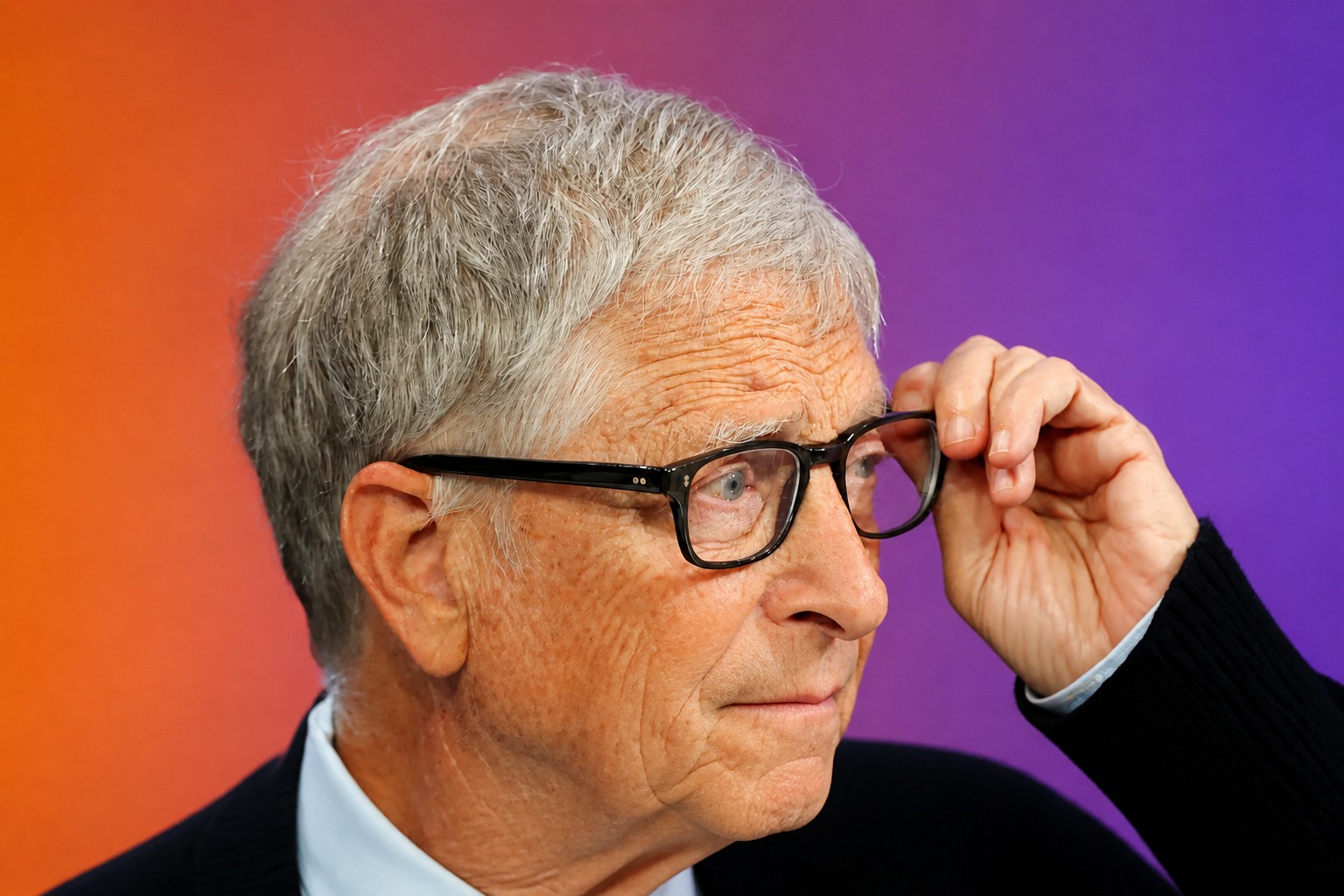
Bill Gates says AI could kill a billion people without proper safeguards, but the warning lands amid questions about his past judgment. The Microsoft co-founder has returned to public attention with a prediction about future harm; journalist Mahdawi argues that the technology is already being used to kill people, and wants him to address Microsoft’s role in the destruction of Gaza with AI instead.
The harm is not only hypothetical
In a Sunday interview with NBC, Gates warned that AI could cost “a billion lives” without adequate control. The prediction is grave, but Mahdawi’s objection is about priorities: she says public debate should also confront harm already happening, including the use of AI in Gaza.
Gates no longer takes part in Microsoft’s day-to-day work. Mahdawi argues that his experience with technology makes his warning worth hearing, but says it is not a substitute for addressing the company’s role in current events.
The judgment behind the warning
Mahdawi also questions Gates’s judgment over his repeated meetings with Jeffrey Epstein after they met in 2011. Epstein had pleaded guilty three years earlier to charges that included soliciting a minor for prostitution.
Gates has not been accused of involvement in Epstein’s crimes. He has said he knew of Epstein’s earlier legal trouble but did not understand its scale. Mahdawi counters that a brief search on Google or Bing would have shown why associating with him was a mistake.
The contrast is sharper because Gates appears attentive to how the public sees him. The Wall Street Journal reported that his team ordered a mannequin fitted to his measurements to check his clothes, aiming for a calm, approachable image reminiscent of Mr. Rogers.
Gates has also said Epstein “knew a lot of very rich people and [claimed he] could get them to donate money to global health.” He is the world’s 17th-richest person, Mahdawi notes, yet relied on a financier whose wealth had an unclear origin to help raise money for health.
What trust is worth
Mahdawi does not accuse Gates of acting maliciously. Her judgment is harsher in a different way: if his explanation is accepted, she says, it points to foolishness. I think that distinction matters. The article does not disprove Gates’s prediction; it asks whether his record makes him a credible guide to risk.
What I’d want to hear from Gates is not another forecast, but a direct account of the present-day harms Mahdawi raises. A warning about a billion possible deaths carries less authority when the speaker’s judgment about people and institutions is itself under scrutiny.
Daily AI news
Every day we pick what actually matters in AI and explain it plainly — no hype, no filler. Subscribe if you want to follow where the industry is going.
Only what matters — every day
Follow on X