
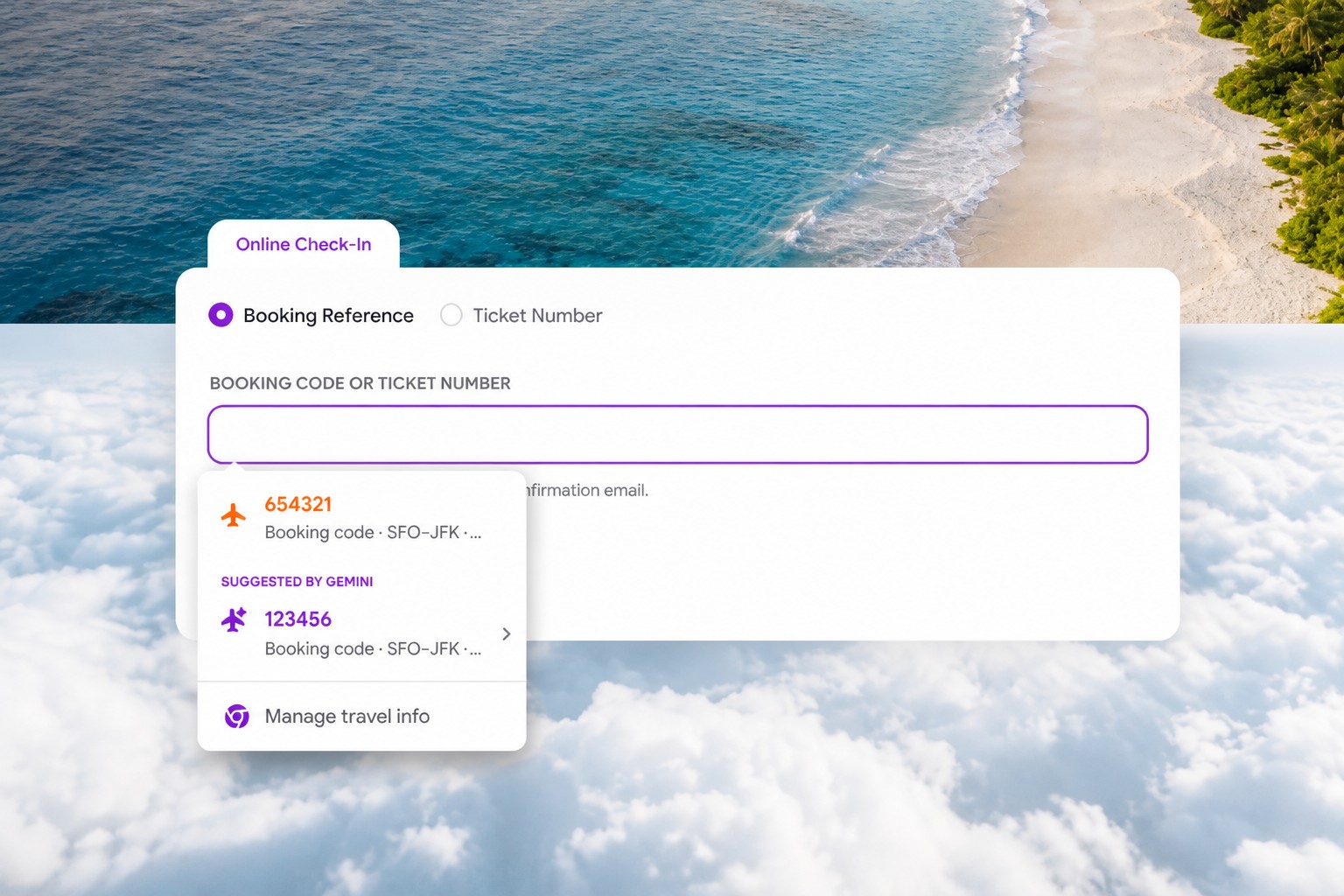
What Chrome can find
When a user fills out a form, Chrome can offer information from Gmail, including:
The feature extends Google’s Personal Intelligence, which already lets users connect Google apps to Gemini so the assistant can find information in them and use it when answering complex questions.
A useful shortcut with a trust cost
The closest comparison is Apple’s feature that recognizes verification codes in text messages and displays them above the keyboard for one-tap entry. Chrome’s version reaches further: it can pull several kinds of personal and transactional information from email, rather than surfacing a single code.
Google says sensitive data is encrypted, and users can turn the expanded autofill on or off in Chrome settings. Those controls matter, but they do not answer the question I think is more important: how will users know which email Chrome used, and whether the detail it suggests is current? Autofill is convenient partly because it removes steps; confidence in the source is what makes people accept the suggestion.
The feature may make Chrome and Google’s AI services more useful together. My read is that the strategic value is less about filling one form than about making Gmail a quietly available part of everyday browsing. The more often that works, the more useful Google’s connected products become—and the more clearly users will need to understand what they are sharing.
Daily AI news
Every day we pick what actually matters in AI and explain it plainly — no hype, no filler. Subscribe if you want to follow where the industry is going.
Only what matters — every day
Follow on X