
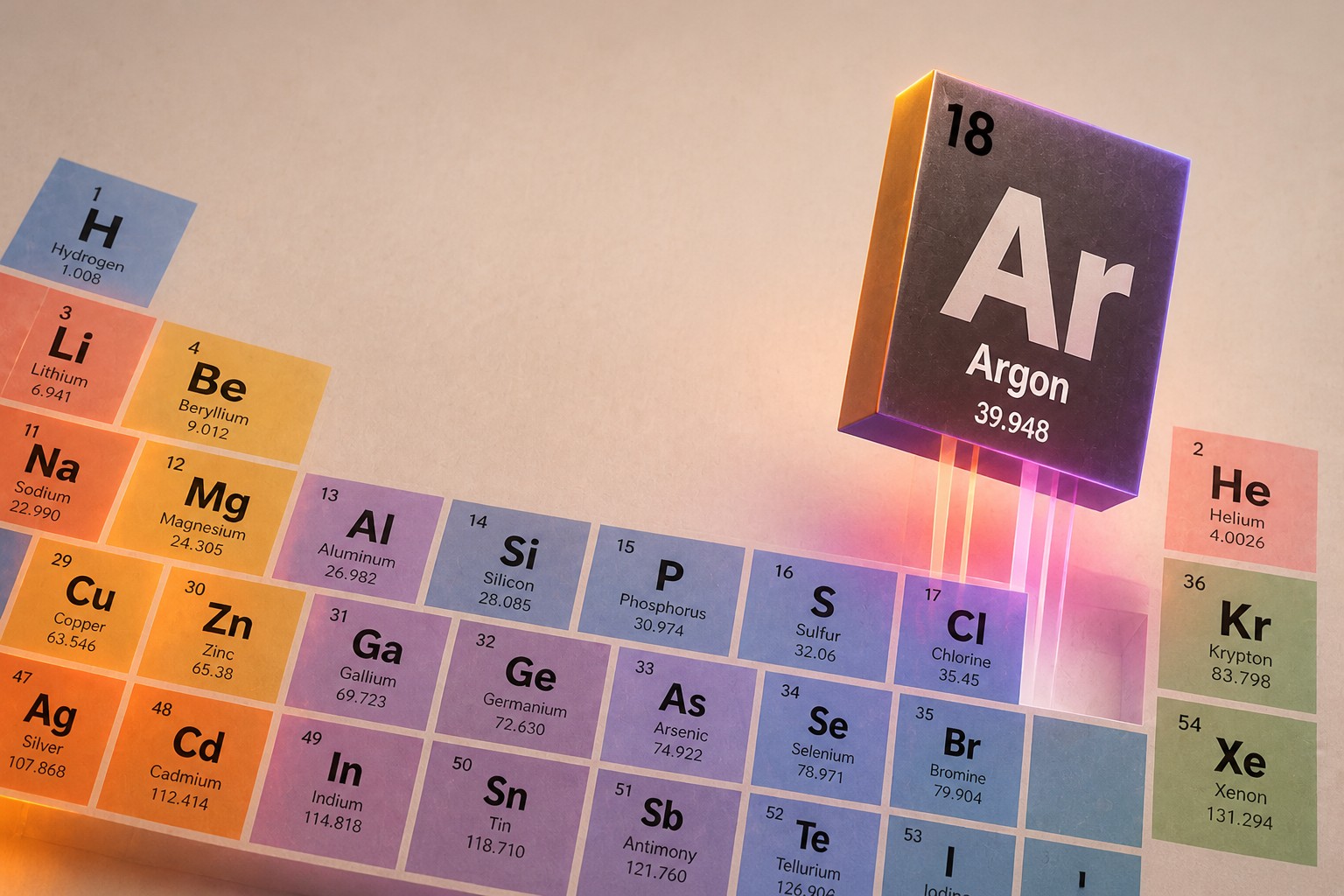
What Google says Argon can do
Google is positioning Argon as a model for long-running engineering work, not just code generation. The company says more than 100,000 employees use it monthly in an internal version of Antigravity. Over four weeks, engineering teams increased AI-agent code submissions by 35% and reduced rollbacks of submitted code by 30%.
Its examples range from large-scale code changes to performance tuning:
These are company-reported results, not independent evaluations of Argon inside corporate systems. That distinction matters: the examples show what Google has managed to make the model do, but not yet how reliably other organizations can reproduce those gains.
Independent benchmarks offer a mixed picture. Vals AI’s GDP-weighted Vals Index ranked Argon first among the models it tested, at 68.90% on October 12, ahead of Claude Sonnet 5.5 at 67.04% and Claude Opus 5.5 at 66.97%. Argon also led Finance Agent v2 with 65.40%.
Other results are less decisive. Artificial Analysis gave Argon 53 on its Intelligence Index, matching OpenAI GPT-6 Astra and Anthropic Claude Fable 5.1, but below Claude Opus 5.5, Claude Sonnet 5.5 and Meta Muse Wonder Full. Google’s own published comparisons put Argon ahead on several professional and software-engineering tests, but behind Claude Opus 5.5 on Terminal-Bench 4.0: 57.4% versus 66.4%.
Sam Witteveen, CEO and co-founder of enterprise AI consulting and training company Red Dragon AI, tested Argon before the wider release. In a VentureBeat review, he called it very good but questioned whether it was the best model on the market. He sees its importance as potentially strategic: Google may have built a capable general-purpose foundation for more complex products and enterprise workflows.
A model is only part of the product
Witteveen found Argon especially effective on tasks combining image understanding, coding and creative work. In one test, he asked it to build a browser-based music app inspired by Propellerheads ReBirth, with synthesized sounds, drum machines, filters and a step sequencer. Using a relatively short prompt in the Gemini app, Argon produced an interactive interface and working audio-generation code.
But Witteveen doubts that Google’s development environment can replace established tools for developers who want autonomous coding systems. He considers Antigravity noticeably behind Claude Code and Codex. That separates the model’s capabilities from the quality of the tools around it: an API benchmark cannot tell a company whether the full development system fits its work.
Google is also making a case for Argon beyond software. It says Wiz used the model through its Scan for Good initiative to find and fix a serious vulnerability in healthcare software. The company has expanded Fairwind to hundreds of additional approved cybersecurity partners and says its Gray Swan Indirect Prompt Injection attack-success rate was 0.7% over 15 adaptive attempts.
In robotics, Google reports that Argon scored 87% on the Embodied Question Answering benchmark. In one demonstration, it analyzed video of a person playing cornhole, wrote simulation code and generated a motion sequence that was transferred to an Apptronik Apollo humanoid robot. Google says the robot hit the target seven times in a row.
The breadth is the point: Google wants Argon judged as a system that can inspect, modify and test complex environments, not only answer questions or write code. My guess is that this is also where the company’s advantage is hardest to measure. A model’s score matters, but so do the tools, integrations and review processes that turn a promising result into dependable work.
The price has an expiration date
Argon’s launch API rates are half those of Claude Opus 5.5 and five times lower than GPT-6 Astra’s, according to the comparison in the announcement. Cached input tokens cost $0.10 per million. Starting December 1, 2026, standard rates double to $4 per million input tokens and $20 per million output tokens, putting Argon in the same price range as Claude Opus 5.5 and Meta Muse Wonder.
The temporary discount gives companies a reason to test the model now, but token prices alone do not determine operating cost. Models can use different amounts of reasoning tokens and require different numbers of attempts to complete the same task.
Google also describes an API continuation protocol that supports a combined budget of up to 1 million input and output tokens for especially difficult tasks. That clarifies the September 30 announcement, which described a new limit of 1 million output tokens, up from 64,000. Google has not explained how the combined budget relates to the maximum number of tokens a developer can receive in a single uninterrupted response.
Witteveen cautions that this extended mode is not the normal experience in the Gemini app or other consumer products. It requires API configuration and, in his view, is best suited to specialized work such as scientific tasks that need hundreds of thousands of reasoning tokens. For most companies, he recommends testing Argon on familiar workloads before redesigning systems around the larger limit.
Google’s distribution may matter more than a clean sweep
Argon arrives as Google faces questions about its pace in frontier AI. Gemini 3 launched in November 2025; later models from OpenAI and Anthropic surpassed it on important evaluations. Reuters reported investor concerns in July over delays to Gemini 3.5 Pro, infrastructure spending and departures from Google AI teams. In August, Axios reported leadership changes at DeepMind.
Argon does not lead every benchmark, and Google has not announced a replacement or release date for the model. Business Insider reported on October 10 that Google employees were testing updated internal Gemini 4 versions codenamed Barium and Carbon; Google declined to comment on the internal tests or future release plans.
The company’s counterweight is distribution. Argon is available across Google’s API and enterprise products, Antigravity, Android Studio and Firebase AI Logic. Gemini is also gaining agent features, including tasks that continue while a user is away from the computer and connections to more than 40 external apps.
What I’d want to know is whether that reach turns into repeatable gains on customers’ own workloads. Google has made Argon widely available, and its temporary price makes trying it easier. But a broad product footprint can bring buyers to the model; it cannot, by itself, prove that the model is the right choice for their work.
Source: venturebeat.com
Daily AI news
Every day we pick what actually matters in AI and explain it plainly — no hype, no filler. Subscribe if you want to follow where the industry is going.
Only what matters — every day
Follow on X