

What the checker covers
The site accepts images in JPG, JPEG, PNG, BMP, WEBP, AVIF, HEIC, HEIF, TIFF, TIF and GIF; video in MP4, MOV and WEBM; and audio in WAV, MP3, OGG, FLAC, AAC and M4A.
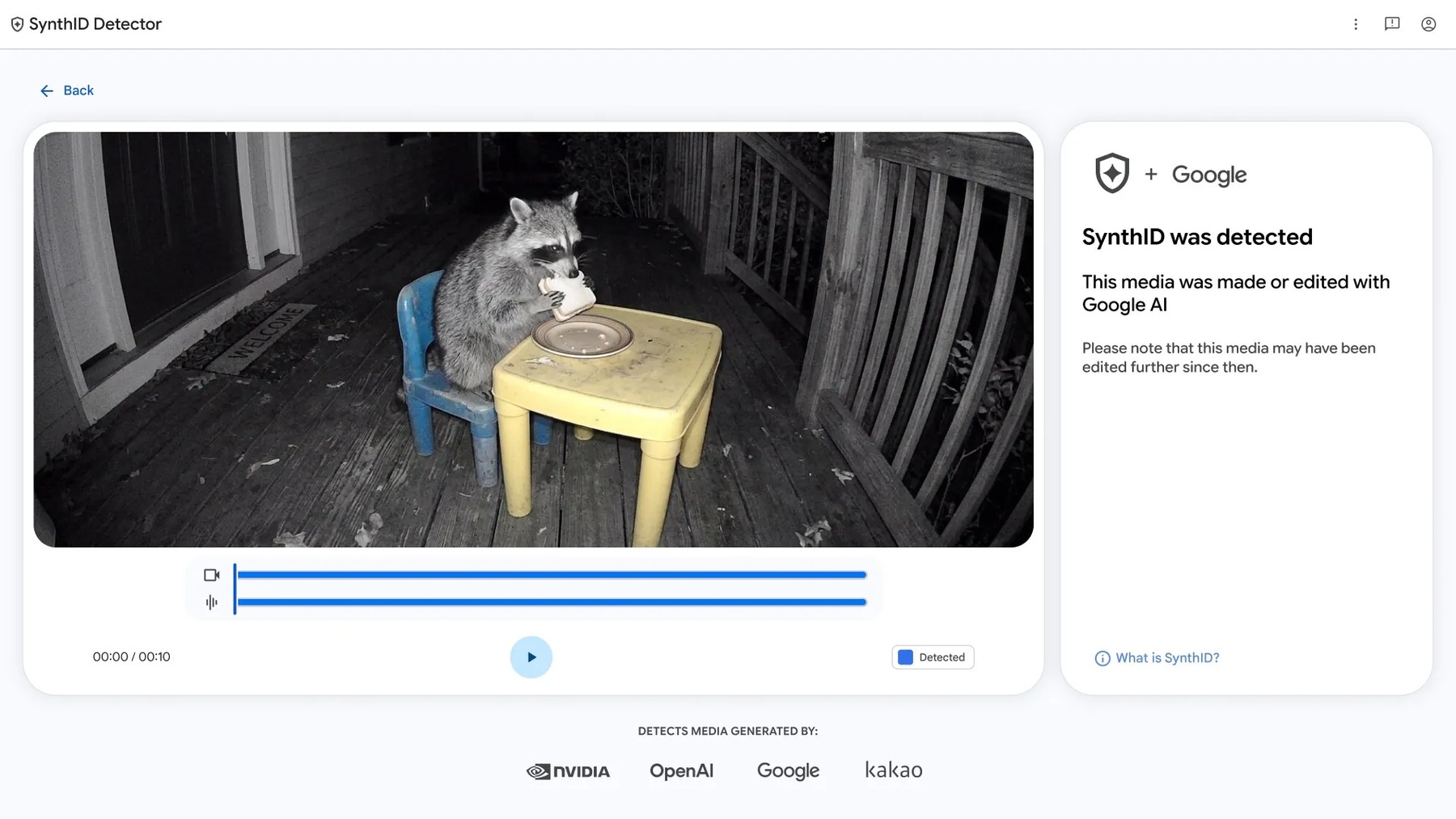
SynthID is Google’s watermarking technology, introduced in 2023. Google says its models Nano Banana, Veo and Lyria use it, along with generation features in Gemini, Flow, ProducerAI and Vids. These tools add a SynthID watermark to the material they create.
SynthID is also supported by OpenAI, NVIDIA and Kakao. OpenAI has its own site for checking content, while Apple is reported to be preparing support for the technology.
The checker’s reach is not limited to a new website. SynthID verification is already built into the Gemini app and Google Chrome. Google says people submit about one million content-check requests each day.
The limit of a watermark
Microsoft and Meta have their own standards for labeling and checking content. But those tools do not always identify material reliably, and often fail to recognize content made by models from the companies that developed them.
I think that is the real test for SynthID: not how many file formats a public checker accepts, but how consistently it works across the tools people actually use. Support from several companies is a useful start, yet a watermark can only help when creators apply it and verification tools can detect it.
Google’s million daily requests suggest strong demand for a way to check suspicious media. What the announcement does not establish is how often the checker returns a clear answer—or what users should conclude when it finds no SynthID watermark.
Daily AI news
Every day we pick what actually matters in AI and explain it plainly — no hype, no filler. Subscribe if you want to follow where the industry is going.
Only what matters — every day
Follow on X