
From benchmark to clinic
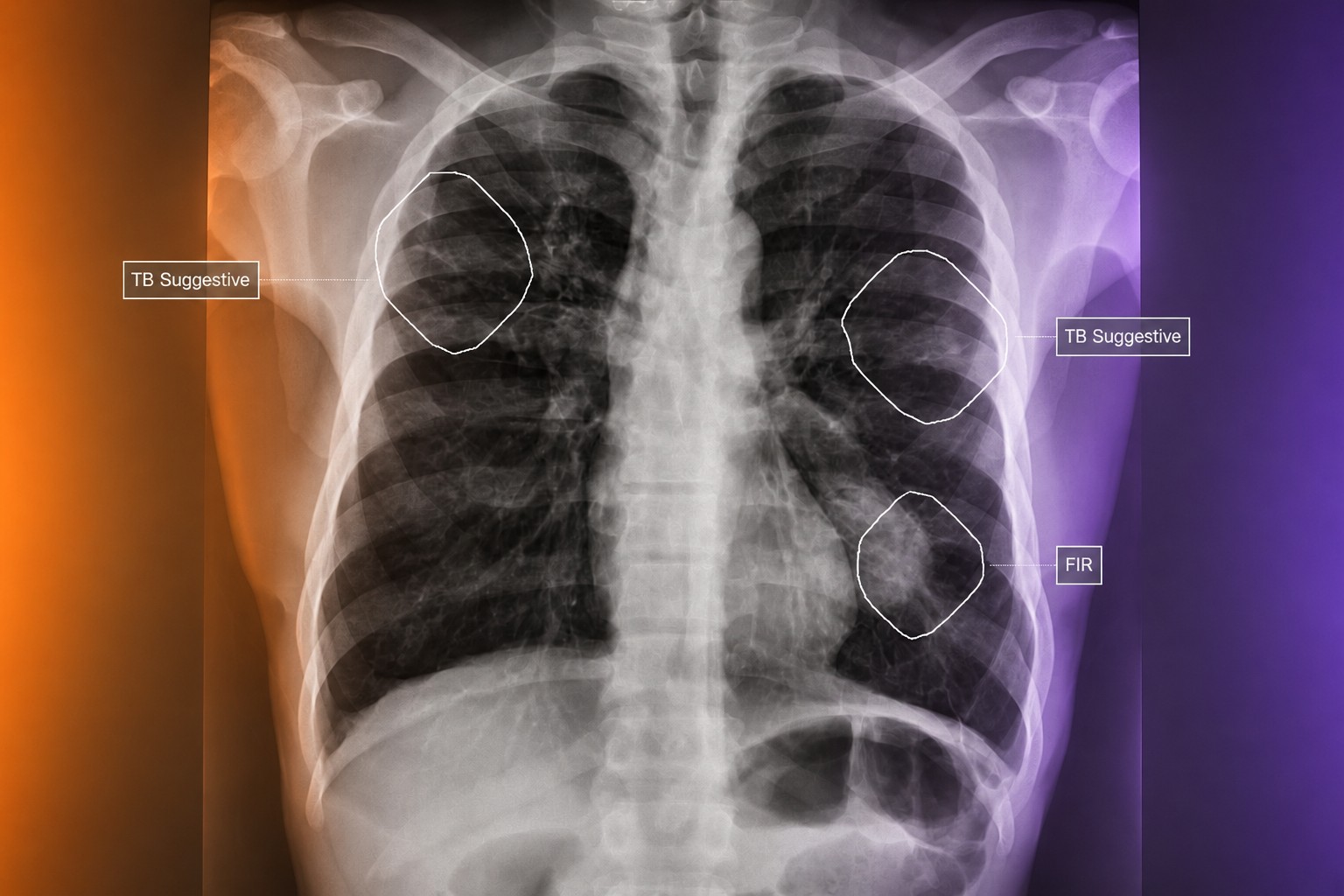
Google’s work began with a question: could AI read chest X-rays for TB as accurately as experienced radiologists? A 2019 benchmark published in Radiology found that deep-learning algorithms could detect active pulmonary tuberculosis at that level.
Independent evaluations followed. In August 2021, a Stop TB Partnership comparison of automated chest X-ray analysis programs placed Google’s model among the world’s leading TB-screening algorithms. That year, the World Health Organization recommended such programs for screening and triage. In September 2024, a prospective study across multiple healthcare facilities, published in NEJM AI, found that AI-assisted screening maintained high sensitivity across patient groups and could also identify other lung and heart abnormalities.
The harder step was turning research into a clinical tool. Google partnered with Pretoria-based medical technology company Nexus AI, which adapted the chest X-ray algorithms for use across different equipment and clinical workflows.
The system is now used at roughly 40 healthcare facilities in six countries: South Africa, Sierra Leone and Côte d’Ivoire, with implementation expanding in the Democratic Republic of the Congo, Zambia and Cameroon. More than 90 healthcare workers have assessed over 25,000 chest X-rays. Results arrive in under 45 seconds instead of weeks, while clinicians retain responsibility for final decisions. Nexus AI has also provided more than 3,000 free screenings at resource-constrained public clinics, with a goal of reaching 10,000 a year.
Open models, local control
A product built for one partner cannot cover everyone at risk. Google’s next step is a set of open models that developers and health ministries can adapt to local data and infrastructure.
Under its Health AI Developer Foundations program, Google released chest X-ray embeddings and MedSigLIP, a compact multimodal model trained to connect medical images with clinical descriptions. Developers can classify images, search them using ordinary language labels, or fine-tune the model for a specific task with a small set of local examples.
Google later released MedGemma, an open family of multimodal models with 4 billion and 27 billion parameters. It can combine an image with a patient’s medical history, answer clinicians’ questions in plain language and run locally without internet access. The models have been downloaded more than 10 million times worldwide.
Indonesia is testing the local-control case at national scale. Its Ministry of Health plans to screen 50 million people a year as part of its effort to eliminate TB. The ministry is fine-tuning MedGemma and MedSigLIP on Indonesian chest X-rays and running them on local infrastructure, keeping patient data in-country and leaving clinical deployment under government control.
Google is also working on screening that does not depend on X-ray equipment. Its Health Acoustic Representations model, or HeAR, was trained on more than 300 million audio clips and can assess disease risk from cough recordings made with a smartphone microphone. Research projects use it with CIDRZ in Zambia, the Aurum Institute in Ghana, supported by a $250,000 Google.org grant, and the regional HELINA project, which is worth $1.5 million.
The deployment question
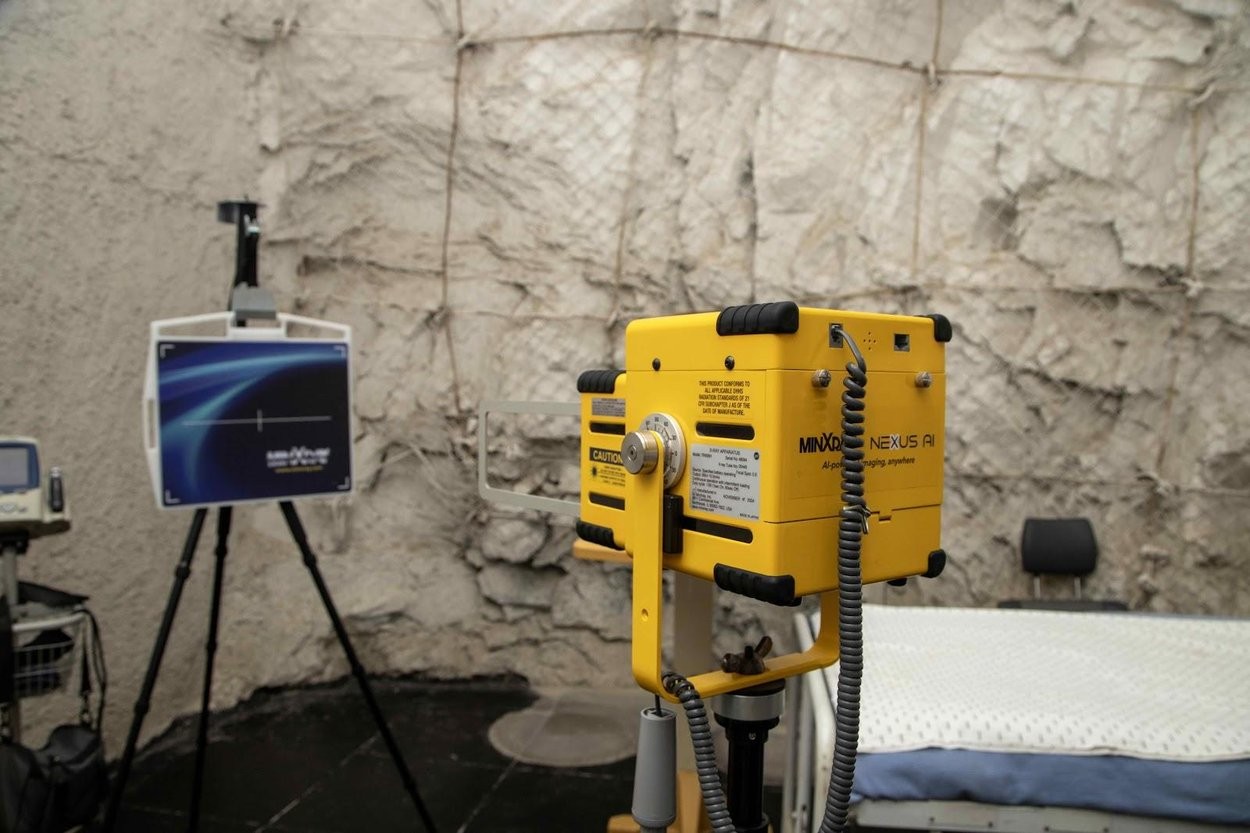
At Mponeng gold mine in South Africa, Nexus AI, Stop TB Partnership, Harmony Gold Mine and the South African Ministry of Health brought portable digital X-ray kits and an offline AI system four kilometers underground. Miners exposed to silica dust can be screened on site; if the system flags possible TB, they are referred immediately for molecular confirmation. Screening, triage and confirmation can now happen in one visit rather than over a process that typically takes weeks.
Source: research.google
The pieces form a sensible progression: cough-based risk assessment where there is no X-ray, mobile imaging where equipment can be brought in, and multimodal models that can help interpret results. But deployment counts and download totals do not show how often the system catches TB, how many people complete confirmatory testing, or whether earlier detection leads to treatment. I think that is the central question for Google’s open-model strategy: whether local control can scale without making clinical performance harder to compare.
Google says it will continue supporting partners with open models, foundational research and ongoing assistance. That support matters, but the test is whether health systems can turn adaptable models into dependable screening pathways—and show what happens after a scan raises an alarm.
Daily AI news
Every day we pick what actually matters in AI and explain it plainly — no hype, no filler. Subscribe if you want to follow where the industry is going.
Only what matters — every day
Follow on X