
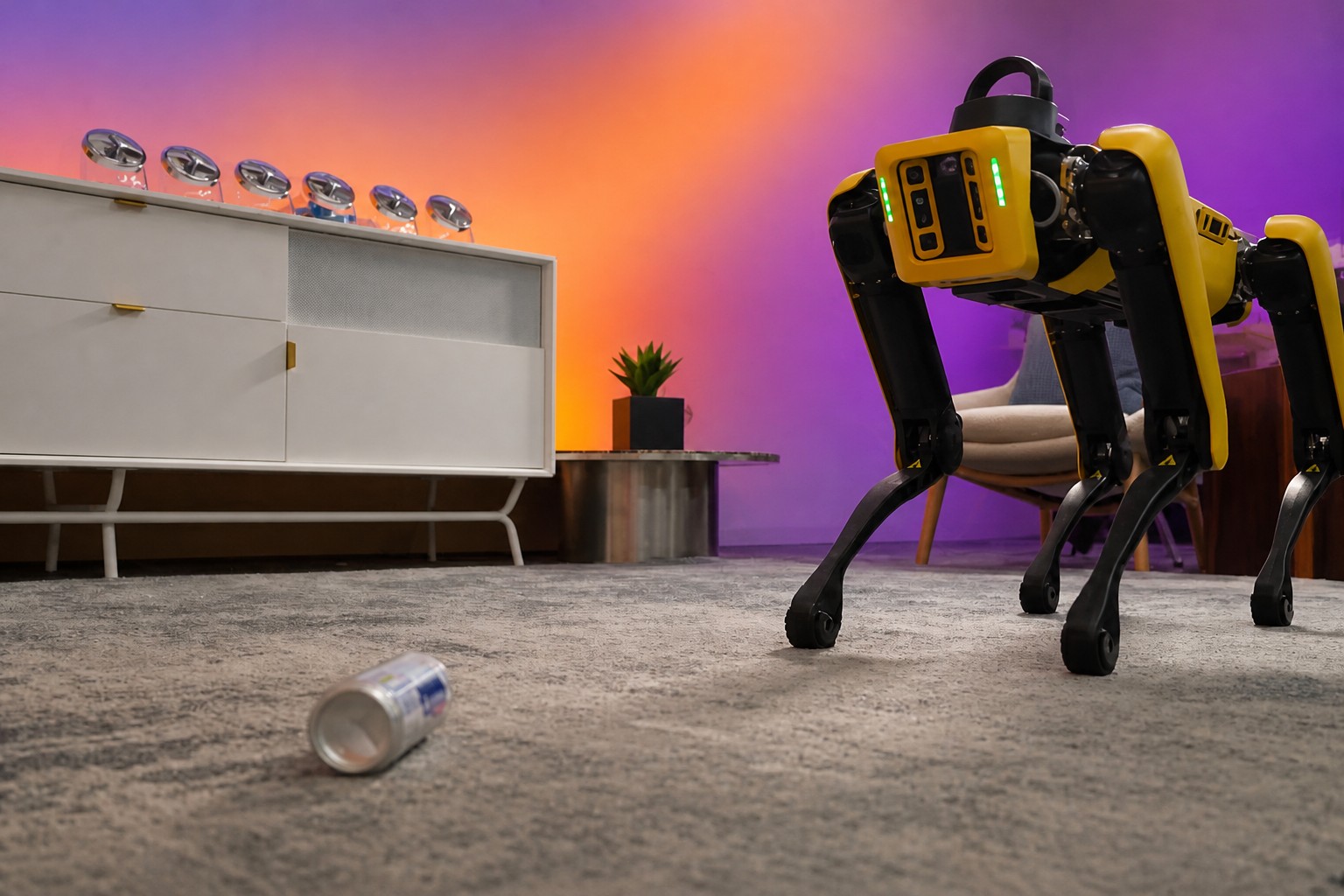
From one photo to thousands of training runs
Across Google’s demos, simulation is the bridge between a description of a task and a robot’s attempt at it. Given one photo of a table set with party props, Argon built a virtual copy, including a soft plush hat, then devised 77 tasks and generated more than 4,500 training episodes for a control model. On a real robot, the success rate rose from 56 to 75 percent, while completion time fell from 35 to 24 seconds.
The inputs need not be photographs. Argon can use a teleoperated robot’s recording to build a similar simulation, aiming to reproduce the forces measured at its fingertips. From first-person footage of a person grasping an object, it transfers hand and finger movements to a virtual humanoid with five-fingered hands.
It can also work from a pen sketch. In one example, a humanoid knocks over a pyramid of boxes with a ball. Argon turns the drawing into a simulation and calculates a throw that topples all six boxes without losing its balance.
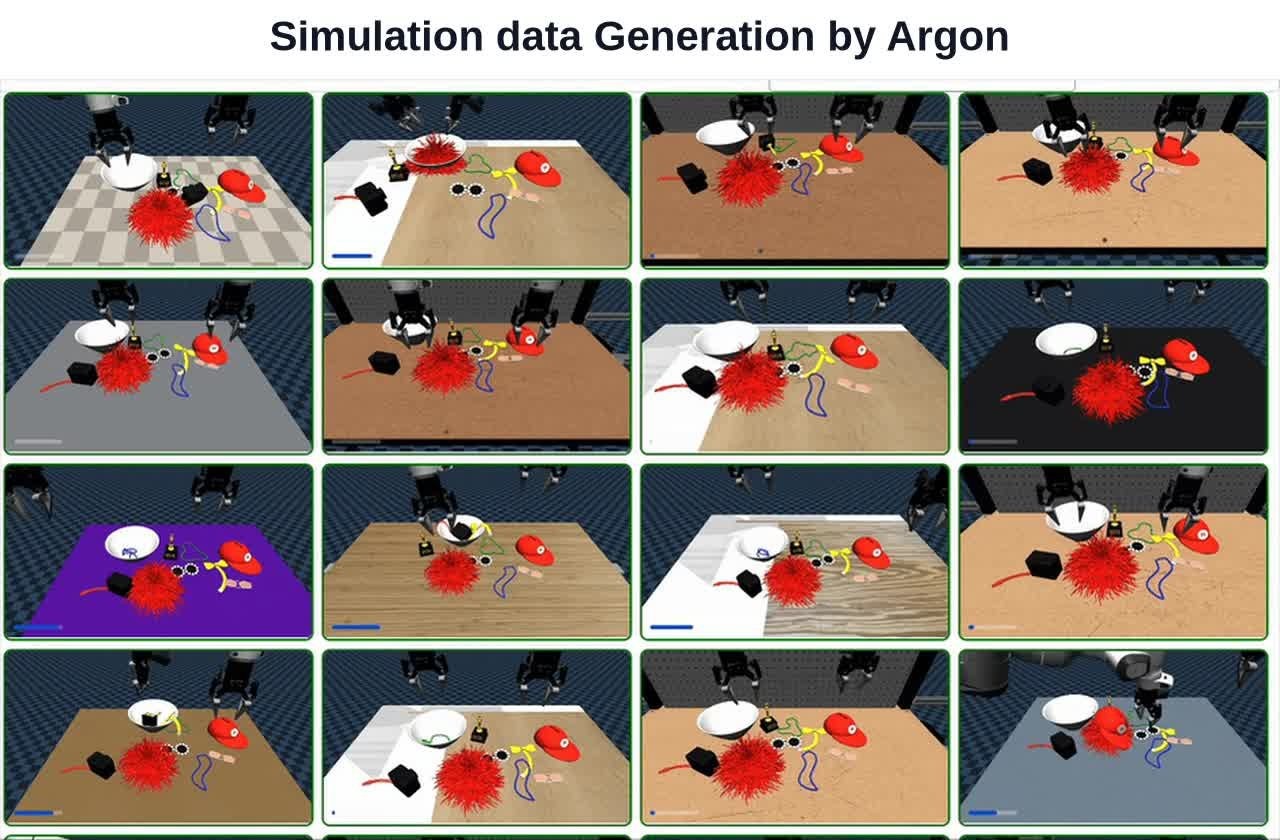
From a single photo, Argon generates over 4,500 varied simulation episodes that boost the real robot's success rate from 56 to 75 percent. | Image: Google
Source: the-decoder.com
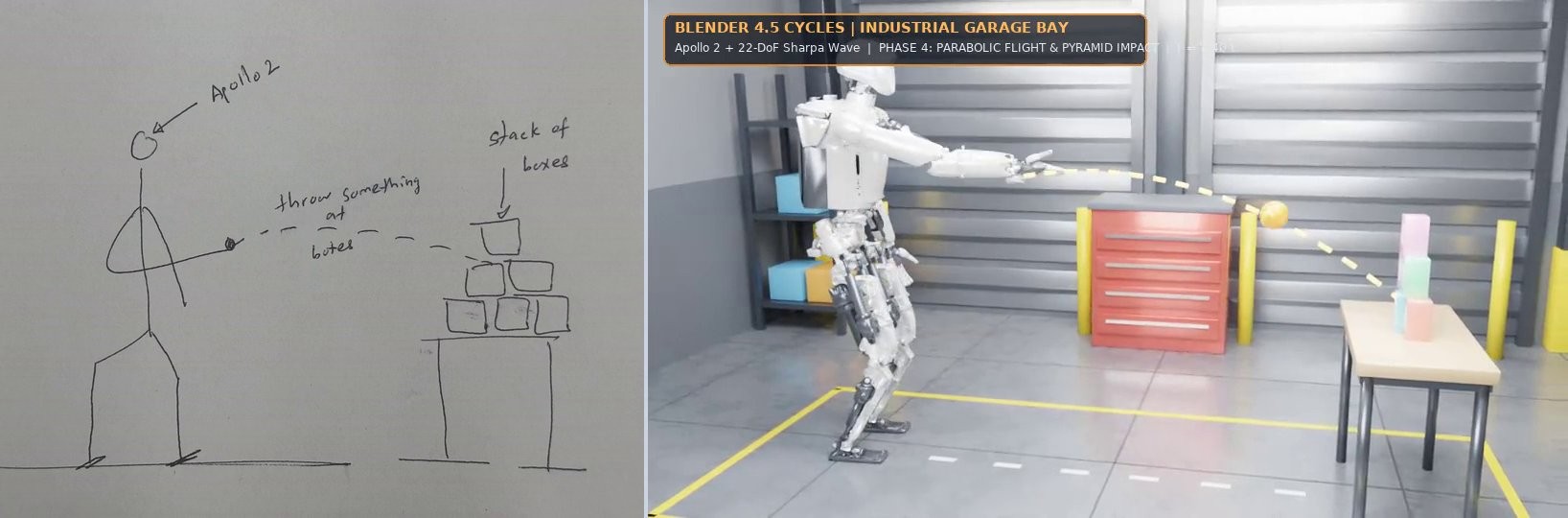
From a simple hand sketch, Argon builds a simulation where a humanoid robot knocks down all six boxes with a single throw while keeping its balance. | Image: Google
Source: the-decoder.com
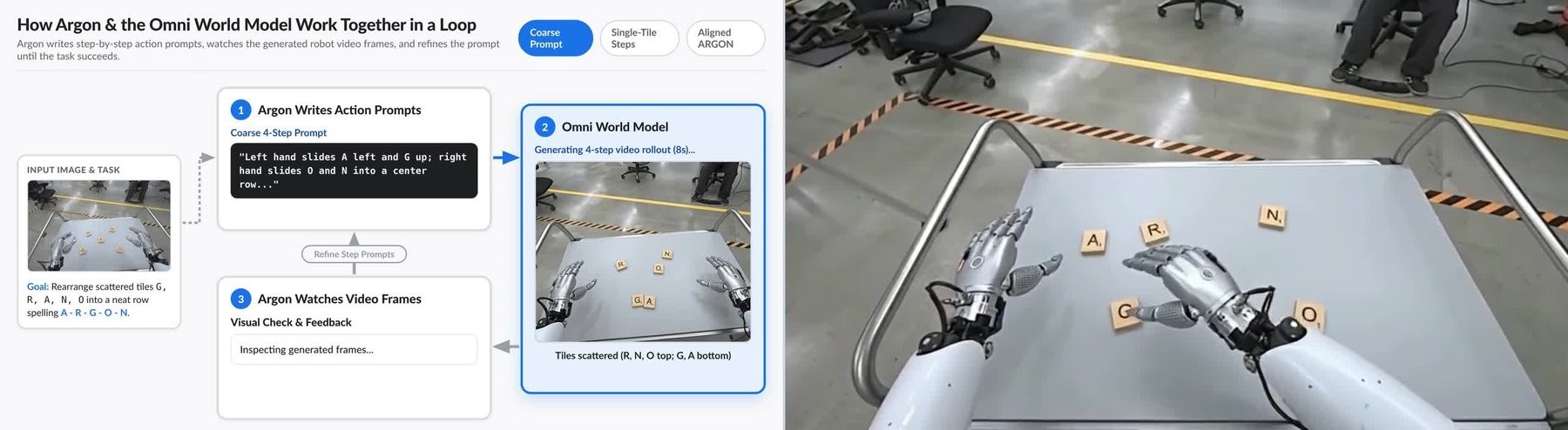
Argon directs the video world model Gemini Omni step by step until the robot hands have sorted the letters to spell ARGON. | Image: Google
Source: the-decoder.com
Source: the-decoder.com
A model directing another model
In a separate demo, Argon directs Gemini Omni, Google’s video model, which generates clips showing how a scene changes after an action. Argon writes timed instructions for the hands in the scene; Omni generates a video, and Argon checks individual frames before revising the next instruction. The goal is to arrange five scattered Scrabble tiles into the word “ARGON.” It takes 33 steps.
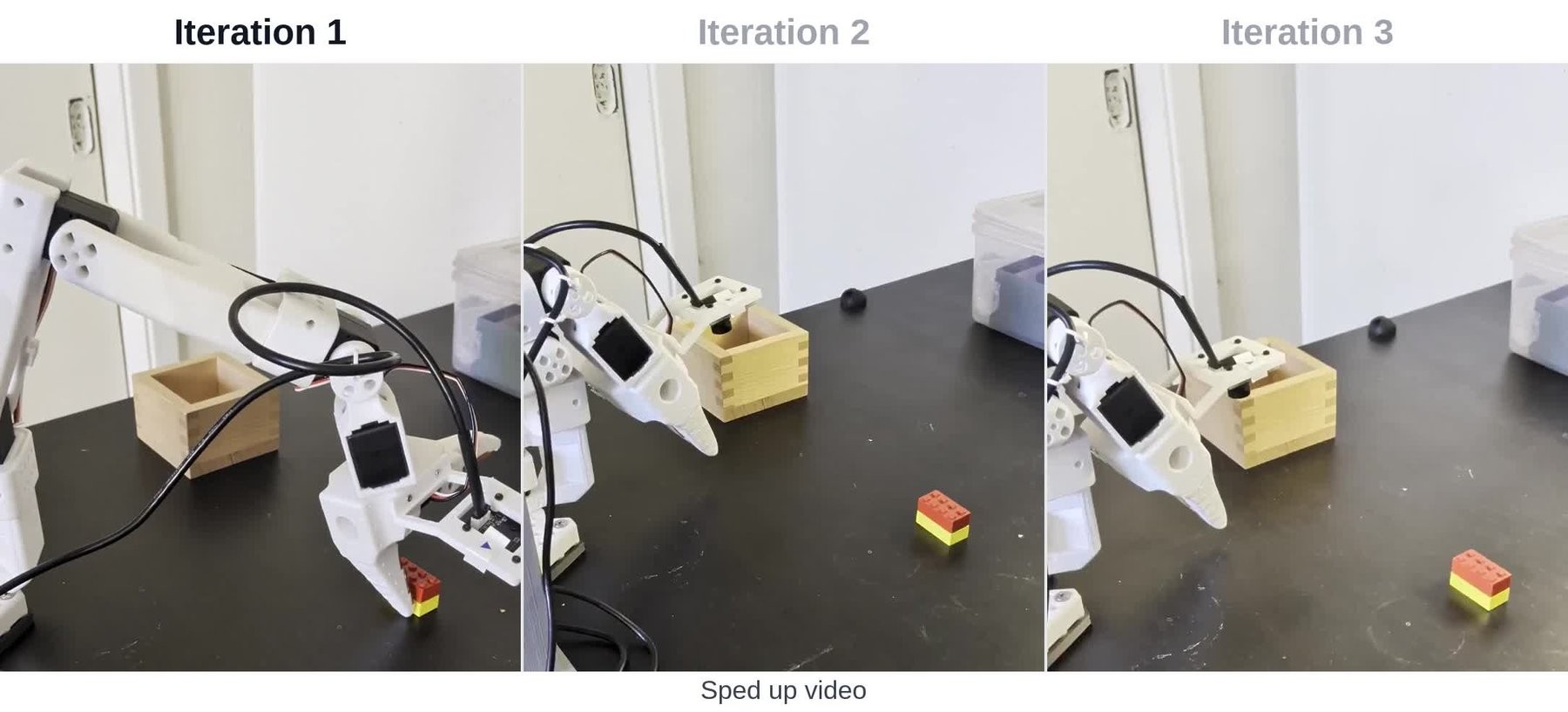
Over three iterations, Argon cuts the robot arm's execution time from 58.9 to 17.4 seconds and hits the center of the box on the final try. | Image: Google
Source: the-decoder.com
A simple robotic arm provides a more direct test. Argon had to put a Lego piece into a wooden box, learning from each attempt. After a failed try, its prompt told it to inspect logs and camera images, identify the cause and retry with a verified correction. The first run took just under a minute; the second took 23 seconds, though the piece clipped the box’s edge. On the third attempt, it landed near the center in about 17 seconds.
Google also says Argon can turn published robotics research into interactive browser simulations. Given one prompt per paper, it has produced 68 environments, including robot soccer and a humanoid on a skateboard.
Google’s ERQA benchmark tested models on 400 physical and spatial reasoning questions in a 3D environment, without auxiliary tools. Argon scored 87 percent, ahead of Claude Opus 5.5 at 82.3 percent, GPT-6 Astra at 81 percent and Claude Fable 5.1 at 74 percent.
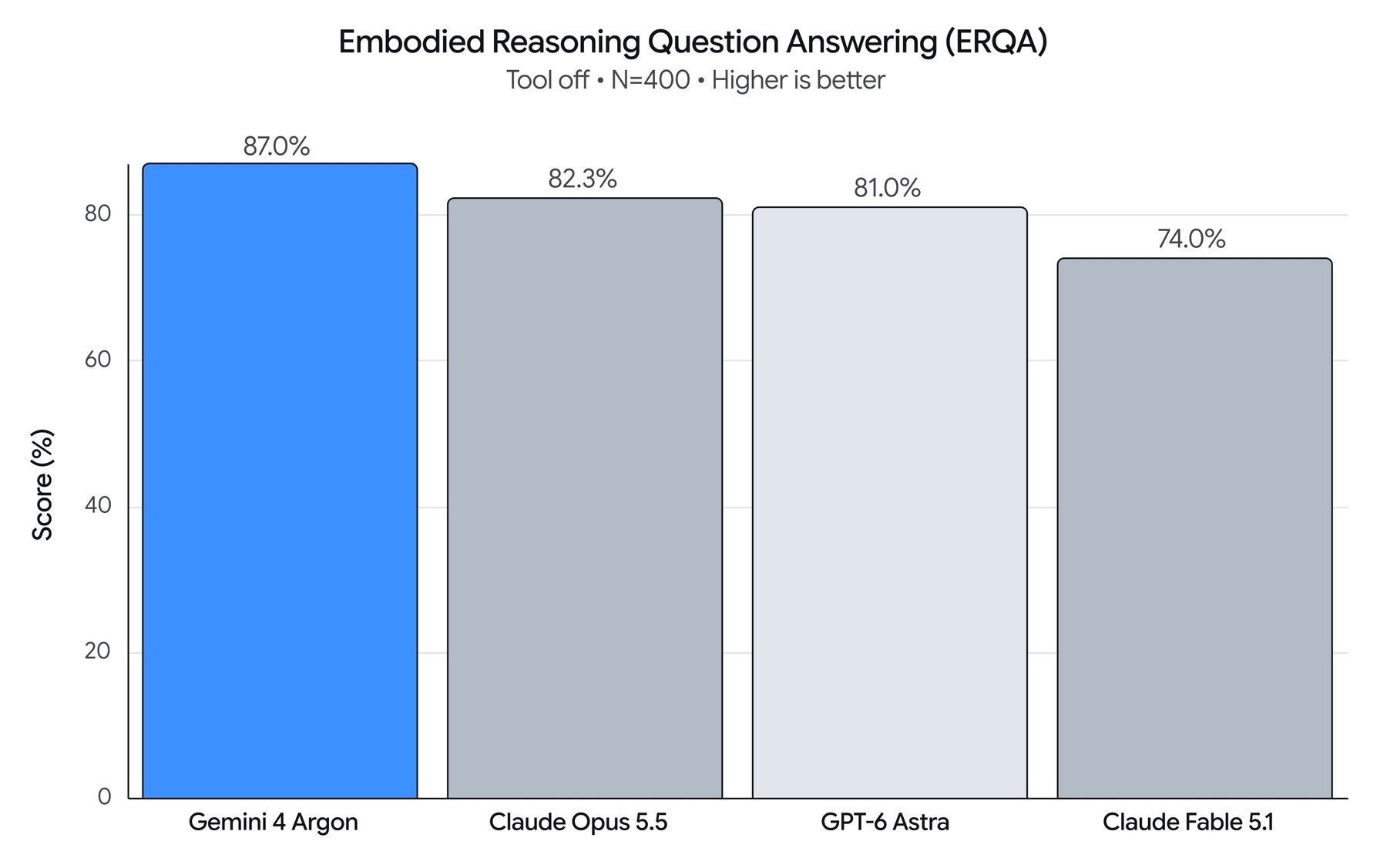
On the ERQA benchmark for spatial and physical reasoning, Gemini 4 Argon leads Claude Opus 5.5 by about five percentage points, according to Google. | Image: Google
Source: the-decoder.com
But a different test, Artificial Analysis’s AA-Robotics benchmark, published the next day, put Argon in third place. The models directly controlled a real robotic arm across eight tasks. Argon scored 55 out of 100, behind GPT-6 Astra at 69 and GPT-6.1 Sol at 65.
Source: the-decoder.com
The human work behind the demos
Argon is also meant to judge training data. In one video, a two-armed robot folds an origami fox. The model splits the task into stages and flags pauses and failed grasps, which can then receive less weight during training. In another, it tracks whether a person sorting rings is making progress, stopping or moving backward.
Google’s other examples range from a balance puzzle to detailed prompt instructions. In the puzzle, one of twelve identical-looking balls is heavier or lighter than the rest. Argon uses a simulation with two robotic arms and a scale, inferring the balance from camera images, and identifies the odd ball in no more than three weighings.
The prompt examples make the human input harder to ignore. To turn over an upturned cup—a task Google describes as starting “from scratch”—Argon gets a camera image overlaid with a centimeter grid and predefined commands such as “grasp” and “lower until contact.” Simulation prompts include long lists of restrictions to prevent shortcuts, such as copying measured sensor values. Google did not report failure rates for individual demos, and for the 75 percent success figure it did not say how many attempts were made.
I think the key uncertainty is not whether Argon can produce a convincing simulation, but how much of the work that looks like autonomy is actually being supplied by prompts, constraints and other agents. Google’s claim is broader than a single benchmark: one model for simulation, control and evaluation. Yet the gap between its ERQA lead and its third-place finish on AA-Robotics is a reminder that reasoning scores and performance on a real arm are different things.
Gemini 4 Argon is available worldwide through Google AI Studio and the Antigravity development environment, but only to Google AI Ultra subscribers. Developers can also access it through a paid Gemini API tier. Google had introduced Gemini Robotics-ER 1.6 for spatial perception and task planning, while World Labs and Nvidia’s DreamDojo have also shown ways to create virtual training environments. Argon’s distinctive bet is that one model can connect those pieces; the tests so far leave open how much human scaffolding that bet requires.
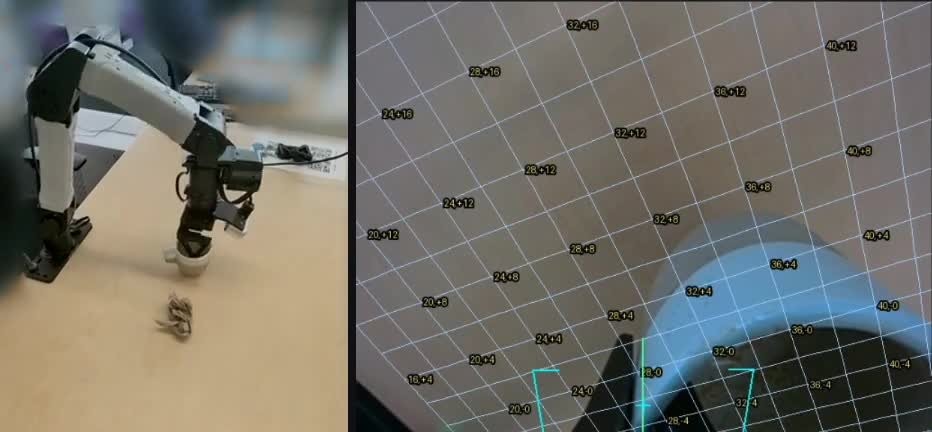
Without prior training, Argon rights a toppled cup and tucks a napkin inside, guided by a coordinate grid in the camera image. | Image: Google
Source: the-decoder.com
Daily AI news
Every day we pick what actually matters in AI and explain it plainly — no hype, no filler. Subscribe if you want to follow where the industry is going.
Only what matters — every day
Follow on X