
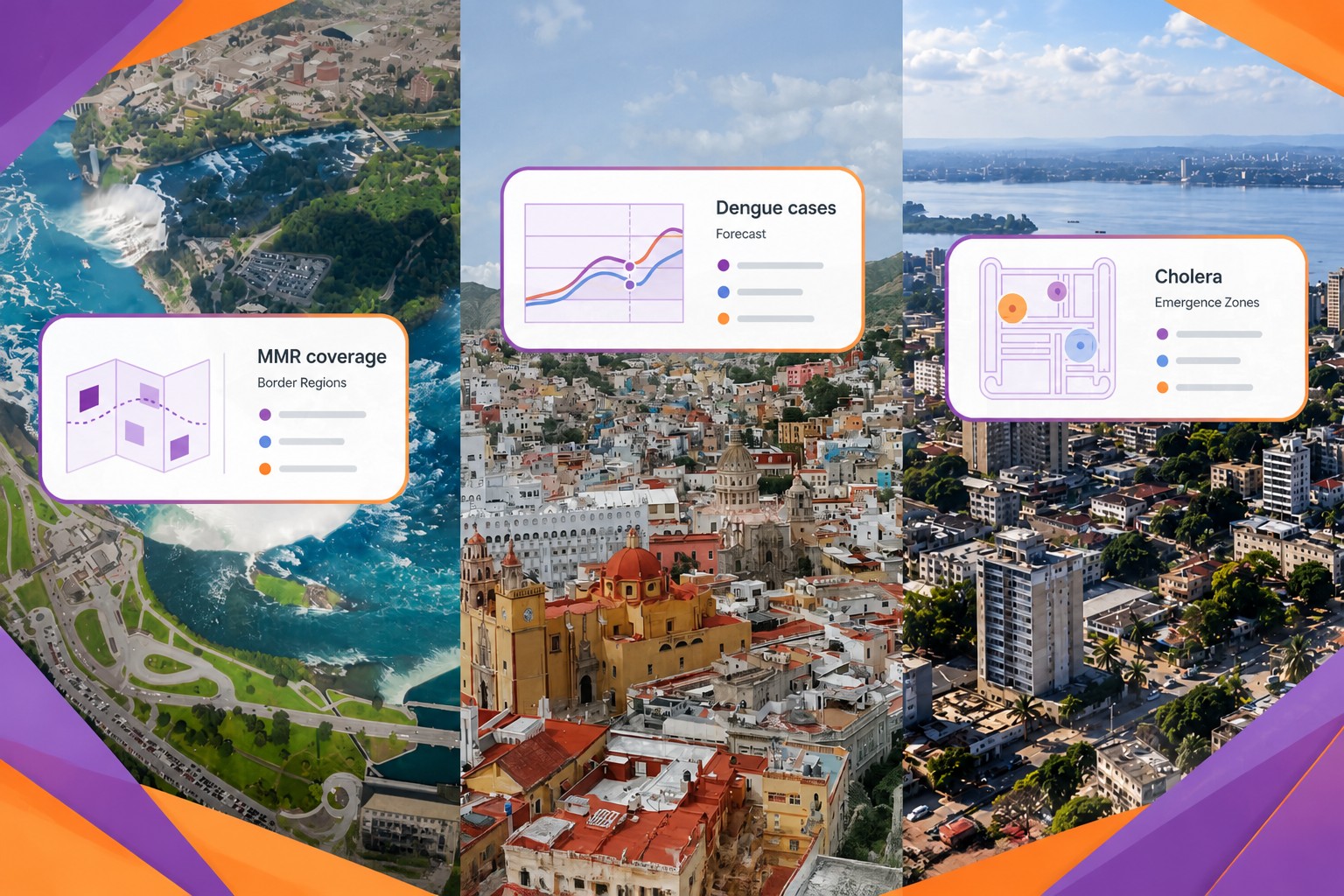
Google’s Research@ 2026 showcase brings together ten projects across science, medicine, education and business. The common thread is not a single new model, but tools meant to help people work with data, research and prototypes: from forecasting floods and reviewing technical papers to building medical applications and classroom simulations. Some are available now, while others remain experiments or early-stage research. That mix matters: the announcement is as much a map of Google’s research ambitions as a catalogue of products.
Tools for decisions, not just answers
Google Earth AI is expanding early access to three experimental ways of working with geospatial data: deeper analysis in Google Earth, planetary forecasting for assessing risks and scenarios, and an agent interface that lets developers bring geospatial reasoning into their own workflows. The interface exposes capabilities such as satellite-image analysis, routing and demographic-data embeddings.
Google also announced integration with Google Dataset Search, which covers more than 100 million public datasets, and TimesFM for current estimates and forecasts about the planet. The system draws on more than 70 geospatial tools, including the Remote Sensing Foundation Model (RSFM) and Population Dynamics Foundation Model (PDFM). Google says the tools were tested against empirical benchmarks described in a new Earth AI technical report.
The intended users range from public-health specialists to enterprise teams. Google.org is also allocating $10 million to organizations working on crisis resilience and public health, including $2 million for the Milken Institute to address infrastructure barriers to affordable housing, clean energy, broadband access, safe water and other essential infrastructure.
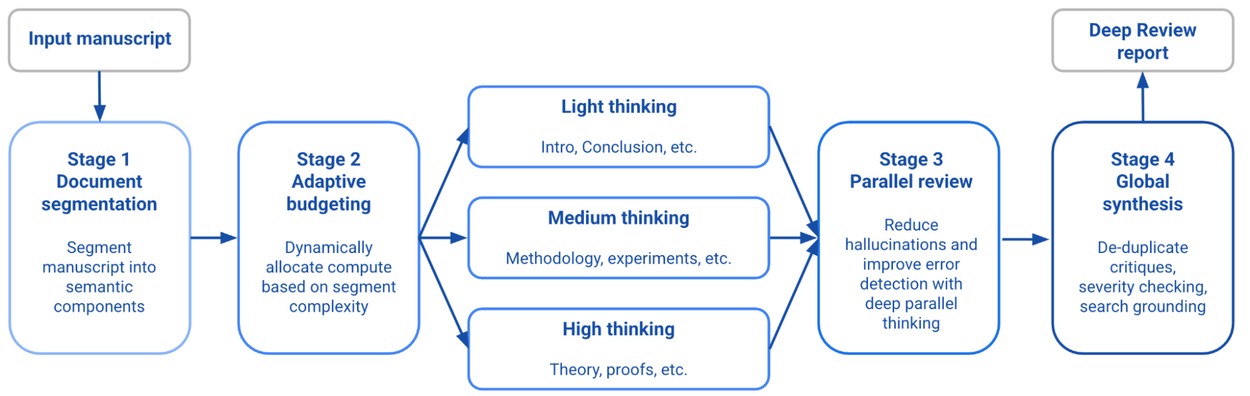
Google is also applying AI to the research process itself. A new multi-agent system helps scientists reproduce methods and analyses from earlier papers, then adapt them to new problems. In a simulation, researchers used a method for inverse design problems in fluid mechanics to develop urinary catheters with designs that better prevented bacterial infections.
Source: research.google
Source: research.google
From forecasts to frontline care
Google’s forecasting work reaches beyond broad planetary analysis. Its global hydrology model, published in Nature, can forecast river floods up to seven days ahead, covering more than 2 billion people in over 150 countries. The model is designed for the largest and most destructive floods.
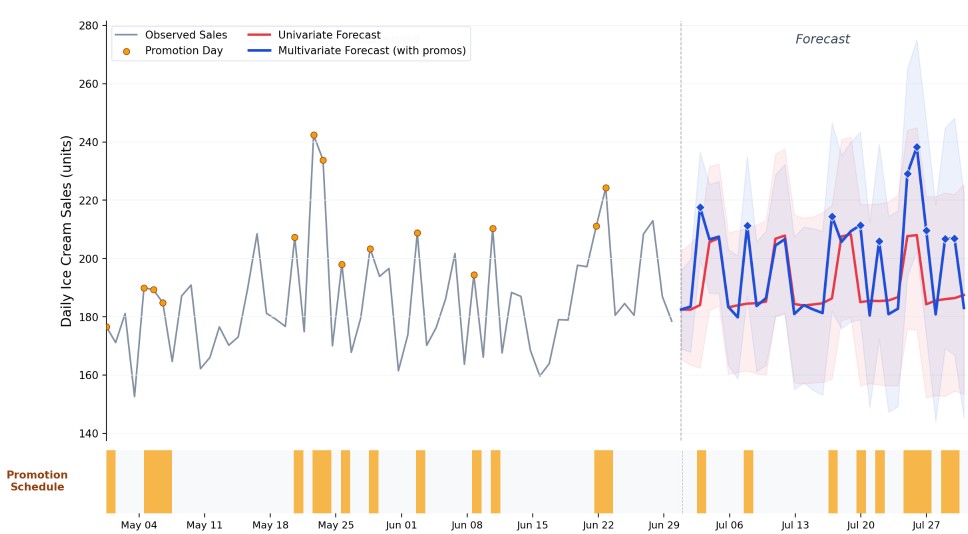
For flash floods, Google developed Groundsource, which uses publicly available crisis information to build historical datasets. With Gemini, Google analyzed news reports and assembled a structured dataset of more than 2.6 million flood cases. That data helped address the shortage of verification data for flash floods and train a model that predicts the likelihood of urban flash floods up to 24 hours ahead. The dataset is part of Google Earth AI and is open for further analysis and research.
Source: research.google
In medicine, MedGemma has been downloaded more than 10 million times by more than 65,000 unique developers since its publication in Nature Medicine last week. The open model is intended as a foundation for specialized medical applications. Developers have adapted it for uses including faster patient triage in crowded clinics and detecting eye disease and cervical cancer.
Google says researchers have added tool-use capabilities so MedGemma can work with medical records and other applications used by clinicians. They are also studying new data types, including mammograms, ultrasounds and electrocardiograms. Early results show improved performance on clinical questions and on interpreting X-rays, skin images and histology slides.
AMIE, Google’s system for clinical reasoning and dialogue, is being studied as a way to support doctors and strengthen the doctor-patient relationship. Research published this year in Nature extended its work from initial diagnosis to long-term disease management; a paper in Nature Medicine examined reasoning across inputs such as medical images and lab results.
A new study in The Lancet reports a clinical use case: at Beth Israel Deaconess Medical Center, 98 patients safely consulted AMIE before urgent doctor visits. Clinicians said its summaries helped them prepare for appointments in 75% of cases. Google is also developing AMIE for multiple data types, including real-time video consultations, and has begun a nationwide randomized study of AI in real-world virtual care with Included Health. The work remains at an early stage and continues a research program that began with the foundational MedPalm work.
The interface is the other research bet
The showcase also includes a low-power edge-computing chip that Google developed with Synaptics using Google’s open technologies. It is due to be introduced next week, following Google’s release earlier this year of the first Coralboard from Synaptics, featuring a Coral NPU based on Google technology. The new chip is aimed at engineers building smart glasses and watches, connected cameras, streaming devices, and industrial machine-vision and voice-control systems.
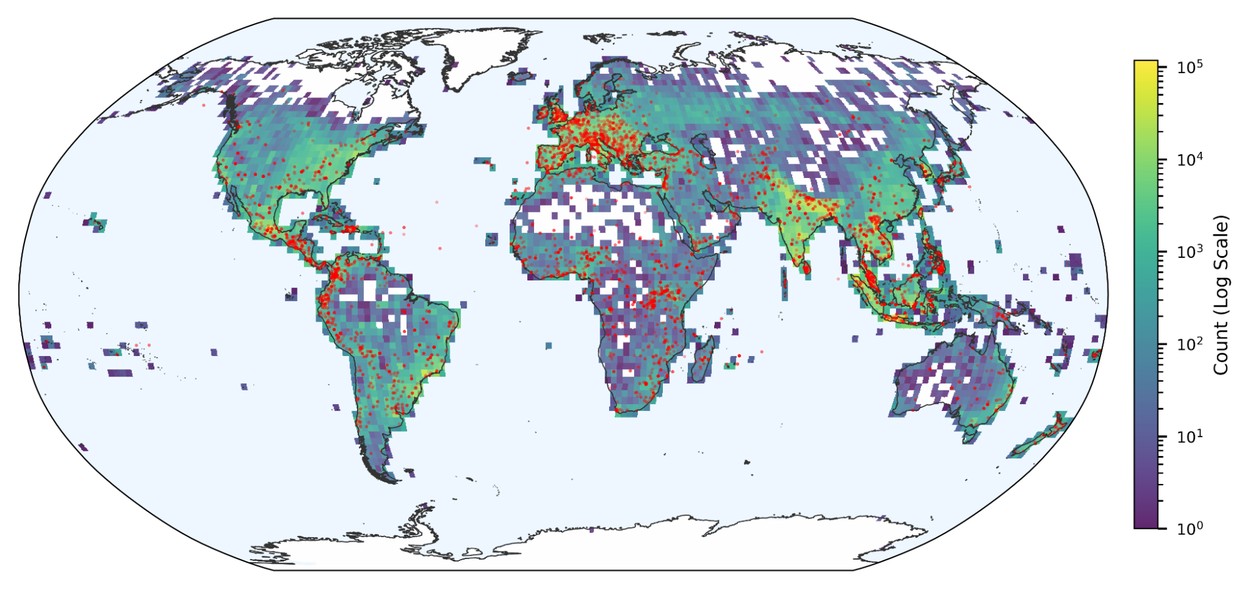
For business data, TimesFM and TabFM are foundation models designed for raw numerical distributions: time series and structured tables. Google says both deliver accurate forecasts without additional training and rank near the top of leading open benchmarks in their fields. They are available to all Cloud BigQuery users, with plans to bring them to Gemini for business. The use cases include forecasting product sales or hospital bed occupancy from complex operational tables and millions of rows of data; confidential information stays within the organization, and answers are available in seconds.
Source: research.google
Two other projects focus on interfaces people can shape themselves. Google is testing a generative interface that lets teachers create curriculum-aligned, controlled simulations for science and math. Its example library contains more than 30 AI-created interactive materials, reviewed by teachers, for middle- and high-school physics, chemistry, biology and math. Schools can apply to a Google for Education pilot and provide feedback.
Play with Putty is a shared space for teams to build prototypes together, with real-time collaborative editing and interaction with interface elements. Google first built it for its own researchers and teams, including work exploring solutions and visualizations with Google Earth AI. A waitlist is now open in Google Labs.
I think the most revealing split in this portfolio is between systems that make a concrete, bounded claim—such as flood forecasts or paper reviews—and projects whose value depends on how people adopt them. The announcement offers usage figures and early study results, but says less about how performance holds up in routine settings, or how these tools fit into existing professional workflows. That gap matters most in medicine and research, where a capable model is only part of the work. Google’s broader bet is that AI becomes useful not by replacing those workflows outright, but by giving people new ways to inspect, predict and build within them.
Source: research.google
Daily AI news
Every day we pick what actually matters in AI and explain it plainly — no hype, no filler. Subscribe if you want to follow where the industry is going.
Only what matters — every day
Follow on X