
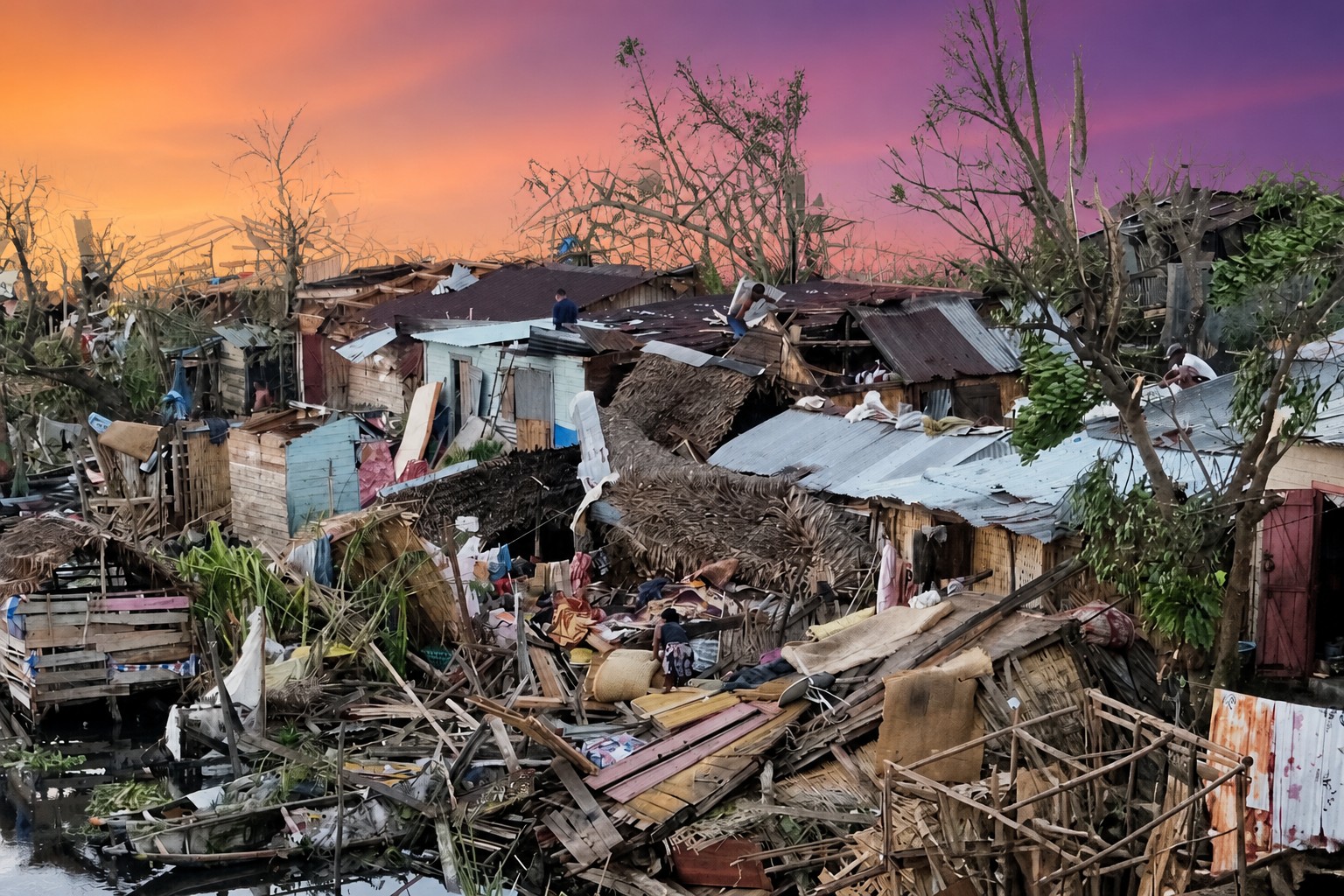
Google's WeatherNext has outperformed existing methods at forecasting cyclones. The gain is described in the only unit that matters to anyone living under one: an extra day of warning, which is the difference between preparing for a hurricane or typhoon and reacting to it. It is one of several AI systems now reshaping weather prediction, in a shift that has been gathering pace for about a year.
The constraint being lifted here is older than the field's computers. Numerical forecasting dates to a book published more than a century ago, "Weather Prediction by Numerical Process," by Lewis Fry Richardson, a mathematician at the Met Office. The method worked; it was simply unusable. Calculations were done by hand, and producing a single day's forecast took more than six weeks. It stayed a curiosity until machines could do the arithmetic, and even now, with supercomputers on the job, forecasting centres still run into the limits of the compute available to them.
AI routes around the bottleneck rather than widening it. Instead of the detailed physical calculation a conventional model performs, it generates forecasts from patterns learned in training data. The output is a forecast; the physics is not simulated.
The result is already competitive. AI systems rival traditional models across a range of forecast horizons, and are strongest at the longer ranges. They do not necessarily produce better forecasts — but they produce comparable ones faster and more cheaply.
Read those two claims side by side and the cyclone result looks like the exception rather than the trend. The general case for AI weather models is parity at lower cost, not superiority; the cyclone finding is the place where someone has claimed an actual improvement in skill. My reading is that cost is the more consequential half of the story anyway. A forecast that is merely as good as the physics but far cheaper to produce is one that can be run more often, at more resolutions, and by institutions that could never justify a supercomputer. That changes who gets a forecast, not just how good it is.
Absent from the account, and it is the thing a meteorologist would ask first, is a number. How much better at cyclones, measured how, over which set of storms, against which operational baseline — and whether any forecasting agency has actually put WeatherNext into operational use, as opposed to evaluating it against archived cases. "An extra day of warning" is a compelling framing and a vague one. The distance between a research result and a forecast an emergency management office acts on is exactly the distance those missing numbers describe.
What makes the field unusual is that it will find out. Meteorology has taken to AI as a useful new capability while most other domains have received it warily, and the reason is structural: a weather forecast is scored against reality within days, in public, by everyone. Nobody has to be persuaded that a model works. Most of the fields still holding AI at arm's length are the ones where the verification loop takes years, or never closes at all.