A model with a skill library
HomeBody’s replaceable vision-language model—in this version, GPT Astra—calls skills from an expandable library. Those include grasping objects, navigation and opening drawers.
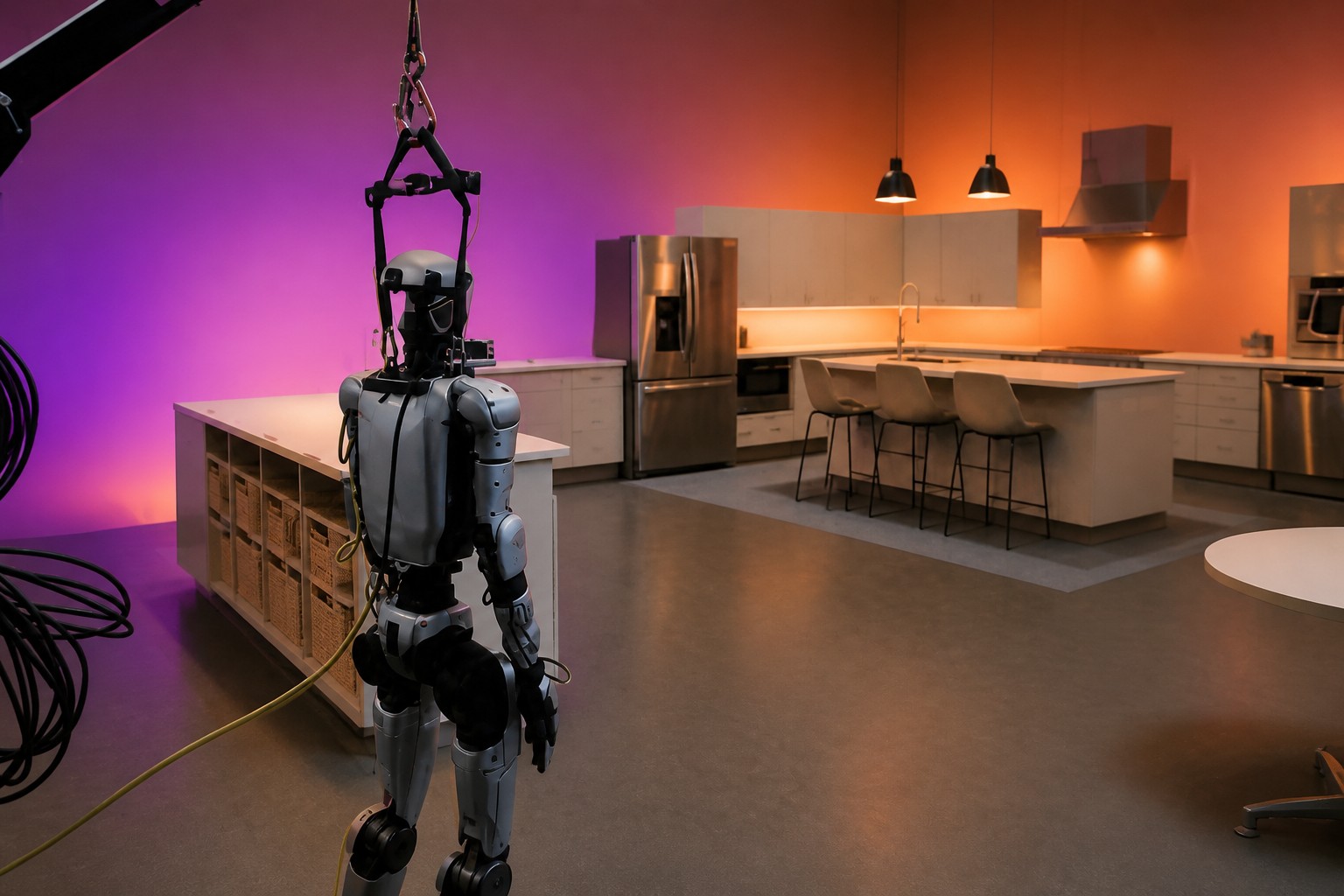
Before acting, the robot explores the room and builds a digital copy in Nvidia Isaac Sim. It records objects and their locations in spatial memory, allowing it to find an item even after it leaves the camera’s view. For a request such as cleaning the kitchen, the model plans a sequence of actions and corrects mistakes as it goes.
What the setup does not settle
The project’s stated limits are practical: GPT Astra’s delays, overheating finger servos and high computing costs. The code is available on GitHub.
Earlier benchmarks found a notable improvement in Astra’s spatial reasoning. Another evaluation identified safety problems that arise when Astra controls a robot. OpenAI has already announced plans to return to robotics, including domestic applications.
I think HomeBody’s most consequential choice is not which model it uses, but where it puts the boundary between language and control: the model selects existing skills directly instead of handing instructions to a separate trained layer. That makes the system easier to inspect as a design, but the announcement leaves a key question open: how reliably can it handle a kitchen whose objects and layout differ from what it has seen?
The answer matters because a robot that can plan around a mistake still has to act safely while doing so. HomeBody points toward a more direct interface between models and machines; its delays, heat and compute costs show how much still stands between that interface and a useful household robot.
Source: the-decoder.com
Daily AI news
Every day we pick what actually matters in AI and explain it plainly — no hype, no filler. Subscribe if you want to follow where the industry is going.
Only what matters — every day
Follow on X