
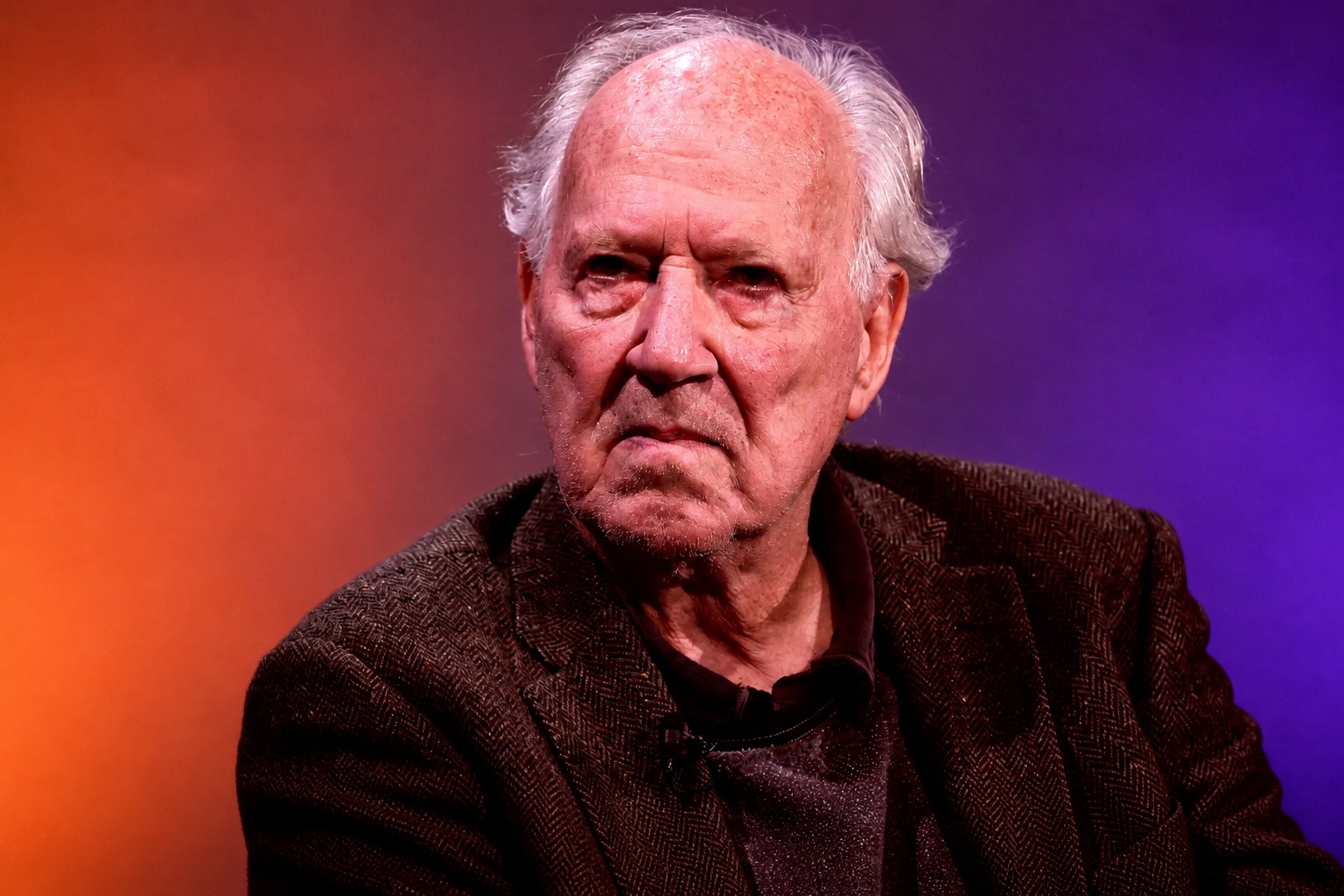
Werner Herzog has now seen a film made in his image, and he wants no part of it. Asked by IndieWire about About a Hero — a feature whose script was generated by an AI trained on his films, and which is narrated by an AI deepfake of Herzog himself — the director said he had told the young filmmaker behind it that the project would fail, because the idea struck him as stupid. He later called it exceptionally and profoundly stupid, and said he would not take part in such a project. In the same interview he said he would welcome AI replacing untalented authors.
The two halves of that answer are the story. Herzog, whose filmography includes Fitzcarraldo in 1982, Bad Lieutenant: Port of Call New Orleans in 2009 and Nosferatu the Vampyre in 1979, was not being asked to license a remake. According to his account, the director behind About a Hero did not intend to reshoot his films at all; he wanted to make his own work "in their spirit." Herzog's objection was not to being copied. It was to the premise.
His argument against it is narrow and, for that reason, hard to dismiss. Standardized material, he said, contains no real narration — only an imitation of what has already been made. He welcomes AI taking over from anyone who can do nothing but repeat the same thing endlessly, until the result becomes tiring; once repetition reaches that point, he said, AI may as well do the job.
The paradox he identifies sits elsewhere. A technology that promises users the ability to create almost anything, in his reading, mostly demonstrates how little there is to release. Genuinely interesting uses of AI in art are rare. Usually the technology automates the production of unoriginal work, stripped of the human spark and the natural unevenness that make a piece expressive.
This is not a new position for him, only a sharpened one. He has said before that a computer will not make a better film than his in 4,500 years. Speaking with the comedian Conan O'Brien a year earlier, he praised AI's "magnificent capabilities" in scientific work while criticizing its military use in blunt terms. Its arrival in art troubled him just as much: he described watching films and shorts made entirely by AI, script through performance, and called them completely dead. There are stories in them, he said, but no soul. Such works, he added, reproduce the most common and lowest denominator of what fills the internet in billions of units of information, and nothing in the output tends to rise above it.
What makes Herzog's line worth attention is that it concedes far more ground than the standard artist-versus-AI complaint. Most directors defending against automation defend craft as a category: skill, labor, years on set. Herzog hands almost all of that over. He agrees the machine can do the work of anyone whose output is imitation, and defends only the part that was never reproducible in the first place. It is a harder claim to argue with, and a much more expensive one for the industry, because a great deal of working film and television is exactly the standardized repetition he is willing to surrender. The test he proposes — does this work reduce to repeating what exists — is not a test most commissioned screenwriting passes.
The interview does not press the question that About a Hero actually raises. Herzog declined to participate. The film has him narrating anyway, in a synthetic version of his own face and voice, from a script trained on his own work. Refusal, in this arrangement, costs the producers nothing: they needed his films and his likeness, not his consent, and both were already available. No part of the reporting suggests he had a mechanism to say no that anyone was obliged to honor.
Which leaves the uncomfortable symmetry. Herzog is content to let AI absorb the authors who only imitate, and he has just been imitated by one — competently enough to reach a finished feature, badly enough that he calls it dead on arrival. The judgment he applies to other people's work is the one being applied to his, by a system that did not ask.