
Kora, a startup, has introduced a Linux-based desktop operating system for developers and content creators who regularly work with AI. It is meant to bring together models from different providers, keep track of the context of interactions with them, and find files by meaning. Kora plans to release the system in 2027; it is being built for computers with at least 64 GB of RAM. The developers also promise compatibility with standard Windows applications and support for computer games.
Kora brings AI tools and files together in a Linux desktop system

Source: wired.com
AI and files at the system level
Kora is designed as an alternative to Windows and macOS for “people who work with AI from the start,” rather than for the mass market. The company’s CEO and co-founder, Kirt McMaster, also a co-founder of Boost Mobile, compares the approach to the way Steve Jobs oriented the Mac toward content creators by changing desktop publishing.
Kora is meant to connect the context of users’ actions across different AI tools. Instead of separate desktop applications and browser tabs, the system will bring models together at the OS level, making it easier for developers and other experienced users to work with multiple providers.
“All your context, all your memory are on your computer,” says Kora co-founder Frank De Girolami. For example, a user could design something with an OpenAI model in Kora’s interface, switch to Anthropic tools to deploy code, and then use a local model to reduce token costs.
Kora is a standalone Linux-based OS that runs directly on hardware. The company has reached an agreement with Qualcomm to bring the system to Snapdragon computers next year. It also supports the x86-64 architecture, so Kora will likely be installable on current computers with Intel or AMD processors.
Compatibility layers will be built into the system to run standard Windows programs. The company is also developing its own contacts, calendar, and email applications, along with a software development kit (SDK) for third-party developers. A dock at the bottom of the home screen will let users switch between email, the browser, and games.
Search by meaning and games
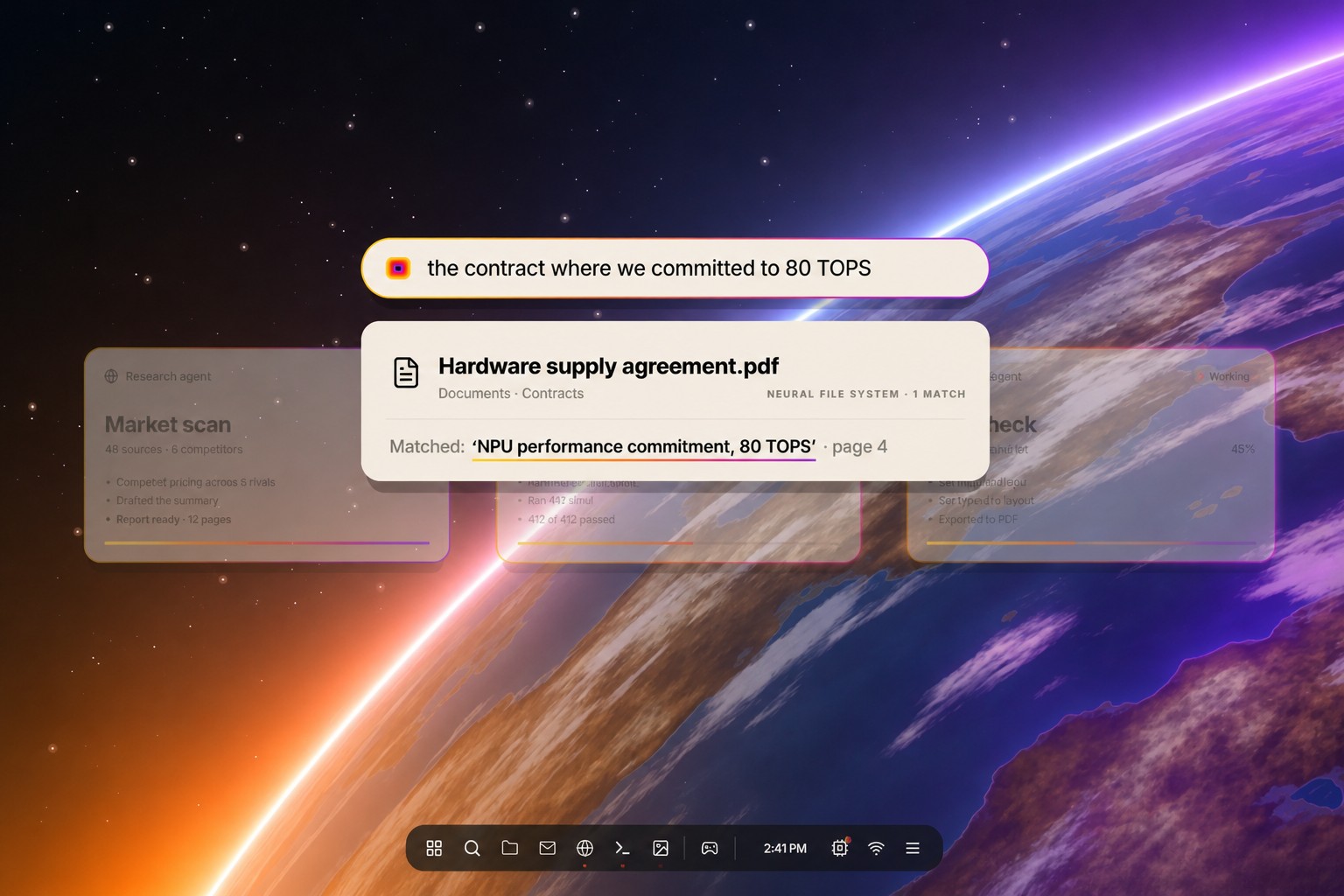
At the heart of Kora is what its developers call a “neural file system.” Based on the interface examples, using it may feel like chatting with a chatbot or AI agent: the system indexes files by meaning, and users enter a question in the OS search bar. This could help locate, for example, a contract saved on the device if you remember a detail about it but not the file name.
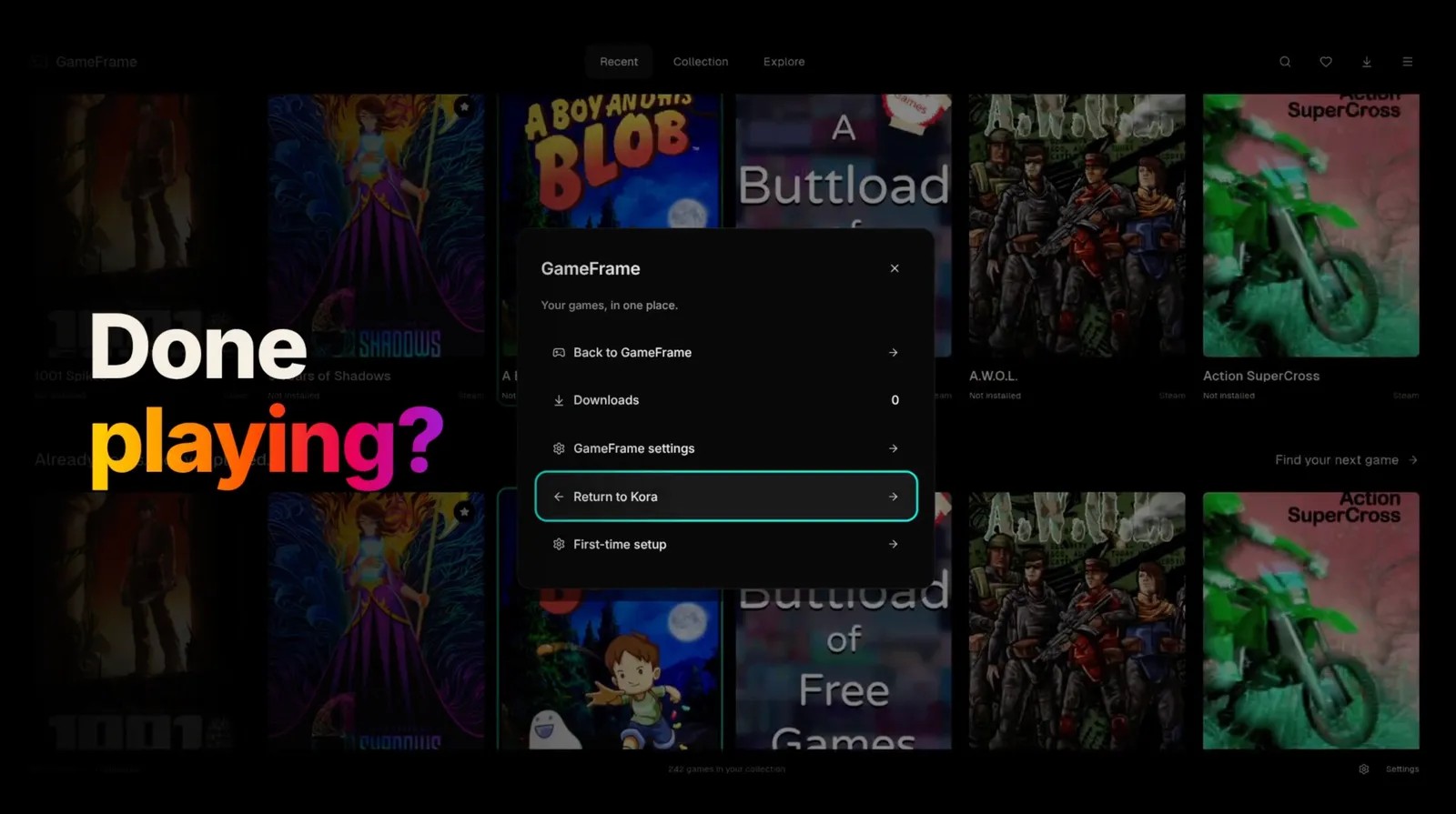
Kora grew out of Playtron, a startup founded by McMaster. Last year, Playtron released GameOS, a gaming OS designed primarily for handheld devices such as the Steam Deck, but also supporting computers. GameOS’s architecture is now built into Kora under the name GameFrame. It lets users run computer games, provided the hardware has enough power.
Kora is also aimed at gamers and experienced computer users. McMaster says the company wants to give creators who use these tools every day to build applications and services both the capabilities they need for that work and the other familiar features of Windows or macOS.
Source: wired.com
The team and competitors
Competing with major platforms is difficult, especially with fewer than 100 people on the Kora team. The three co-founders have different backgrounds: McMaster helped create and lead Cyanogen, an open version of Android that gained millions of users before shutting down about ten years ago; De Girolami helped develop GameOS at Playtron; and John Lagerling previously worked on Android at Google.
Kora is not the first attempt to rethink the desktop OS for the AI era. In October, Google introduced Googlebook OS and compatible laptops designed around Gemini. McMaster, however, believes Googlebook and Android support will not satisfy experienced users who need substantial computing power to run AI models.
Kora is therefore being optimized for desktop computers with at least 64 GB of RAM—twice as much as the Googlebook with the most memory. McMaster believes a small company can change the system faster than Apple and Microsoft: in his view, major platforms with a billion users find it difficult to make large-scale changes quickly. Over time, he thinks, demand may emerge for a new OS built to work with intelligent systems.
Dataist's take: Kora is betting on tightly connecting AI tools, files, and applications within a single OS. But its plans depend both on launching in 2027 and on whether it can attract users who need computers with 64 GB of memory or more.
Daily AI news
Every day we pick what actually matters in AI and explain it plainly — no hype, no filler. Subscribe if you want to follow where the industry is going.
Only what matters — every day
Follow on X