
From driving research to a product
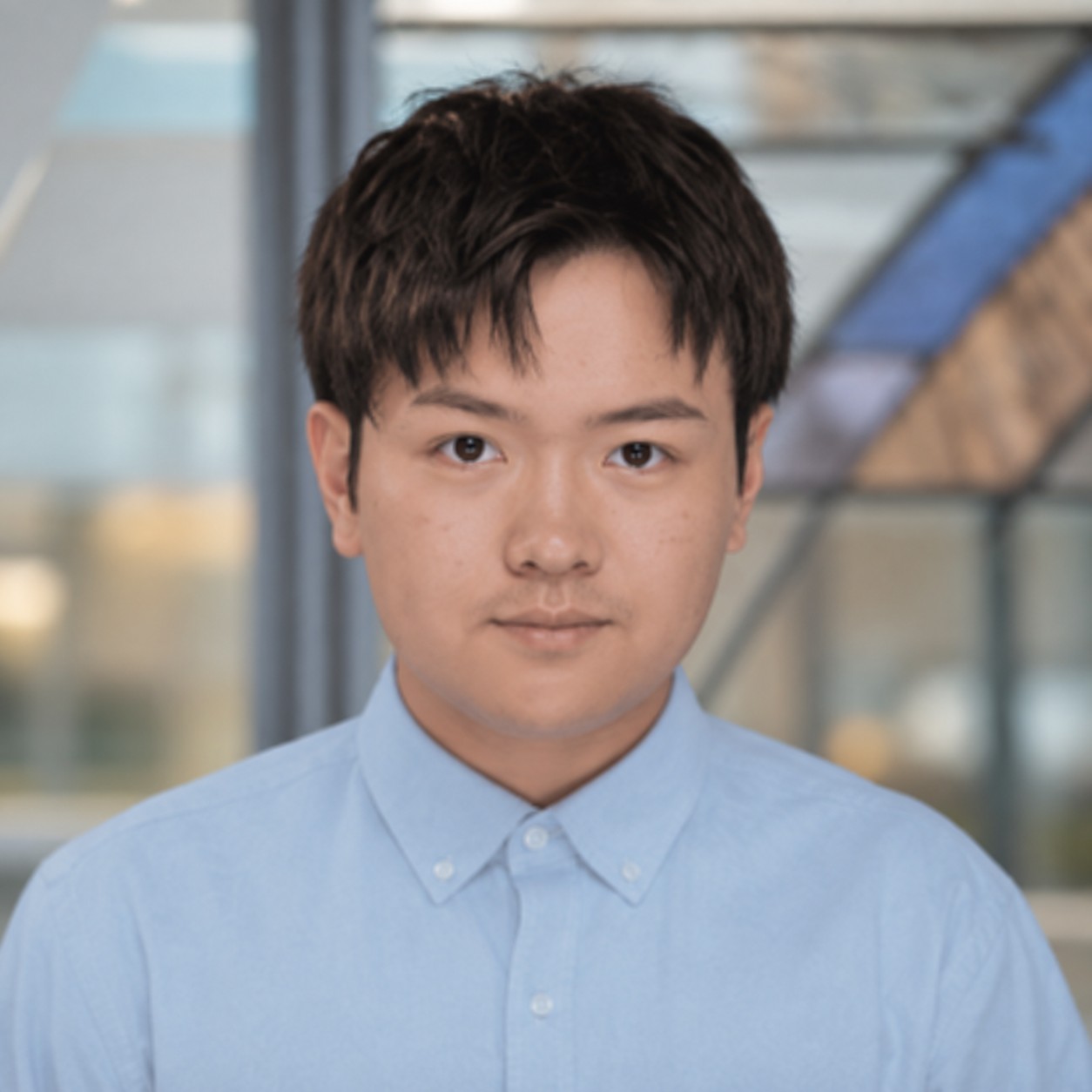
CEO and co-founder Howie Sun spent eight years in academia studying how to test autonomous-driving AI in simulation. In 2023, he and Henry Liu, then Sun’s doctoral adviser and now Laplace’s co-founder and chief scientist, published research on the subject. It appeared on the cover of Nature. Autonomous-vehicle companies began contacting them afterward, interested in applying the work.
They founded Laplace a year ago at the University of Michigan. The name refers to French scientist Pierre-Simon Laplace’s 1814 thought experiment: if someone knew the exact state of everything in the universe, they could predict the future with complete accuracy. Sun says the company uses simulation to predict what may happen in the real world.
Laplace builds simulations from real-world data, then uses an AI agent to search for weaknesses and possible failures. Its system is intended to test robots, autonomous vehicles and smart-city systems before deployment.
For the simulations, Laplace uses a fine-tuned version of Nvidia’s Cosmos, a platform for grounding world models in reality. The company can recreate places such as an Arizona highway or a Paris crosswalk by combining different data sources. Google Street View imagery can guide a reconstruction, while real map data helps preserve the scale and layout of a location.
Developers can change conditions in real time with text prompts, such as adding daytime traffic. Laplace also gets current traffic and congestion information from navigation services such as TomTom.
The simulation models other road users as well as the surroundings. In one demo, Sun asked a test vehicle to drive into the oncoming lane. A car that might otherwise have collided with it — or been passed through, as can happen in some generative world models — changed course and yielded.
The search for scenarios people miss
Sun sees the scenario-generating agents, rather than the simulation alone, as Laplace’s main distinction. They are designed to automatically find rare, difficult cases that could stump a system and reduce the amount of human work needed to test it.
The agents can draw potential scenarios from news stories, police collision reports and other sources, Sun said. Today, autonomous-vehicle developers often turn recorded events into simulations or ask people to devise new cases. Some already use AI to generate rare situations; Sun cited autonomous-trucking company Waabi.
The need could become more acute with general-purpose robots. Sun said there is less data on general-purpose robotics, and it is not yet clear what unusual situations those robots will encounter in the real world.
Laplace already has paying customers and has reached a small profit, despite Sun and Liu’s academic backgrounds and lack of experience at well-known Silicon Valley technology companies. Most revenue comes from autonomous driving. Its customers include Japanese truck manufacturer Isuzu and Texas-based autonomous-trucking company Bot Auto.
Sun also named Nvidia as a Laplace customer. The startup is working with Nvidia and T-Mobile on a free smart-city pilot in San Jose, California, intended to provide shared traffic management. Laplace is also at an early stage of working with partners developing humanoid robots for warehouses.
Most of its current contracts are project-based, and the company is working toward recurring revenue. It plans to raise funds and scale, including through its participation in TechCrunch Disrupt’s Startup Battlefield 200, where it is one of 20 startups. The conference runs October 13–15 in San Francisco; Laplace is scheduled to pitch on Tuesday afternoon, October 13.
The proof still has to leave the simulation
Laplace’s main competitor is Applied Intuition, a later-stage company that has raised $1.2 billion at a $15 billion post-money valuation. Isuzu is a customer of both companies. Sun is not worried, arguing that AI testing AI turns physical-AI evaluation into a dynamic, interactive process.
I think the harder question is not whether Laplace can produce more scenarios, but whether customers will trust those scenarios as evidence that a system is ready for deployment. The company wants to build a shared evidence base for customers, insurers and regulators, but the announcement does not say how that evidence would be validated or adopted. For now, revenue is coming largely from custom projects in autonomous driving; the broader case for testing robots with less real-world data remains to be demonstrated.
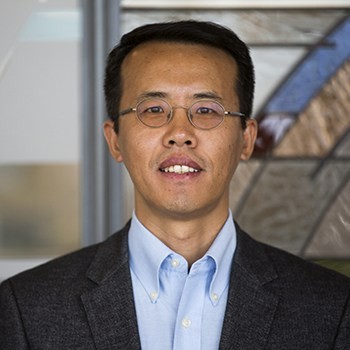
Henry Liu, chief scientist, Laplace Intelligence. Image Credits: Laplace Intelligence
Source: techcrunch.com
Source: techcrunch.com
Daily AI news
Every day we pick what actually matters in AI and explain it plainly — no hype, no filler. Subscribe if you want to follow where the industry is going.
Only what matters — every day
Follow on X