
Source: techcrunch.com
From driving research to a product
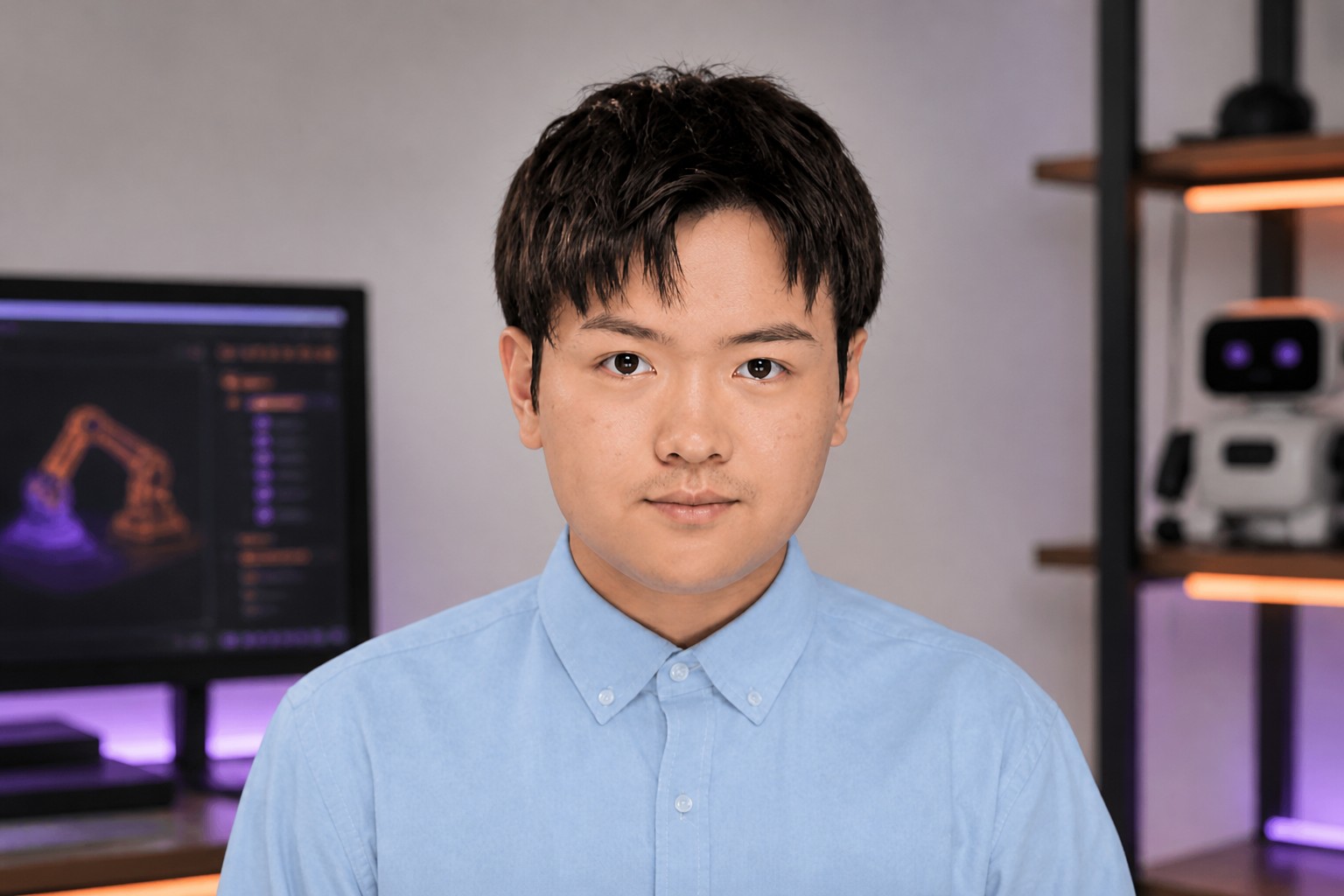
Laplace was founded a year ago by CEO Howie Sun and chief scientist Henry Liu, building on work at the University of Michigan. Sun spent eight years in academia testing autonomous-driving AI in simulations. In 2023, he and Liu, then Sun’s doctoral adviser, published research on the subject. It appeared on the cover of Nature and drew interest from self-driving companies.
The company’s name nods to the “Laplace’s demon” thought experiment, proposed by French scientist Pierre-Simon Laplace in 1814: if every state of the universe were known, the future could be predicted precisely. Laplace Intelligence uses simulation to model possible events in the physical world.
Its environment is built from real-world data and a fine-tuned version of Nvidia Cosmos, an AI world-modeling platform. Laplace can recreate places such as an Arizona highway or a Paris crosswalk, combining sources that include Google Street View and real map data. Developers can change conditions through prompts, such as adding daytime traffic. Sun says the company also receives current traffic and road-congestion data from navigation providers including TomTom.
The simulation models other road users, too. In a demo, Sun sent a test car into the oncoming lane; the car it was about to hit swerved to avoid a crash. Sun says that kind of interaction sets Laplace apart from generative world models in which cars may pass through one another.
The hard part is finding the rare case
Laplace’s agents automatically generate unusual, difficult scenarios that could confuse a system, reducing the need for people to invent them. They can draw on sources such as news and police collision reports to prepare tests for autonomous vehicles and other physical AI systems.
That addresses a gap in current development. Autonomous-driving teams commonly build simulations from recorded video or ask people to devise new scenarios. Sun also points to Waabi, which is developing self-driving trucks, as a company already using AI to generate rare training situations.
The case for this approach may be stronger with general-purpose robots, Sun argues. There is less data available for them, and developers do not know in advance which unusual situations they will encounter in the real world.
I think the pitch is most convincing as a way to broaden scenario generation, not as proof that a simulation can establish real-world safety. Laplace’s own account describes detailed environments and interactive agents, but does not say how closely those simulations track actual system failures. That is the evidence customers, insurers and regulators would need before trusting a shared safety record.
Revenue, rivals and the next test
Laplace says it is already generating revenue and has reached a small profit, with most income coming from autonomous-driving projects. Its customers include Texas self-driving truck developer Bot Auto and a large Japanese automaker. It is also working with Nvidia and T-Mobile on a free pilot to help San Jose, California, manage traffic at a high level, and has started work with partners developing humanoid robots for warehouses.
Most contracts are still project-based. The startup wants to shift to recurring revenue, raise funding and grow. It is one of 20 startups in Startup Battlefield 200, the pitch competition at TechCrunch Disrupt, which runs in San Francisco from October 13 to 15. Laplace is scheduled to present on the afternoon of October 13.
Its main competitor is Applied Intuition, a late-stage startup that has raised $1.2 billion at a $15 billion valuation. Sun says Laplace’s approach—using AI to test AI—will make physical-AI testing more dynamic and interactive.
My guess is the commercial test is whether that distinction can turn project work into repeatable contracts. A convincing simulation may help find failures; a trusted, recurring way to measure them is a much bigger product.
Daily AI news
Every day we pick what actually matters in AI and explain it plainly — no hype, no filler. Subscribe if you want to follow where the industry is going.
Only what matters — every day
Follow on X