

The literature can change the idea
Notes from four completed computer science projects showed 21 shifts in research direction prompted by reading literature. Researchers either differentiated their ideas from published work to establish novelty, or connected them to existing research to build on it. LitPivot’s own contribution took two such turns before its authors settled on the project’s focus.
The difficulty is doing both jobs at once: developing an idea and checking it critically against prior work. In a preliminary study, five scientists used a text editor and standard search tools to develop proposals. When a paper challenged an idea’s novelty, they wanted concrete ways to revise it, backed by references. LitPivot was built around that need: literature-based criticism paired with suggestions for changing the part of the idea under review.
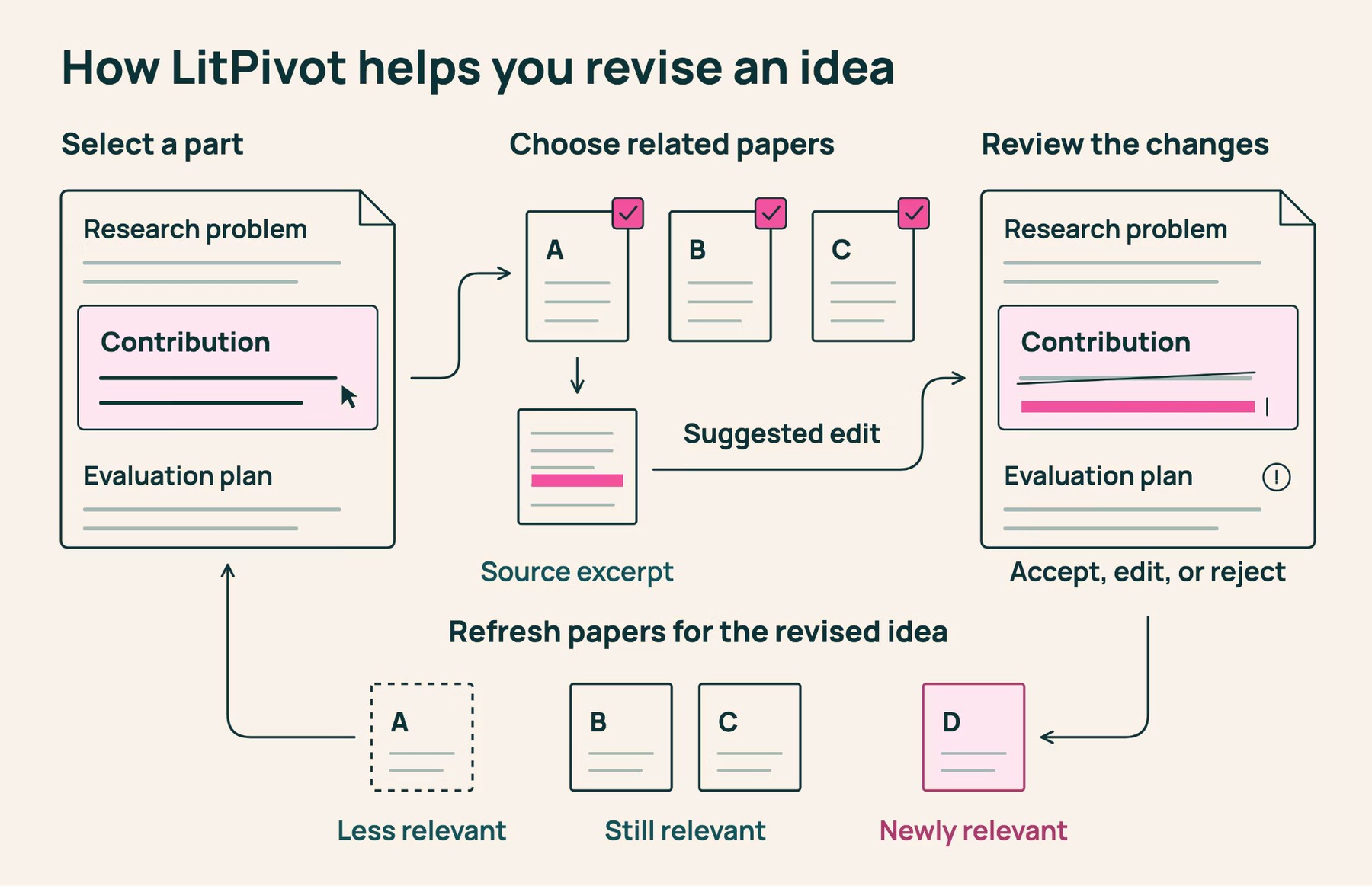
A researcher starts with a short proposal and turns on highlighting that divides it into three aspects: the problem, the intended contribution and the evaluation plan. Selecting one aspect brings up related papers, grouped around that part of the proposal. Researchers choose sources, request an assessment and compare a suggested revision with excerpts supporting the critique. LitPivot then reranks the literature for the revised aspect.
The system also flags other proposal sections that may need attention when one part changes. Researchers can accept, edit or reject suggestions, request more papers, or rerank the literature as the project develops. They retain control of both the proposal and the sources used to assess it.
Source: huggingface.co
Example adapted from material provided by a study participant.
What the studies establish
In a lab study, 17 researchers developed one assigned idea with LitPivot and another with a baseline tool: a text editor plus an AI tool that could answer questions about selected papers. Both conditions used the same publication set. Two domain experts, unaware of which tool had been used, rated the proposals on how well they used relevant literature to support the idea. LitPivot proposals scored higher.
Participants also said they understood the project literature better and had improved their ideas’ novelty and usefulness. Experts separately judged the ideas themselves and found those developed with LitPivot significantly better grounded in relevant research.
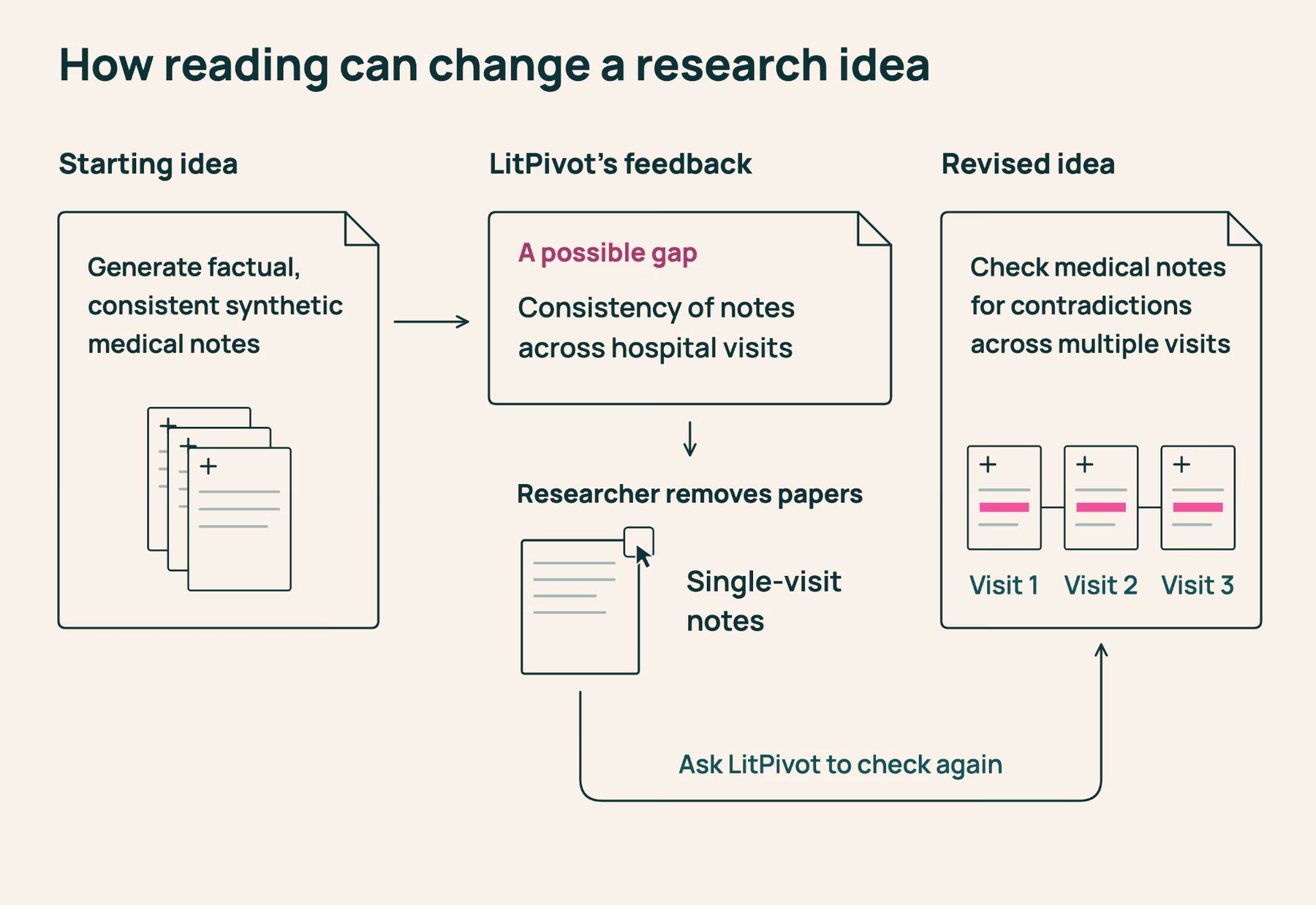
One participant began with an idea for generating consistent, factually accurate synthetic medical records. LitPivot pointed to consistency across multiple hospital visits as a possible gap in the selected literature. After reviewing abstracts and removing papers about single-visit records, the participant narrowed the proposal to detecting contradictions between records from multiple visits. Here, changing the proposal changed which literature mattered, and choosing literature helped change the proposal.
In a follow-up study, five scientists used LitPivot in 30-minute sessions on their own ongoing projects. Two checked new ideas against the literature; three refined more mature ones. One participant said that parallel concepts from different fields helped them rethink their contribution.
Source: huggingface.co
A useful workflow, with an open question
LitPivot sits alongside tools for scientific writing such as Prism and AI assistants with agentic capabilities such as Claude Code. Its more specific proposition is to make literature selection part of the revision loop, rather than treating a search as something that happens once before drafting.
That connects with other work at Ai2. Asta supports theory generation from published findings through Theorizer, synthesis, and hypothesis generation and testing on data through AutoDiscovery. HARPA generates promising hypotheses in light of new research trends. Scideator combines elements of prior work into new ideas and assesses their novelty; IdeaSynth supports iterative refinement using feedback and scientific literature.
A recent study, Old Ideas, Novel Problems, examines a limitation of automated novelty assessment: small prompt changes can alter an AI evaluator’s verdict on the same idea. LitPivot takes a different route by letting researchers change the papers used to assess a proposal as it evolves, and by attaching supporting excerpts to the resulting critique.
I think that makes LitPivot’s most interesting claim less about generating better ideas than about making the evidence behind revisions inspectable. The reported studies support that narrower case: experts rated proposals as better grounded, and participants reported better understanding of the literature. They do not, on their own, show that the system produces more successful research. The unresolved issue is whether this feedback loop improves the eventual work, not just the proposal’s relationship to the papers selected to judge it.
Daily AI news
Every day we pick what actually matters in AI and explain it plainly — no hype, no filler. Subscribe if you want to follow where the industry is going.
Only what matters — every day
Follow on X