
New York is setting local limits
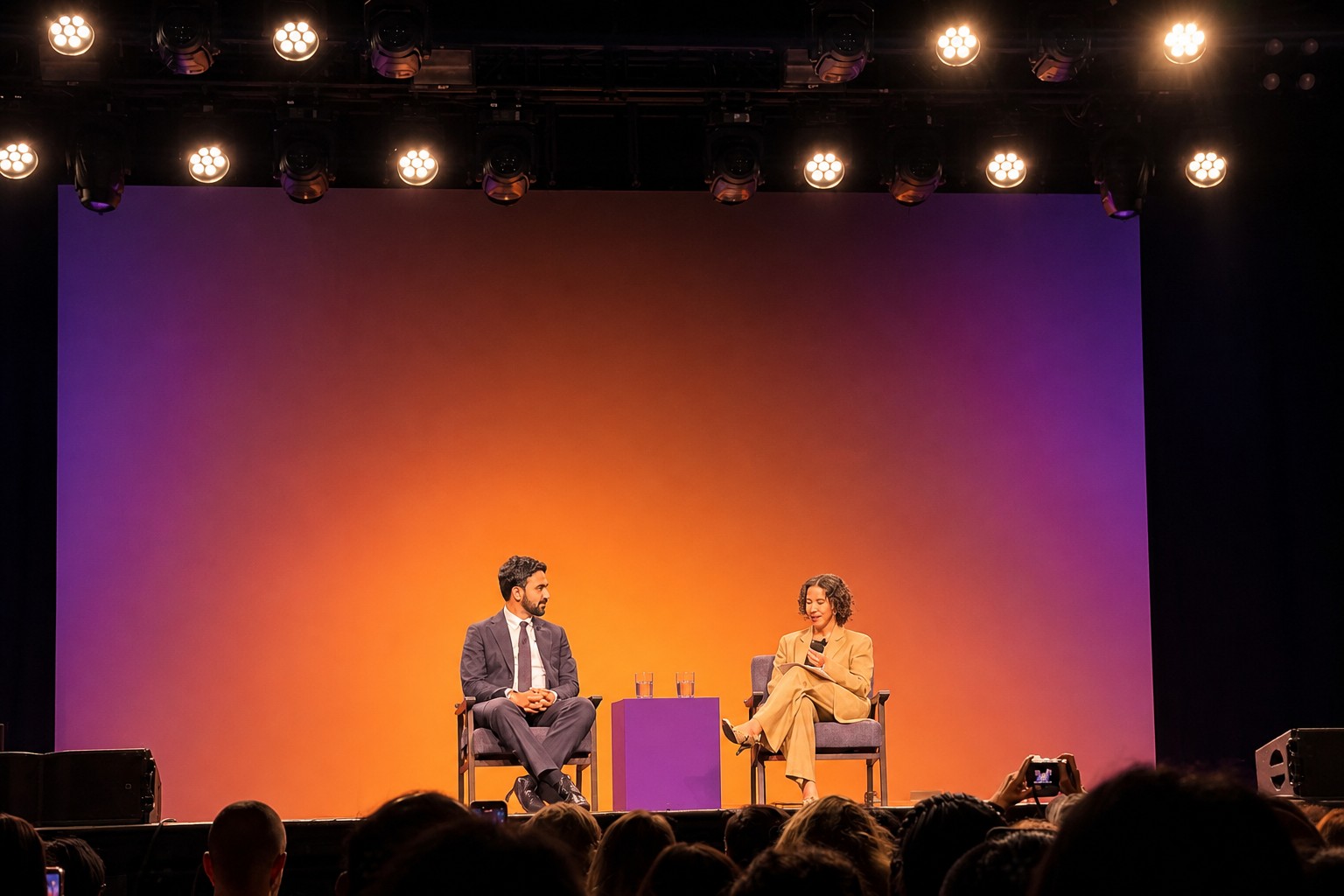
At Webster Hall, Mamdani spoke with Ilana Glazer about AI’s effects on society. He urged residents not to accept the prospect of the technology taking jobs, shaping children’s thinking or stripping people of dignity as unavoidable. People, he said, need to reclaim control.
The event was The People’s AI Assembly, organized by the AI Now Institute, a think tank focused on AI’s social effects. Mamdani argued that rapid adoption is not predetermined and called on public officials to make developers answer for their choices.
The city has already taken two steps that challenge the idea that schools and public life must absorb AI wherever it appears:
At Monday’s event, Mamdani said neither development had to happen. He argued that people are being pressured to feel they have no choice about AI’s spread.
The accountability question
Mamdani called it reckless to deploy technology without seriously examining its limits. He pointed to the US military strike on a school in Iran in February, which killed more than 150 people, including at least 123 children. Participants in an internal Pentagon investigation told Bloomberg that excessive reliance on AI in target selection may have been one cause of the attack.
He criticized claims that AI is infallible or beyond scrutiny, and the idea that only its developers can regulate it. Mamdani said Facebook was making similar arguments in 2008, and argued that such claims let companies evade accountability while protecting a potential valuation ahead of going public.
Anthropic is expected to enter public markets this year; OpenAI has said it plans an initial public offering in 2027.
Mamdani described federal AI policy as a complete abdication of regulation. He said national debate often frames AI as an arms race with China, pushing human concerns aside in favor of competition between countries.
Earlier this month, President Donald Trump announced a working group on superintelligence. It is focused largely on letting major companies regulate themselves rather than imposing new federal limits. That approach comes amid concerns about AI’s effects across human life: former employees of Anthropic, Google DeepMind and OpenAI have warned that AI development could lead to human extinction.
I think the sharper test of Mamdani’s position is not whether cities can reject the idea of inevitable adoption, but whether local rules can make developers answer for consequences that cross city lines. The federal retreat he describes leaves that question unresolved—and makes the limits of city-level action part of the argument.
Daily AI news
Every day we pick what actually matters in AI and explain it plainly — no hype, no filler. Subscribe if you want to follow where the industry is going.
Only what matters — every day
Follow on X