
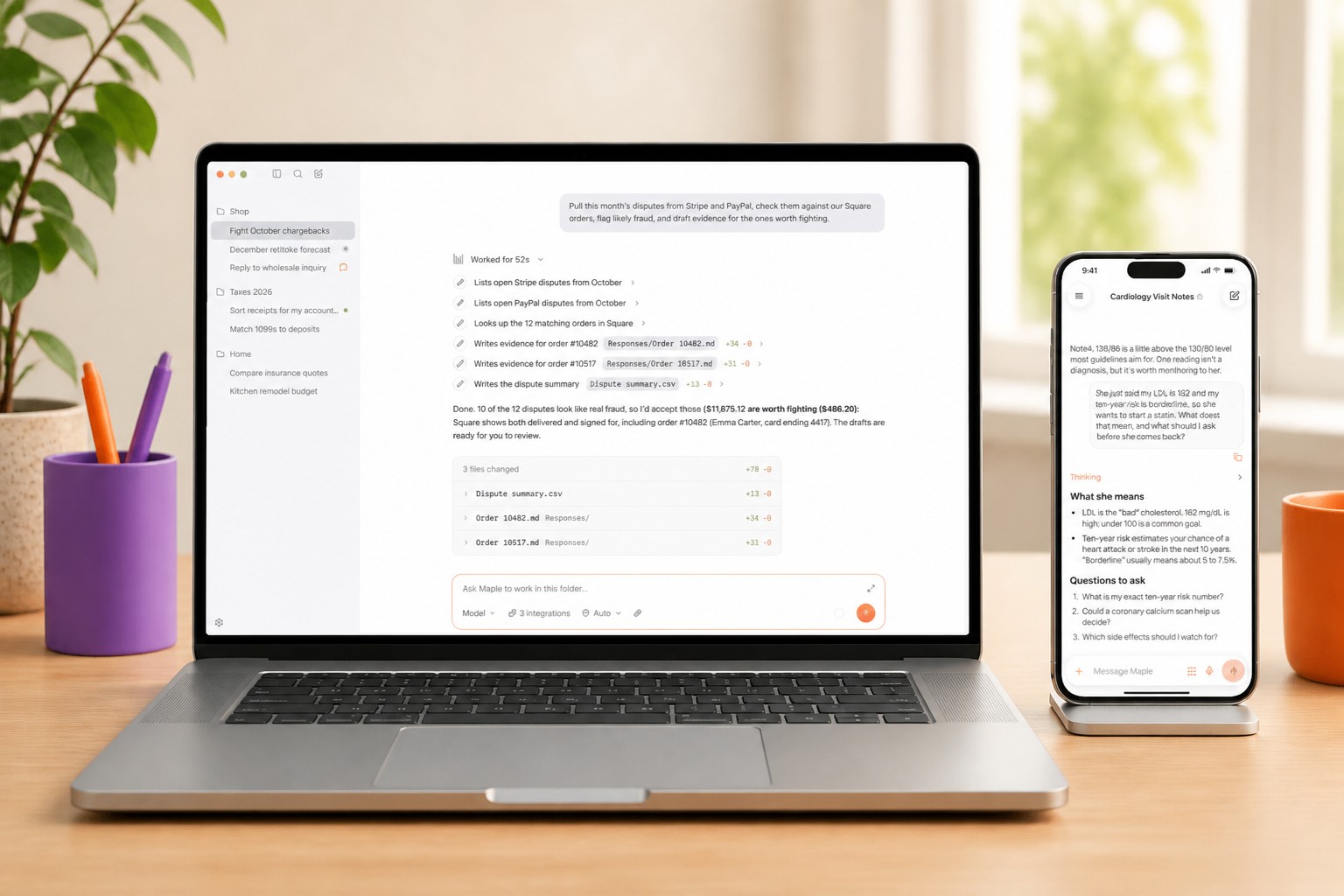
How Maple processes data
Maple is building its business around the idea that users should not have to choose between the convenience of AI services and privacy. Co-founder and CEO Mark Suman says the company aims to make its data protections verifiable: users can inspect the open-source code and check what code is running on the servers. The approach is intended to spare them from simply having to trust Maple’s promises.
Unlike services whose policies allow them to collect personal information and sometimes train on it, Maple is trying to operate in a way that keeps the company itself from accessing raw data. The service offers a familiar chat interface where users ask questions and get answers. Models run in a trusted execution environment on a server with hardware encryption at a data center in the United States. For European customers, Maple uses a partner with servers in Europe.
Data is first encrypted on the user’s device with a password known only to them. It is decrypted inside the secure environment for AI processing, then encrypted again with the same password and sent back. Suman says Maple cannot access the raw data either while it is being transmitted or while it is stored. If the system is breached or government agencies demand the data, the company can provide only an encrypted file.
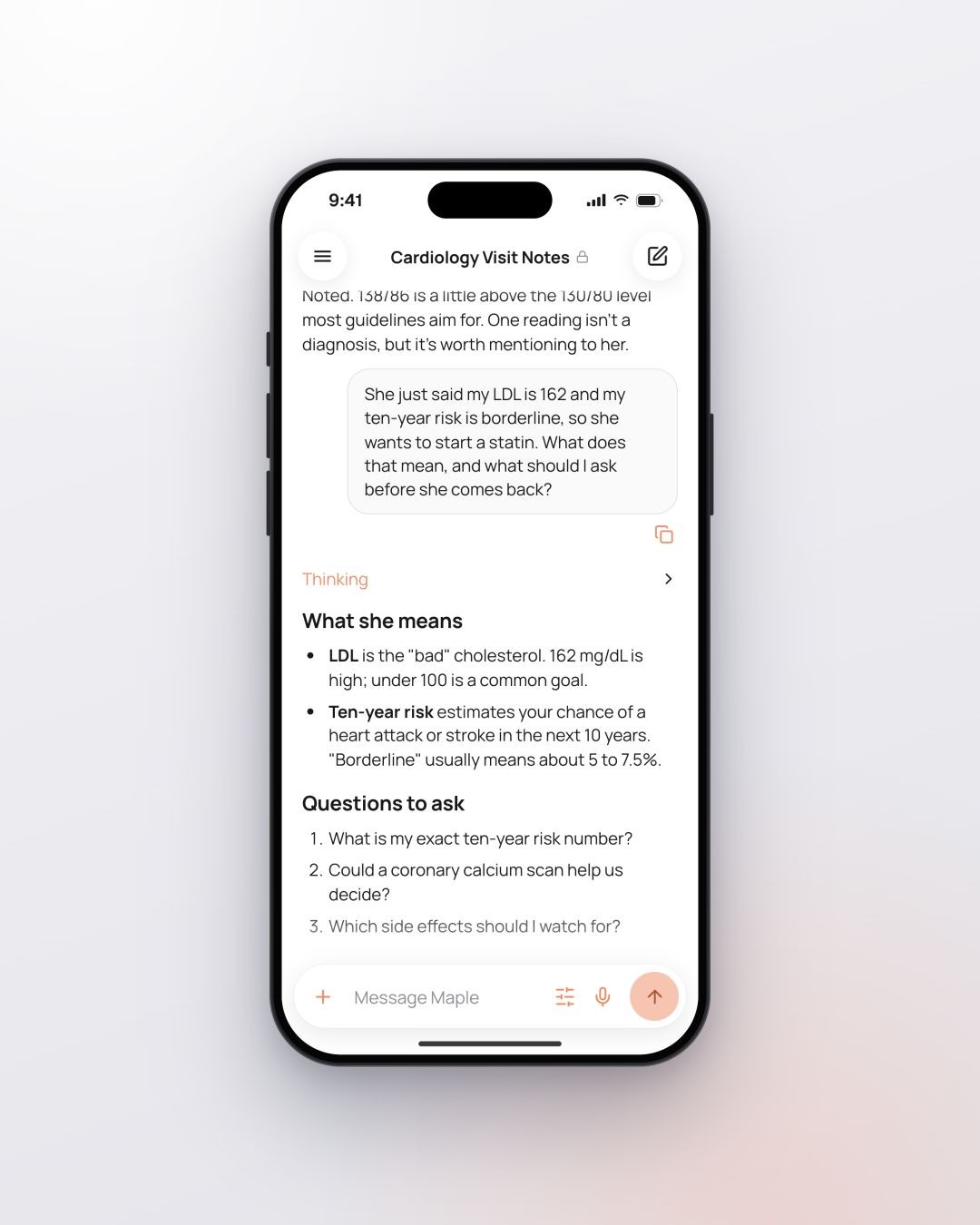
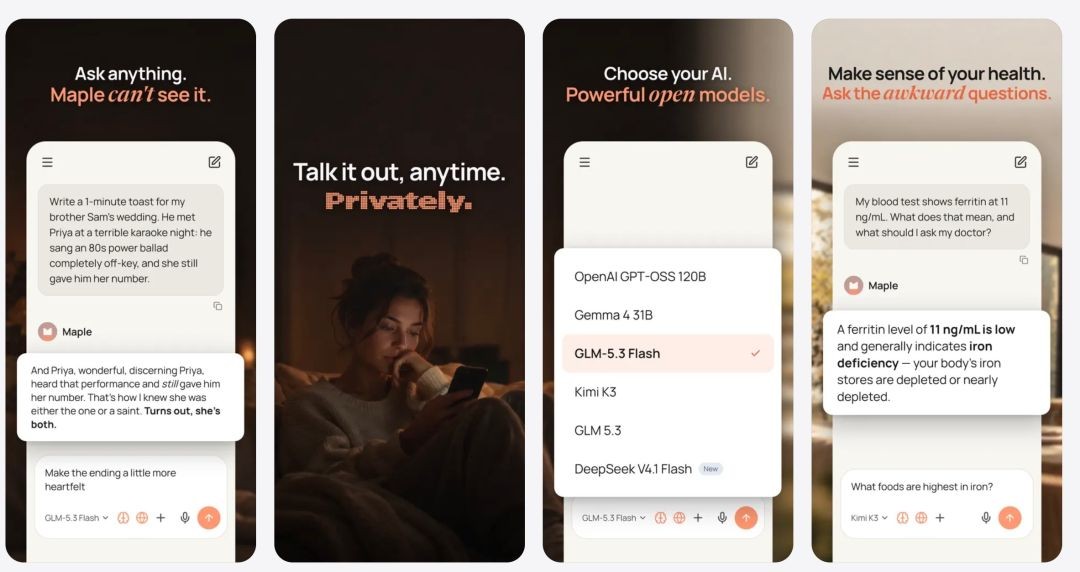
Models available in the app include versions of DeepSeek, Kimi, GLM, Inkling from Thinking Machines, Gemma from Google, and GPT OSS from OpenAI. Users can choose models themselves or switch between a faster option and a more powerful one.
Apps and plans
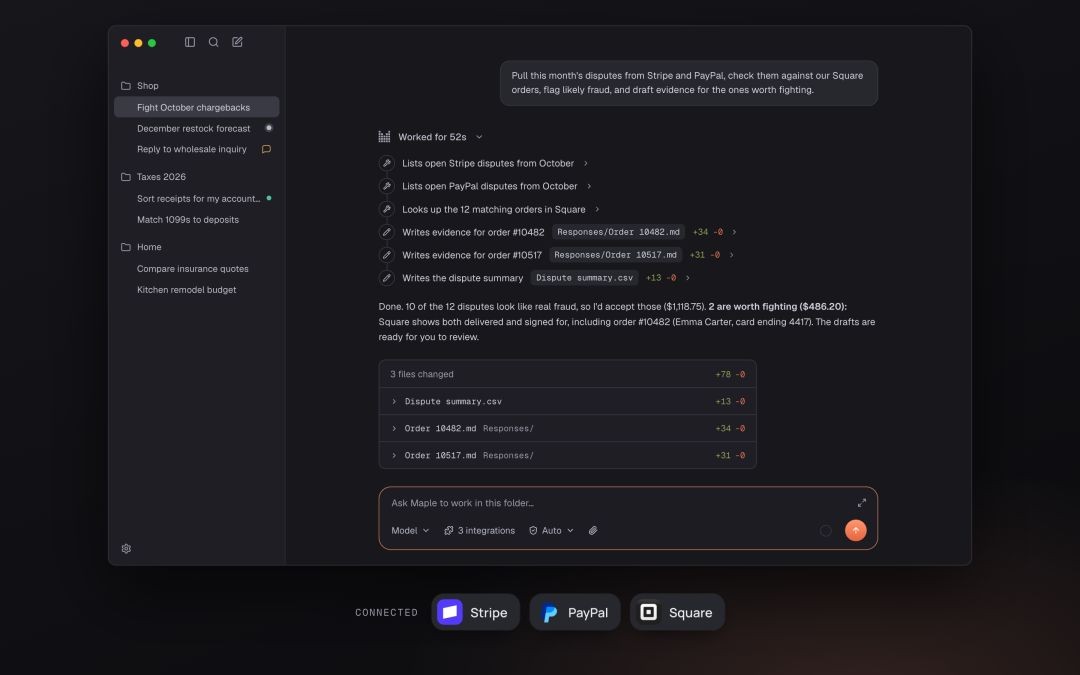
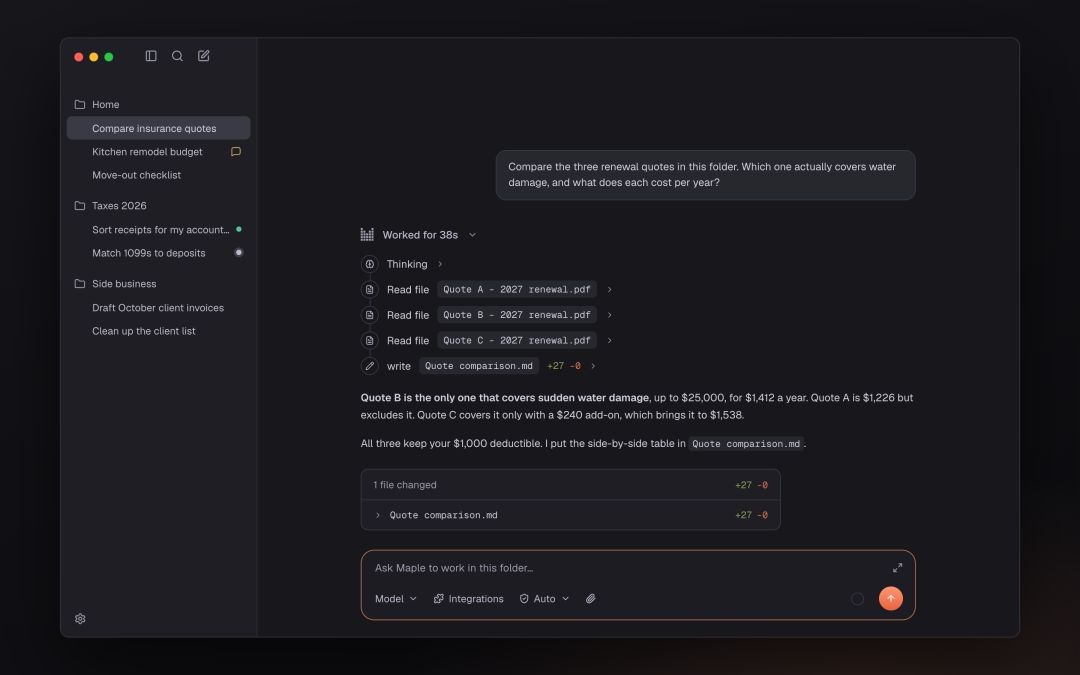
The newly released Maple Work desktop app adds AI agent capabilities to the chat interface: it can control a computer, work with files and applications, and use a browser. The app has an integration store where users can connect services such as Gmail and a calendar. Maple Work can also run a subagent inside another AI app, such as Claude or Codex, if it supports the Agent Client Protocol (ACP). This lets users assign a task to the app of their choice while sharing only the information needed to complete it.
After raising $5.3 million, Maple plans to build a cloud-based AI agent that can keep working without the user’s computer being on. The product is intended to help the company compete with consumer AI services such as Meta Muse, Instinct, and other agents that operate through chat.
Epic Ventures led the oversubscribed seed round, with participation from Draper Associates, Planetary VC, and Epoch VC. Before that, Maple had raised less than $1 million in an angel round. With investor interest growing, the company plans to raise a Series A in the first half of 2027.
Anthony Ronning, Maple’s current CTO, founded the startup in 2023. He previously worked in defense technology, security, and networking. The company initially focused on privacy-oriented fintech. Mark Suman joined Ronning in August 2024, when the idea for Maple AI took shape. The app became publicly available the following January.
Before joining Maple, Suman spent six years at Apple working on AI and machine learning, with a focus on computer vision. At Apple, he worked on protecting users’ identities when applying these technologies. Ronning became the project’s co-founder and CTO.
Maple plans to begin pilot projects for corporate customers next year. The company will offer its own approach to data storage without retaining data: Maple keeps most customer information, and encrypts anything it needs to retain. The startup is currently undergoing a SOC 2 compliance review and a security audit.
Maple has not disclosed how many customers have signed up, but says it grew 60-fold over the past three months. The company earns revenue from subscriptions priced in line with other AI model providers: the Pro plan costs $20 per month, while Max and Max Plus cost $100 and $200, respectively. The Austin- and San Francisco-based startup has four employees and is actively hiring.
Dataist's take: Maple is trying to make privacy a property of the service’s architecture, keeping data inaccessible to the company even during processing and storage. The startup is still developing its consumer products and preparing for corporate pilots, but it has not disclosed its customer count, and its reported growth does not show the size of its audience.
Daily AI news
Every day we pick what actually matters in AI and explain it plainly — no hype, no filler. Subscribe if you want to follow where the industry is going.
Only what matters — every day
Follow on X