

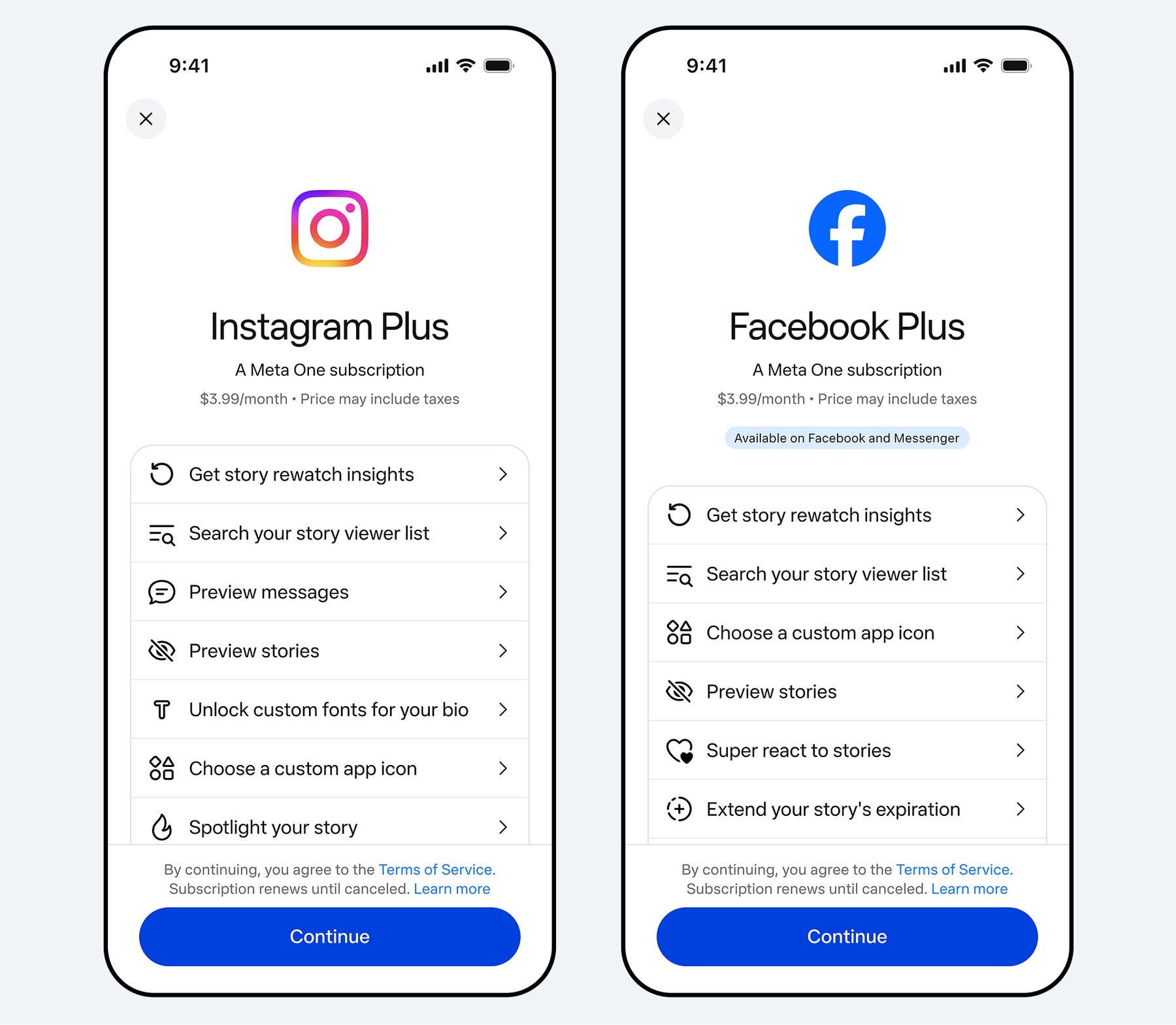
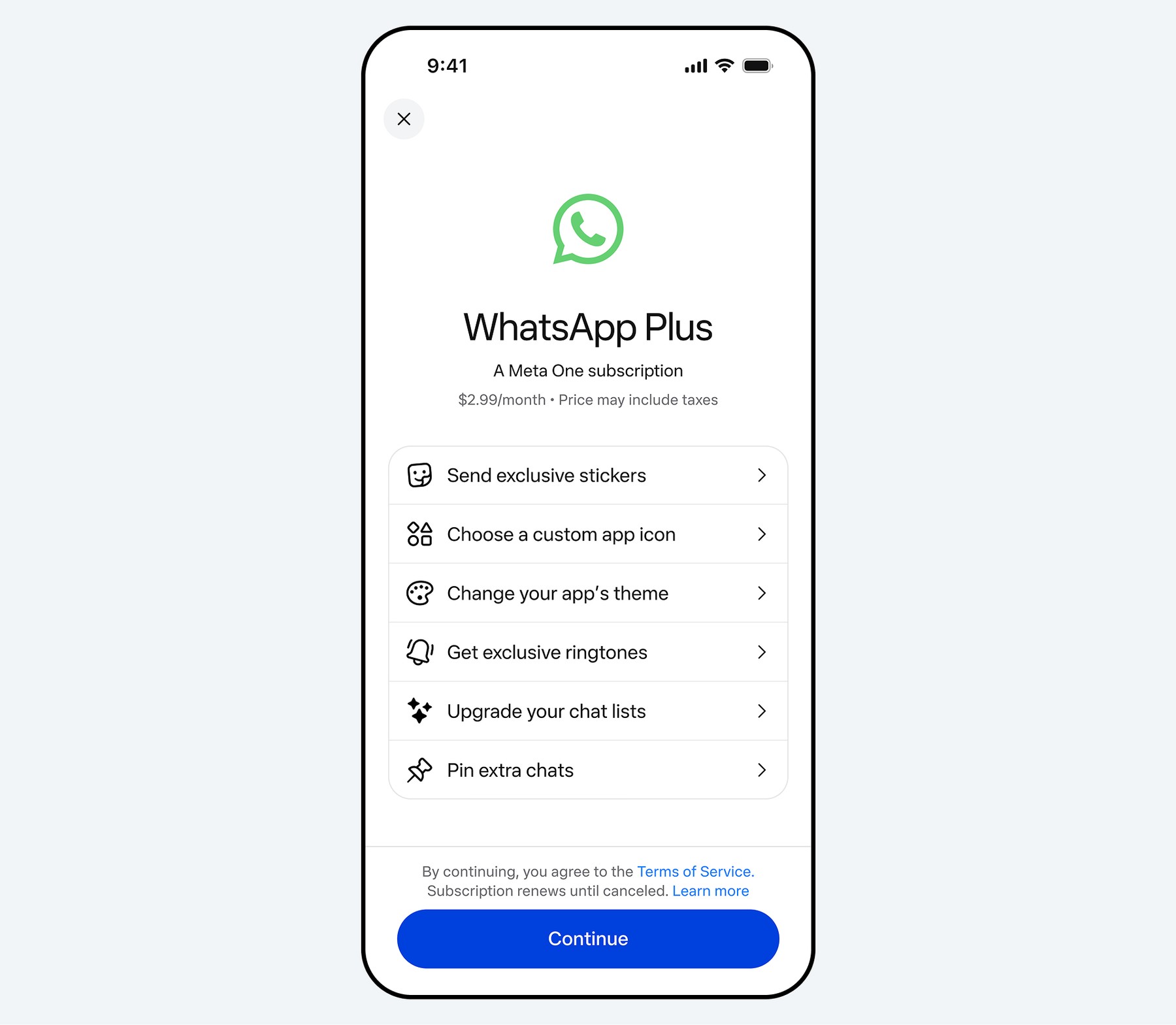
Meta has added six paid tiers to its subscription business, ranging from $7.99 to $499 a month and built around its Muse AI models under a bundle called Meta One. Two are aimed at heavy AI users, four at businesses and creators. The company already sells Instagram Plus and Facebook Plus at $3.99 a month and WhatsApp Plus at $2.99, all introduced in March, and those are now producing real money: Appfigures estimates that in the week of September 9, Instagram's average worldwide daily revenue reached $1.2 million and Facebook's $528,000, up 475% and 143% across the week.
Those growth rates are a week old and start from close to nothing, so they describe a launch curve rather than a trend. The absolute numbers are the useful part. Together the two apps are running at roughly $1.7 million a day, which works out to a little over $600 million a year if the rate holds.
Source: techcrunch.com
The reason Meta is doing this is on its balance sheet. The company put $14.3 billion into Scale AI in 2025 and installed the startup's chief executive, Alexandr Wang, at the head of its AI organization. Meta One is how the Muse models are meant to start paying for themselves.
For consumers there are two plans: Core at $7.99 a month and Premium at $19.99. Both include the existing Facebook Plus, Instagram Plus and WhatsApp Plus features. The difference between them is the volume of AI usage available, with Premium offering more, which is what the price reflects. Subscribers get Muse Image and Muse Video for generating images and video, the AI-based Restyle tool for editing Instagram stories, and more frequent use of voice effects and creative tools.
Source: techcrunch.com
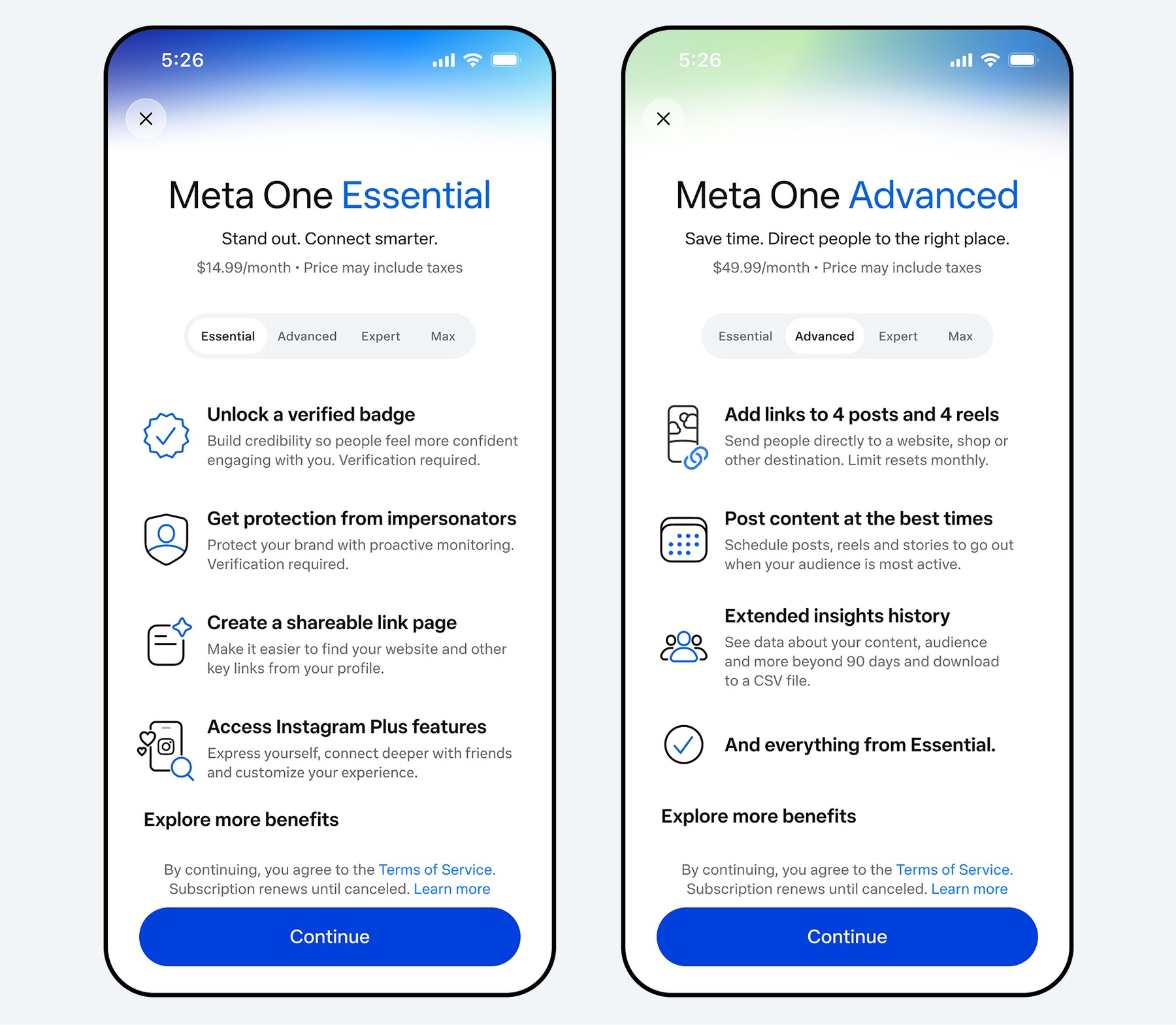
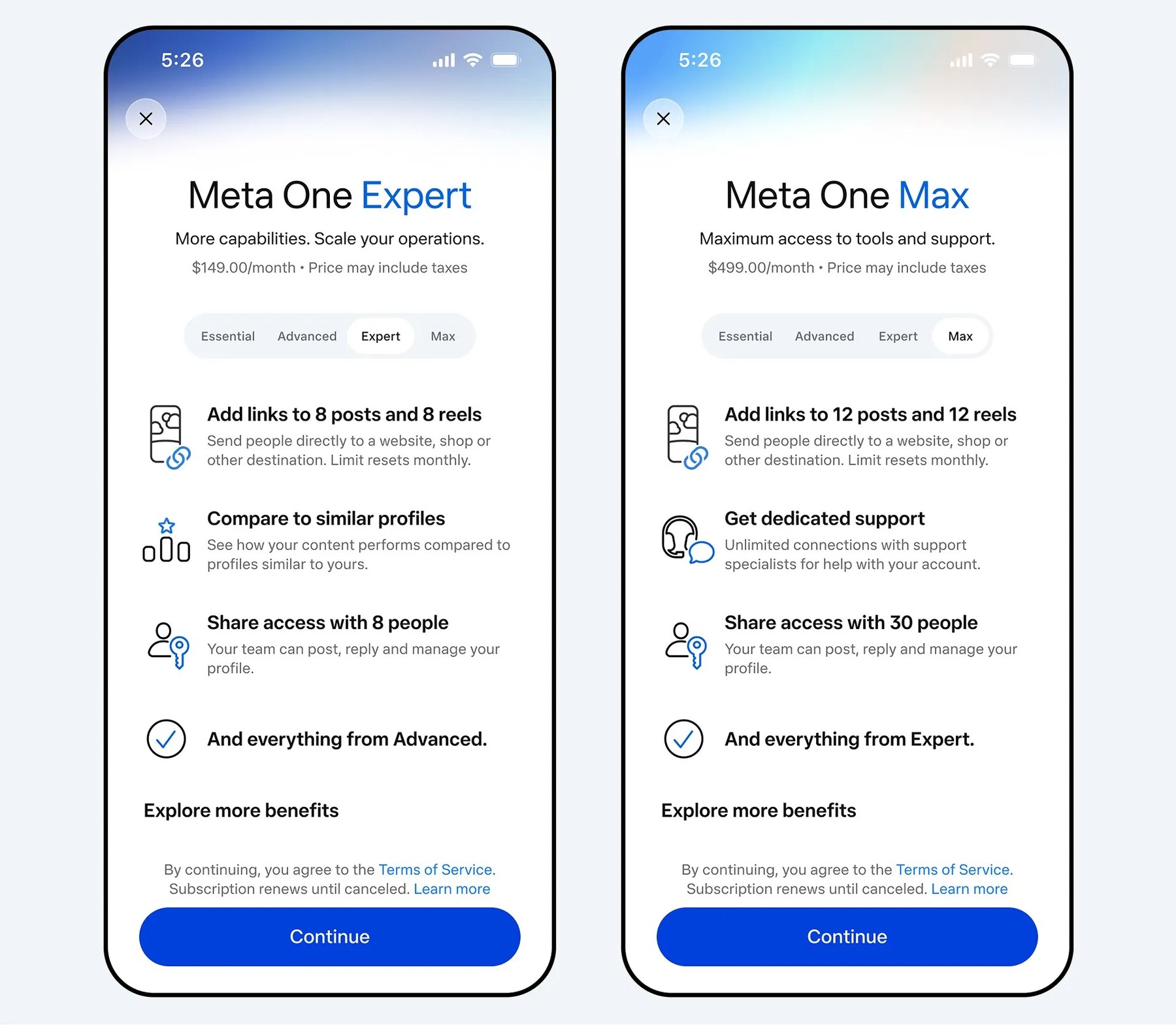
The business and creator side has four plans: Essential from $14.99 a month, Advanced from $49.99, Expert from $149 and Max from $499. Meta says feature sets, prices and availability can vary by region, app and account.
Essential covers tools for managing a creator's or business's social presence, expanded access to Meta Business Agent for answering customers, a verified badge and a channel in the WhatsApp Business App, and impersonation protection. Advanced adds story scheduling up to 30 days ahead, links in regular posts and reels, exportable analytics, more detailed audience data, team member access to the account, more linked devices, more credits for business messaging and more Meta Business Agent replies. Both tiers also get an extended profile showing website, location and reviews, a prominent Follow button on reels, and follow invitations sent automatically to people who have interacted with the content.
Source: techcrunch.com
Meta says it will add further features and agent skills later for end-to-end marketing, business operations, content creation and optimization, and will soon fold an Edits Plus tier for its Edits content-creation app into Meta One, bringing more cloud storage for syncing projects across devices and broader access to the Edits AI assistant. Expert and Max are described only as offering maximum feature access and the largest Meta Business Agent capacity.
Source: techcrunch.com
Appfigures also found that after subscriptions began catching on from September 9, US users accounted for 32% of Instagram's revenue and 39% of Facebook's, around 10% above each app's usual US share. Analysts are pricing in considerably more to come: BNP Paribas expects subscriptions to bring Meta $13.5 billion in additional revenue by 2028, and Truist forecasts that the figure could reach $20 billion by 2030.
Set those forecasts against the current run rate and the gap is the whole story. BNP Paribas's $13.5 billion is roughly twenty times what the Plus tiers are generating today. The new tiers are not an increment on that base; they are supposed to become the base. Meta is betting that a meaningful number of people will pay $19.99 a month for image and video generation inside Instagram, and that small businesses will pay $499 a month for an agent that answers their customers.
The pricing says what Meta thinks it is selling. Core and Premium are separated by how much AI you get to use, which makes this metered inference wearing a subscription's clothes — from the company whose entire history is giving the product away and selling the audience instead. And the top of the business ladder is not priced against a social app. At $499 a month, it is priced against marketing software, which is a different competitive set with different buyers and much less patience.
Nothing in the lineup Meta described removes advertising. That leaves nine paid tiers across three apps, and a paying Instagram subscriber still sees the same feed as everyone else, which means users are being asked to help fund the AI build-out without getting the thing subscribers normally buy. It also puts the business tiers in an awkward position next to the ad system: an Advanced subscriber receiving automatic follow invitations and a prominent Follow button on reels is buying reach at a flat monthly price, and reach is what Meta's auction already sells.
The real exposure is not that nine tiers will confuse people, though they will. It is that Meta has handed its most valuable users — the creators and businesses whose content fills the feeds — a monthly invoice and a standing reason to compare what they pay against what they get. Advertisers have always done that arithmetic. Creators have not had to, and now they will.