
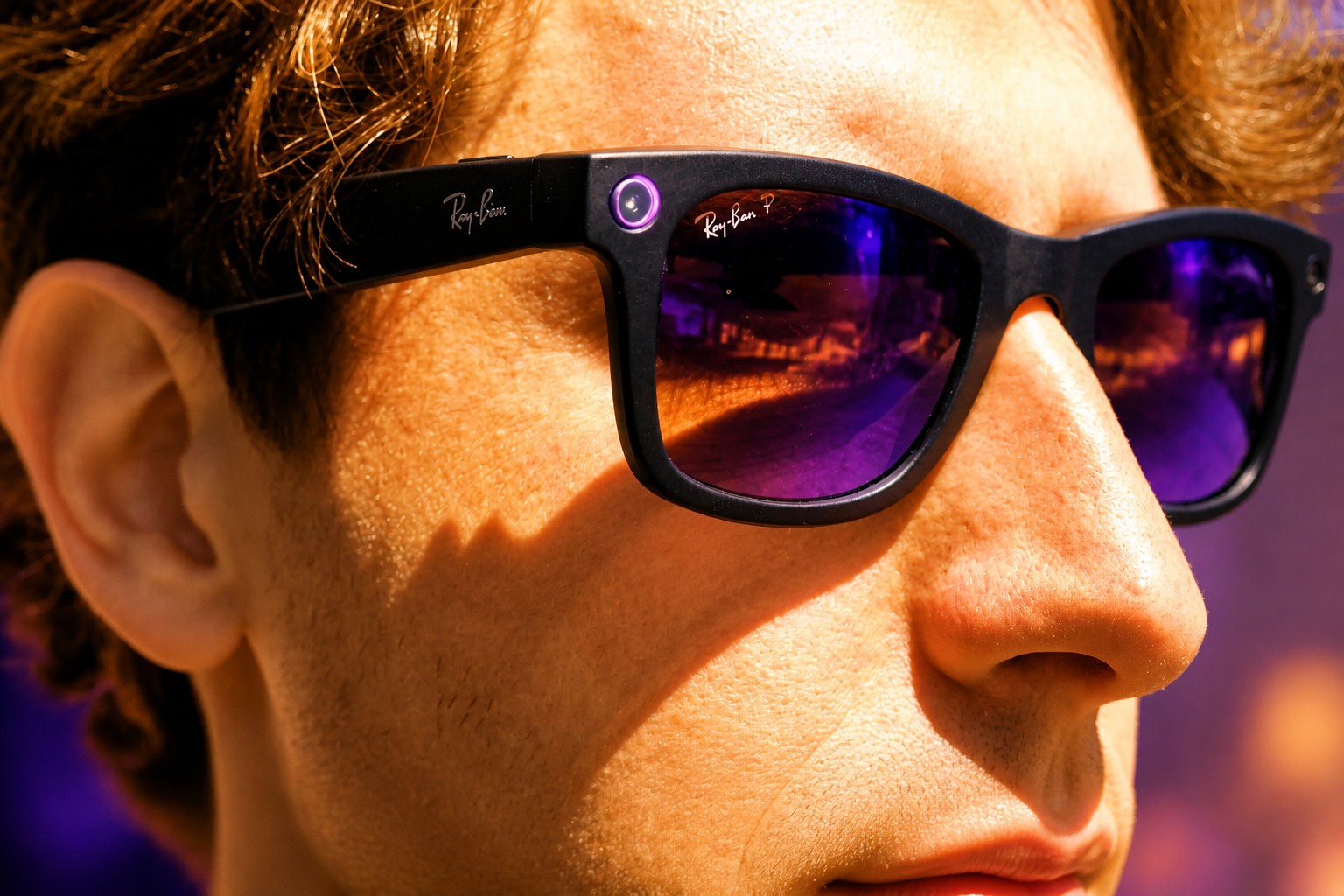
A prank video shot on Meta's AI glasses has passed 60 million views, and the technology that made it possible is not the glasses. Before approaching a stranger in a Walmart, the creator, a TikTok prankster who goes by Levese, photographed the man's face on his phone and ran the image through a facial-recognition site. The service returned the man's social accounts and identified him as an aspiring writer. Only then did Levese start recording. The encounter that millions watched as a warm coincidence was assembled from a face search, and it worked because it looked kind.
Meta's smart glasses have been out a few months and already carry a nickname: the pervert glasses, earned because they can record anyone in a public place without the person noticing. They have served voyeurs and compulsive content creators around the world, producing cases of stalking, harassment and privacy violation. The Levese video is the same capability in a form viewers applaud.
Ragebait is content engineered to anger people into clicking. Joybait runs the same machinery toward the opposite feeling.
The clip was first spotted by journalist James Vincent. The writer, Travis Schick, was shopping with his partner. After the face search told Levese who he was, Levese walked up, started the glasses recording, and while Schick was paying asked whether he was Travis and whether he had written the book The Readhead. Levese said he knew the novel and loved it, calling it very good. Schick confirmed it was his and tried not to smile.
The on-screen caption read:
Let's Make His Book #1 . . . . | #author #caught #digitalfootprint #fyp |
It is a call to push the author's book to number one, hashtagged for the author, the chance encounter and the digital footprint.
The warmth rests on a premise that was manufactured. Without the recognition service, Levese would not have known who Travis Schick was. Schick was an input. The output was a clip for Levese's 225,000 TikTok followers.
As content, it performed. More than 60 million views. Thirty thousand comments on Levese's TikTok page alone. Rapid recycling by content farms across platforms.
Vincent's reading was that the video shows a personalized surveillance culture disguised as kind, pleasant material.
Many viewers accepted the original framing and defended the privacy breach on the grounds that exposure helps Schick sell books. Part of that held up. Hundreds of supportive comments appeared under his novel The Redhead on Quotev, from people who would probably never have found it. His TikTok account went from roughly 150 followers to more than 12,700 in a few days.
That outcome is exactly what makes this format harder to argue against than the voyeurism it grew out of, and it is why the format will spread faster. A creepy clip has a visible victim. This one has a beneficiary. The consent problem is unchanged, since Schick had no idea he had been identified before he was approached, but the happy ending supplies a retroactive justification any viewer can reach for. Kindness is the alibi, not the content.
Vincent's counterweight is the aggregate. One video can have good consequences precisely because a short clip like this is still unusual. The pattern produces a society that monetizes kindness, trades on the trust of strangers and dismantles the right to privacy in public places.
It is already a pattern. Levese has dozens of clips built on the same template, each with millions of views.
Notably absent from the video is the name of the service that did the identifying. That is the part of the pipeline that matters and the part that never appears on screen. The glasses are a camera; the face search is what converts a stranger into a subject with a biography, a publication history and a follower count. Levese understands this. His first clip of the kind follows a man buying bananas under a pinned caption reading day 1: stealing people's digital footprint, and he captioned the post "This app is dangrous [sic]". The most honest line in the genre is also its hook.
Schick came out of it with 12,700 followers and hundreds of readers wishing him well, which is the strongest argument the format has and the reason it will keep running. The next person photographed in a checkout line does not get to weigh that trade. The search has already happened by the time the camera turns on.