
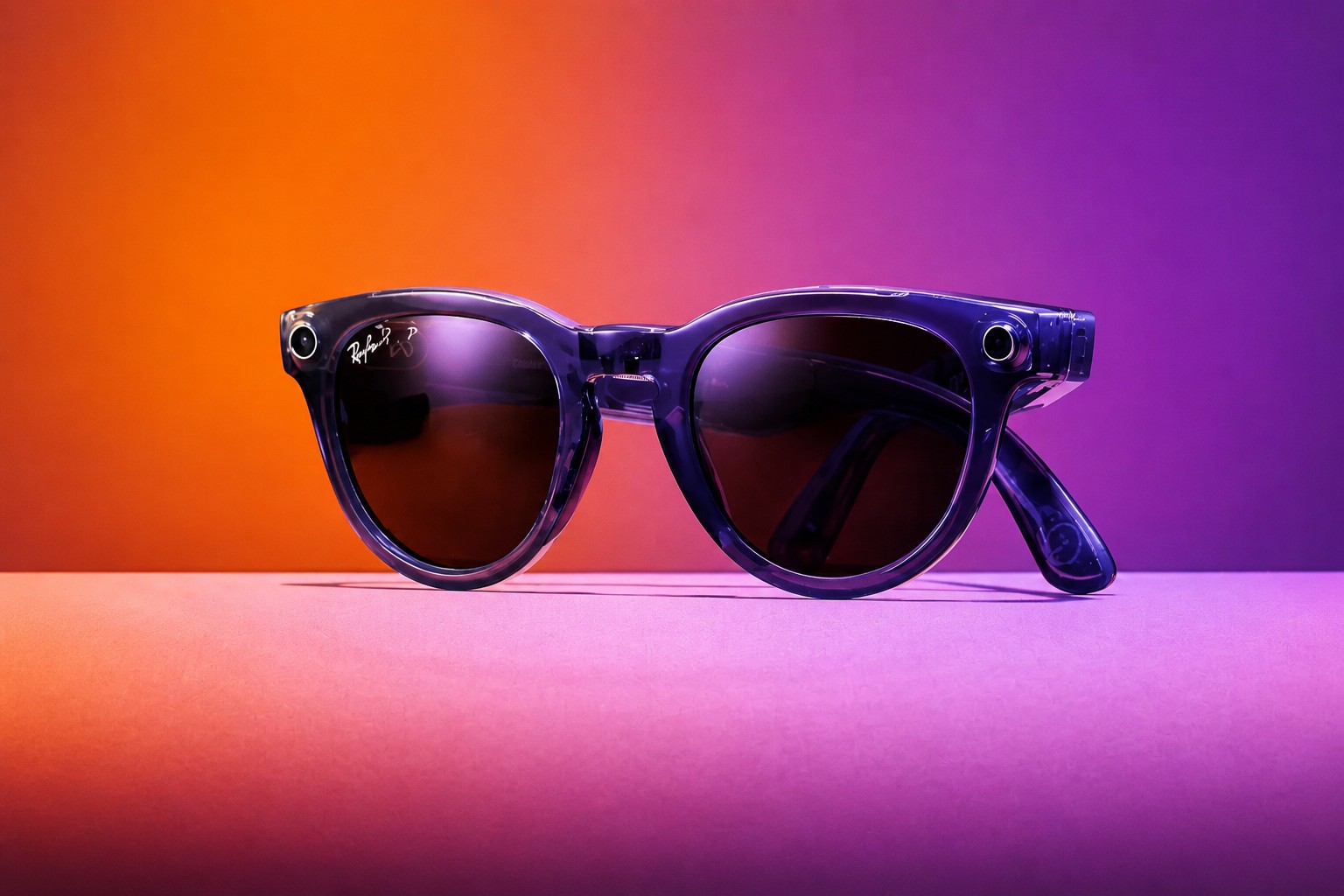
Meta is preparing a version of its smart glasses with no camera, according to The Information, for release later this year. The project is called Luna and it may surface at Meta Connect next week. It arrives after a backlash severe enough that wearing the camera model in public has become something many owners now worry about — a problem for a company whose accessory was, until recently, disappearing from shelves. Mark Zuckerberg's answer to the complaint about the lens is to remove the lens.
The removal is not the only measure. Meta is working on a kill switch and, reportedly, can already shut off the glasses of certain male influencers remotely, turning the hardware into a paperweight.
What stays in Luna matters more than what goes. The glasses keep six microphones, there so the wearer can talk to Meta's chatbot and to Muse, the AI assistant the company introduced recently. Those microphones will also pick up whatever is happening around the wearer, and the people nearby have no way of knowing that their conversation is being recorded or analysed.
That is the hole in the fix. The objection to camera glasses was never only that they take photographs; it was that a device on someone's face is collecting from people who did not agree to be collected from. A camera is the visible half of that. Six always-available microphones are the invisible half, and Luna keeps them.
The timing does not help. The news landed days after two families filed a class action against Meta alleging that the company extracted biometric data from the photographs of Instagram and Facebook users in order to build the facial recognition system for its smart glasses. The complaint is about what Meta did with images it already had, which is precisely the kind of concern a camera-free model does not touch.
Luna is also, whether Meta frames it this way or not, a demand test. It will show what people were actually buying. The company is betting that customers will spend hundreds of dollars purely for the privilege of talking to its imperfect AI assistants, with no first-person photography attached. That is a thin proposition, and if the camera was the reason the originals sold out, Luna will establish it by failing.
The unspoken part is the kill switch. A company that can remotely disable a customer's device because of how that customer used it in public is not describing a privacy feature; it is describing a product whose worst use case it already knows about and cannot design out. Conceding at Connect that a consumer product is enabling strange and frightening behaviour in public spaces is not something Meta is likely to do. Removing the camera concedes it anyway.