
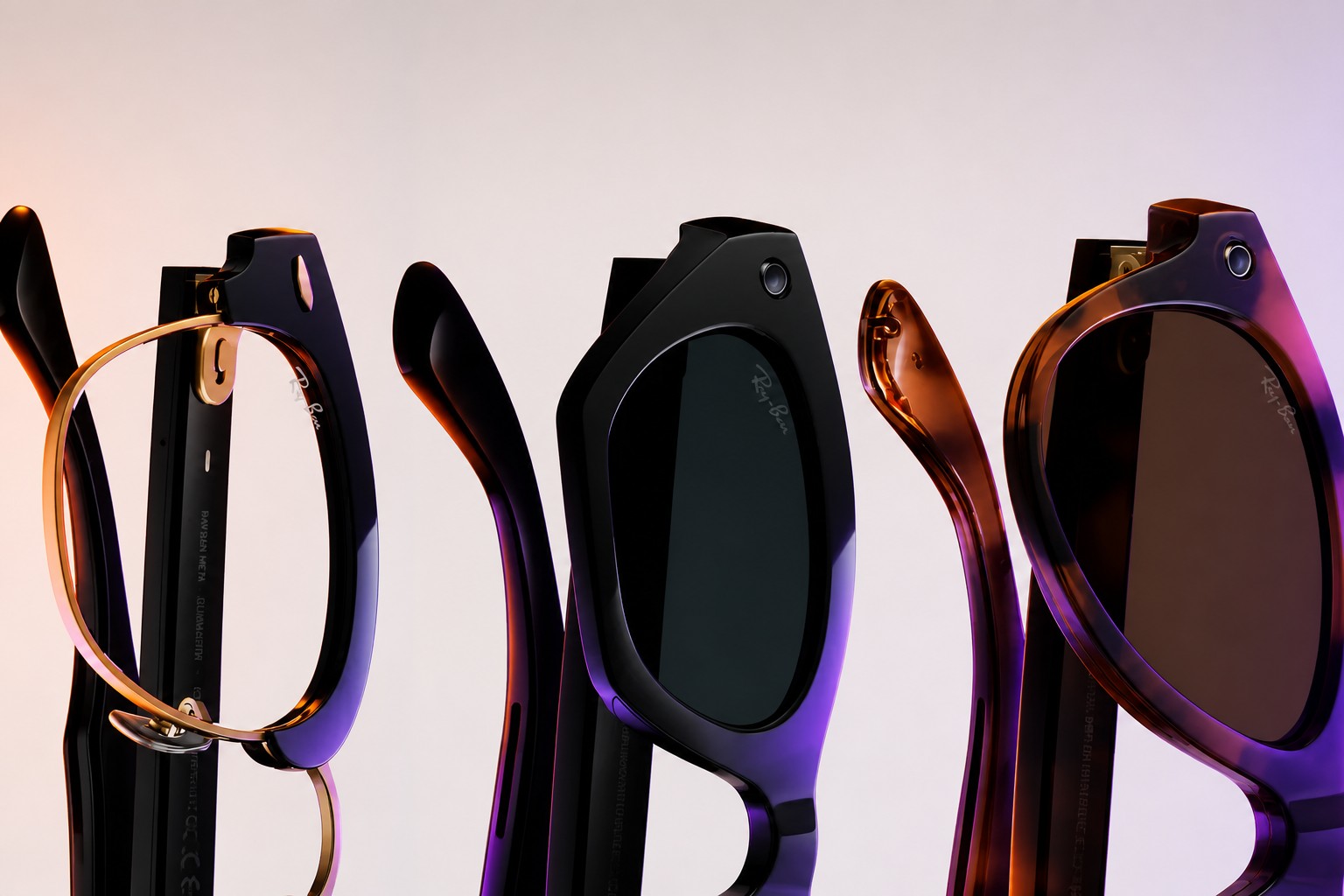
The quieter Ray-Ban bet
Smart glasses are facing a credibility problem. Privacy critics worry about people being recorded without noticing, while the products have already attracted labels such as “pervert glasses” and “spy glasses.” Meta’s smart glasses remain the most popular device in the category, but the criticism puts pressure on the company’s camera-first design.
Ray-Ban Meta Audio AI is a direct response to that pressure. It has no camera, while keeping built-in microphones and speakers for music, calls and Meta’s AI assistant. The glasses use the familiar Ray-Ban Clubmaster or Burbank designs, but are thinner and lighter than the camera-equipped models.
They offer up to 12 hours of battery life and cost £319 (€349/A$529).
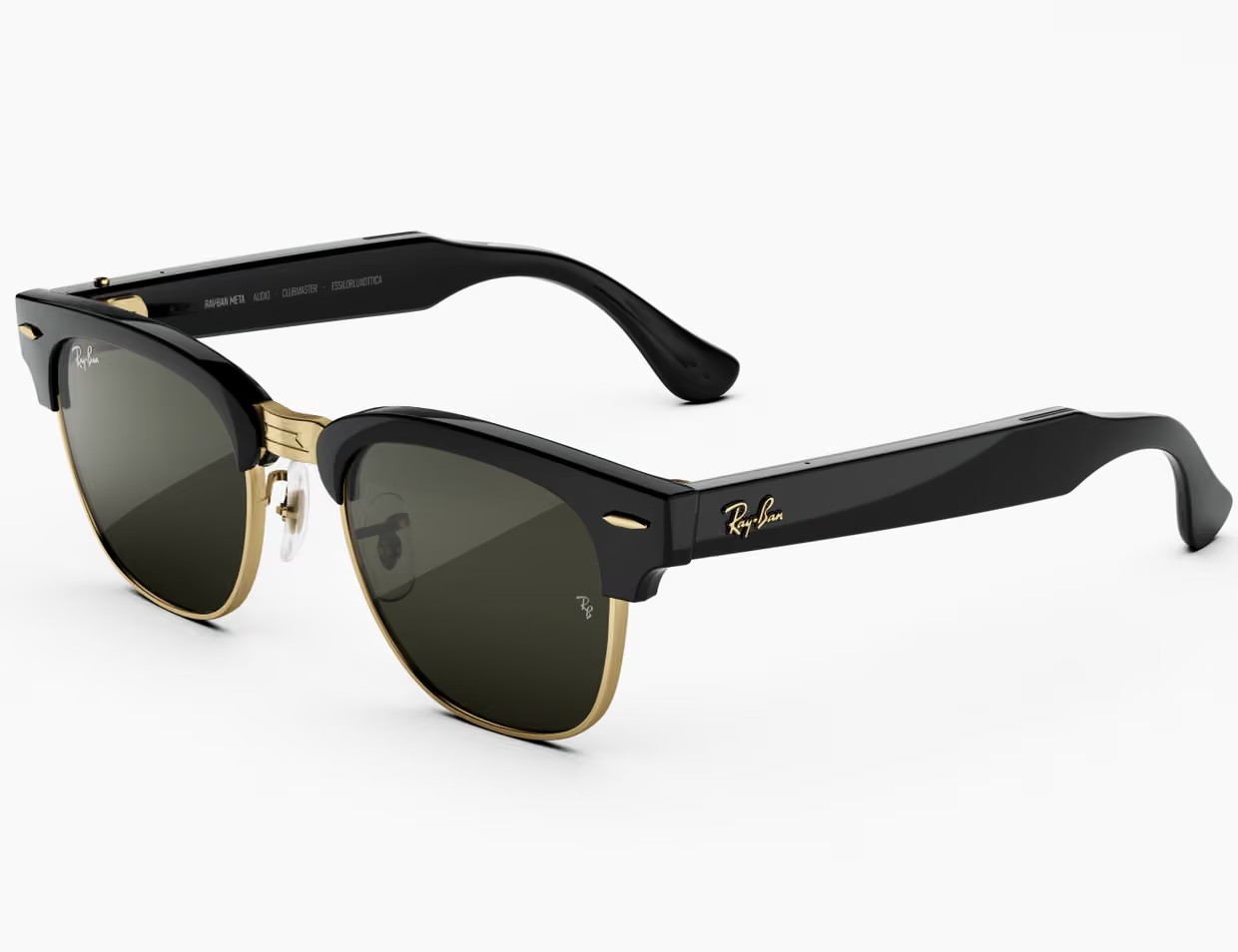
The camera-equipped Ray-Ban Meta Gen 3 lasts up to nine hours, longer than its predecessors. It adds Dolby Atmos support and costs £409 (€449/A$679).
Meta is also releasing two new versions of its own-brand glasses in collaboration with singer and actress Lisa. Every Meta smart-glasses model has an LED indicator that flashes while recording. Meta says it has improved detection of attempts to interfere with that system, including during live streams.

The camera-free model is the clearest strategic signal in the announcement. Meta says it had been developing these glasses for several years, so this is not simply a reaction to the latest criticism. But the hardware removes one of the most obvious reasons for suspicion without requiring users to give up audio, calls or an AI assistant.
The announcement is quieter about the harder privacy question: whether people will trust glasses with microphones and a live connection to an AI system even when there is no camera. Better recording indicators help, but they do not resolve that broader concern.
Display moves beyond the US
A year after its announcement, Meta is expanding sales of Meta Ray-Ban Display outside the United States. The glasses place a virtual screen in the right lens.
They will go on sale in the United Kingdom and Canada on September 23 for £749 (CA$1 149). Sales will begin in France, Germany and Italy on October 13 for €899.
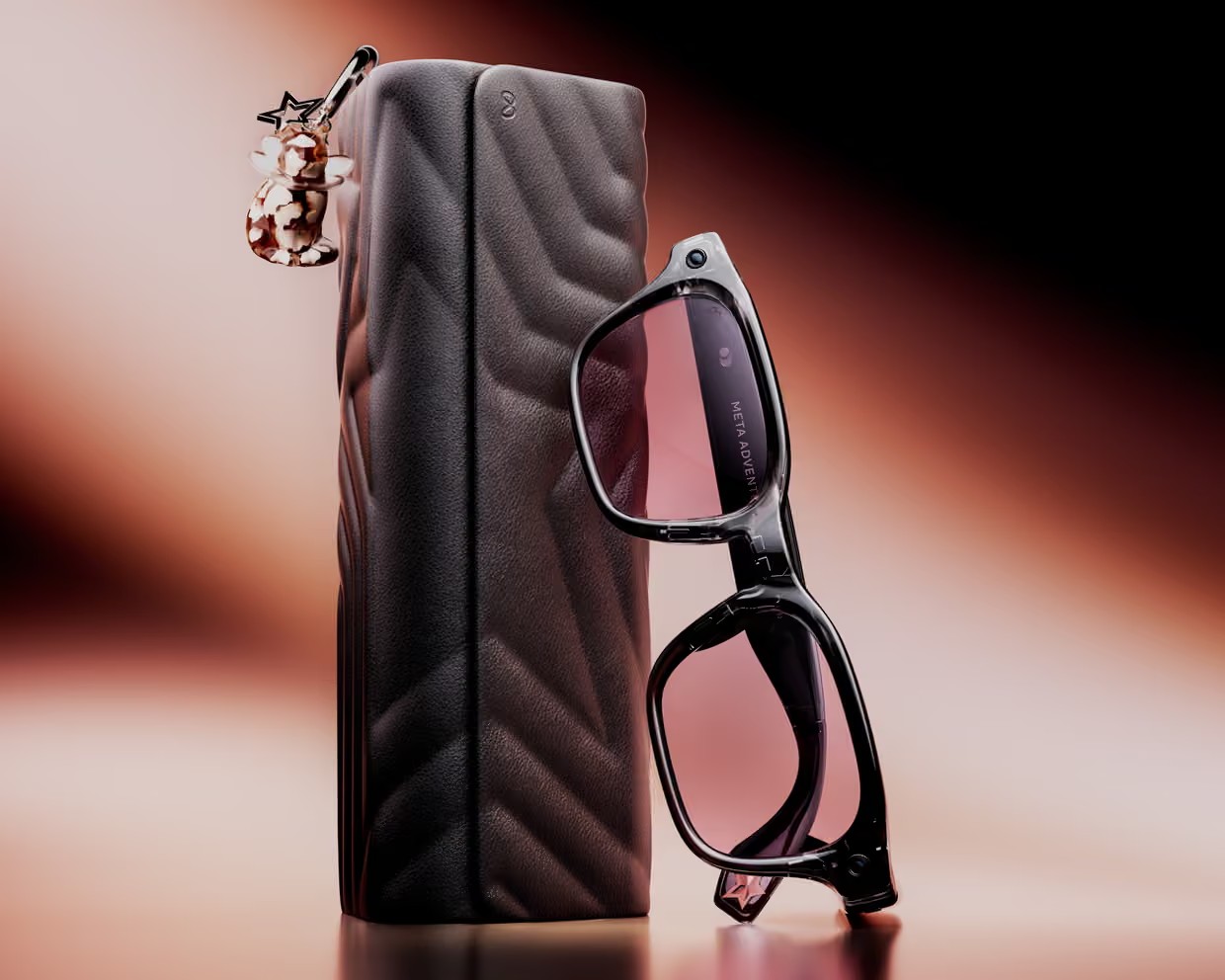
A set of Meta Glasses by Lisa in Adventurer style with their case. Photograph: Meta
Source: theguardian.com
This gives Meta a three-level consumer lineup:
My read is that Meta is trying to make smart glasses ordinary before asking people to wear a full computer on their face. The first two products keep the familiar Ray-Ban form and focus on small, repeatable interactions. Display pushes further, but its price places it well above the camera-free model.
A 100-gram VR computer
Meta’s new VR glasses extend the Quest line, which helped the company establish itself in the VR market. Instead of a bulky plastic headset, the device weighs 100 g, uses a magnesium alloy and resembles an enlarged pair of glasses.
The display is a 5K microOLED with a density of 37 pixels per degree. Meta says the image quality is comparable to the more expensive Apple Vision Pro. Users can see the surrounding world through the sides of the glasses, while a front-facing camera system supports augmented-reality features and helps track the environment.
The glasses connect by cable to a 300 g pocket computing module containing the processing components and battery. The module provides three hours of operation. According to Meta, moving those components away from the head makes the glasses five times lighter than the Quest 3.
The device is fully compatible with the Quest software library, but Meta is positioning it primarily for work and entertainment rather than games. It supports the IMAX Enhanced format and 3D films. At launch, users will get a new immersive Disney+ project that surrounds a virtual cinema screen with landscapes from films including The Avengers: Infinity War.
The glasses can show multiple virtual windows and connect to a Mac or PC to display their screens. Eye tracking and hand gestures control the interface, including a virtual keyboard that can be projected onto any table or other surface. Quest hand controllers and an Xbox gamepad are also supported for games.
Meta VR glasses will cost $1 299,99. Sales in North America, Europe and Asia will begin in spring 2027.
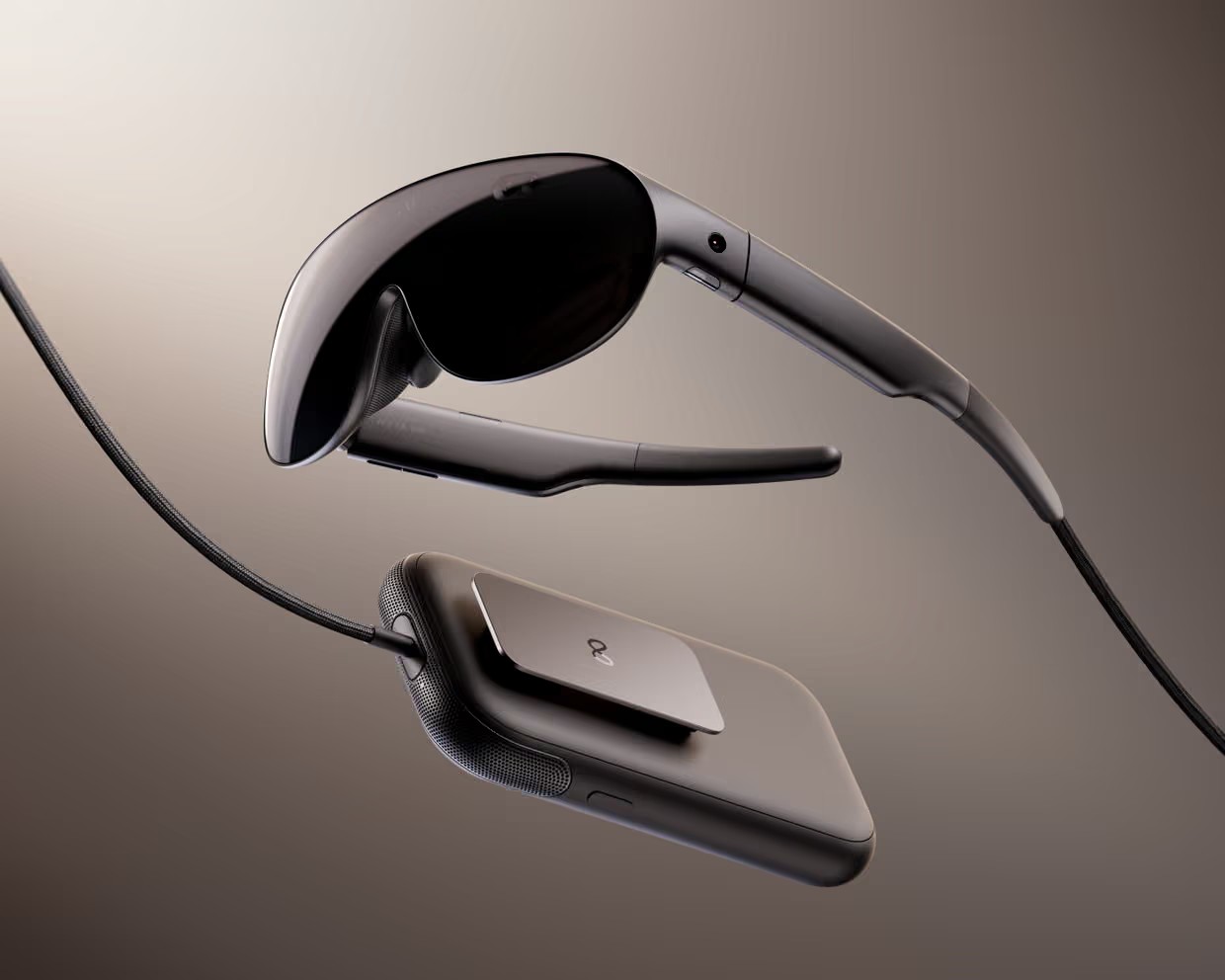
The Meta VR glasses and tethered compute puck Photograph: Meta
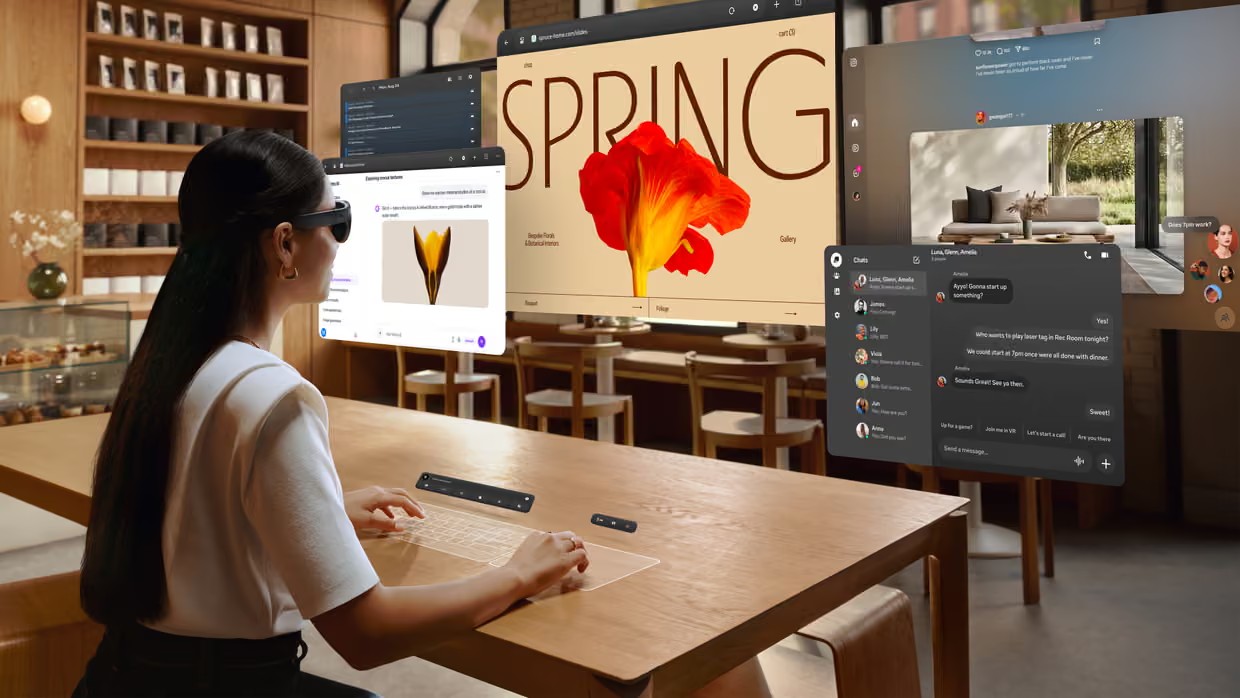
A woman works with multiple virtual windows in a cafe wearing the Meta VR glasses. Composite: Meta
Source: theguardian.com
Source: theguardian.com
I think the split is more important than the weight claim. Meta is not presenting one device as the answer to every use case: the Ray-Ban products are meant to disappear into daily life, while the VR glasses turn the face into a portable workstation and cinema. The tension is that the latter still needs a 300 g computer and a cable, making it lighter on the head but not yet a self-contained pair of glasses.
Daily AI news
Every day we pick what actually matters in AI and explain it plainly — no hype, no filler. Subscribe if you want to follow where the industry is going.
Only what matters — every day
Follow on X