

A lighter Quest, with compromises
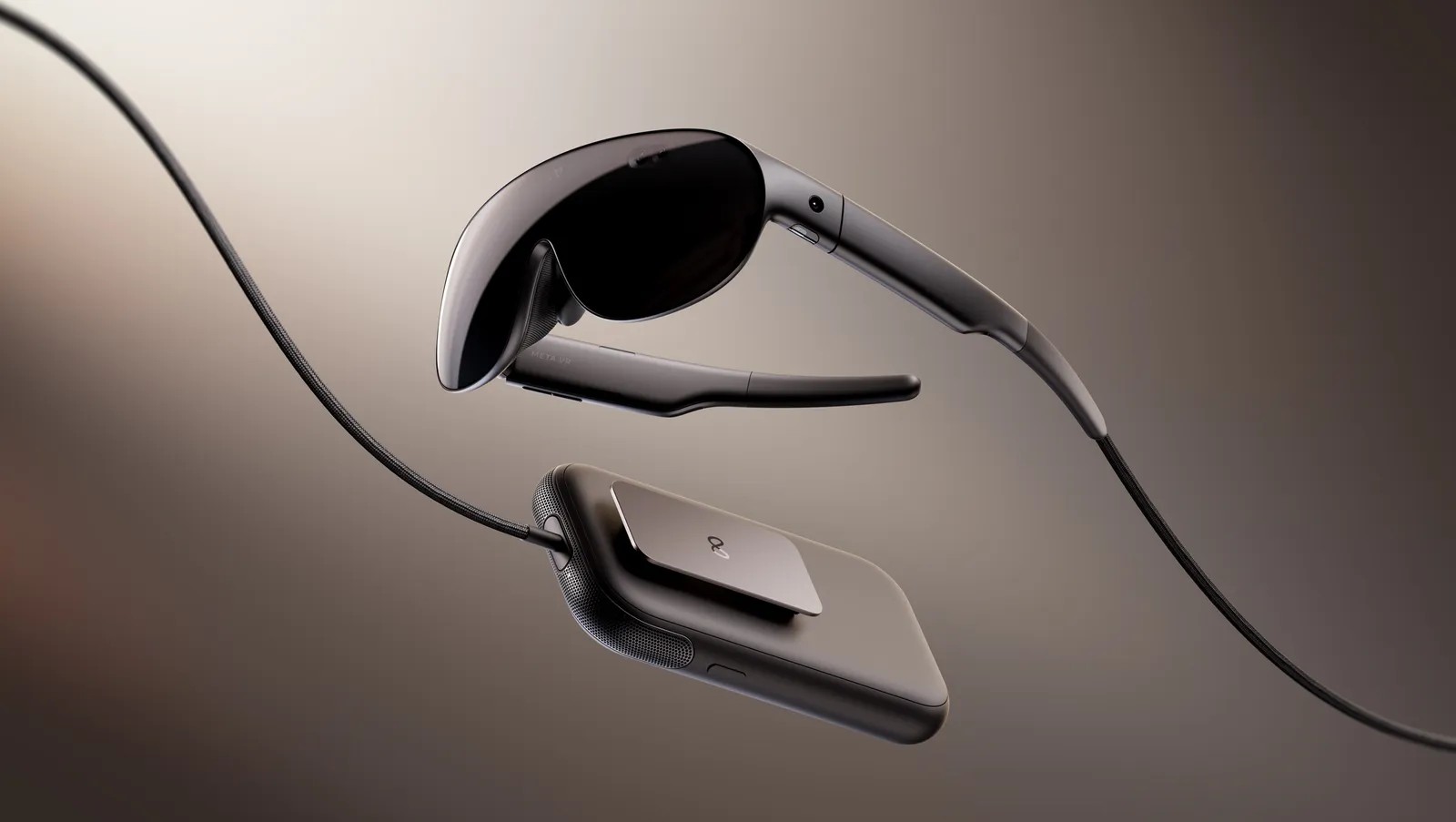
Meta VR Glasses are the most consequential product in the announcement. They replace the heavy headset format of Meta Quest 3 with large glasses that sit on the nose and need no strap. Meta says they are five times lighter than Meta Quest 3.
Source: wired.com
The closest comparisons are Viture’s virtual-display glasses and Xreal’s Project Aura concept: lightweight mixed-reality lenses that place virtual spaces in front of the wearer without requiring a full VR headset.
The glasses ship without controllers. Users can connect existing Quest controllers or devices such as an Xbox controller, but Meta expects everyday interaction to happen through hands and fingers:
The hardware uses micro-OLED displays with 5K resolution, or 2412 × 2288 pixels per eye. Processing and the battery sit in a connected computing unit rather than inside the glasses. Small prescription lenses attach magnetically, though Meta has not disclosed their price.
The software is familiar: VR Glasses run the same Quest ecosystem, including Beat Saber, live sports apps and streaming services such as Disney+. They support digital workspaces with several virtual monitors, can project a virtual keyboard onto the surface in front of the wearer, and use built-in cameras to track individual fingers.
The trade-off appeared during a short demonstration at Meta Connect. Because the field of view is not fully enclosed, the glasses were less immersive than a conventional VR headset. That is not a minor specification difference; it defines the product’s position. Meta is selling access to Quest software in a more wearable shape, not recreating the isolation of a headset.
Meta VR Glasses will cost $1 300, with shipments beginning in spring 2027.
Source: wired.com
The privacy answer has no cameras
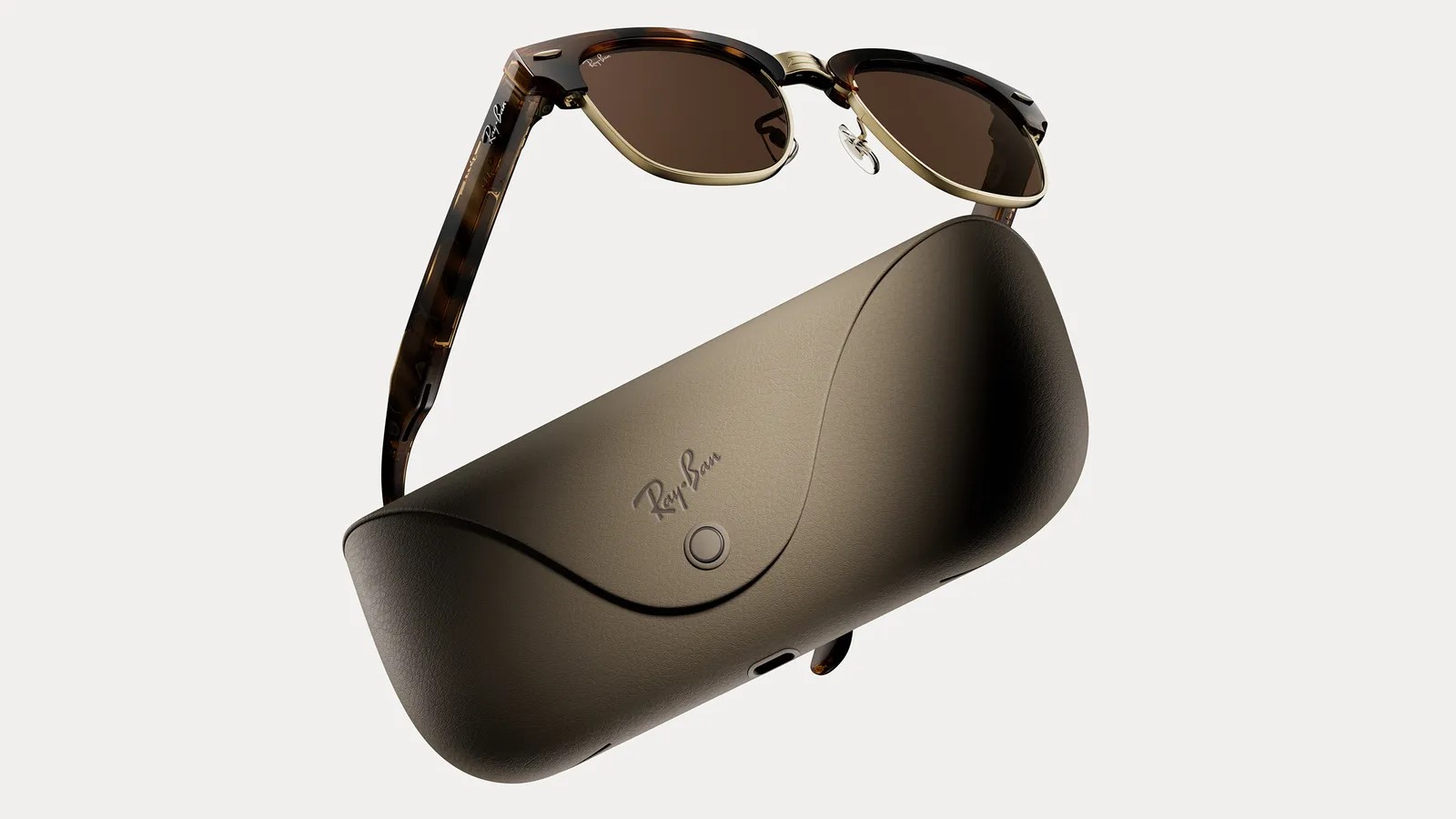
Ray-Ban Meta Audio takes the opposite route. It keeps the audio features of Meta’s existing smart glasses but removes the cameras used for photos and video.
That design follows months of criticism Meta faced over privacy problems associated with camera-equipped smart glasses. The company’s answer is not a new privacy setting or a clearer recording signal. It is a product that cannot capture images or video at all.
At 43 grams, Ray-Ban Meta Audio is lighter than the other models. A charge lasts 12 hours, or up to 48 hours with the charging case. The glasses come in 23 colors and finishes, including the retro Ray-Ban Clubmaster frame and the more rectangular Burbank model.
Preorders are open at $349, with shipments starting October 10.
Gen 3 pushes the camera platform forward
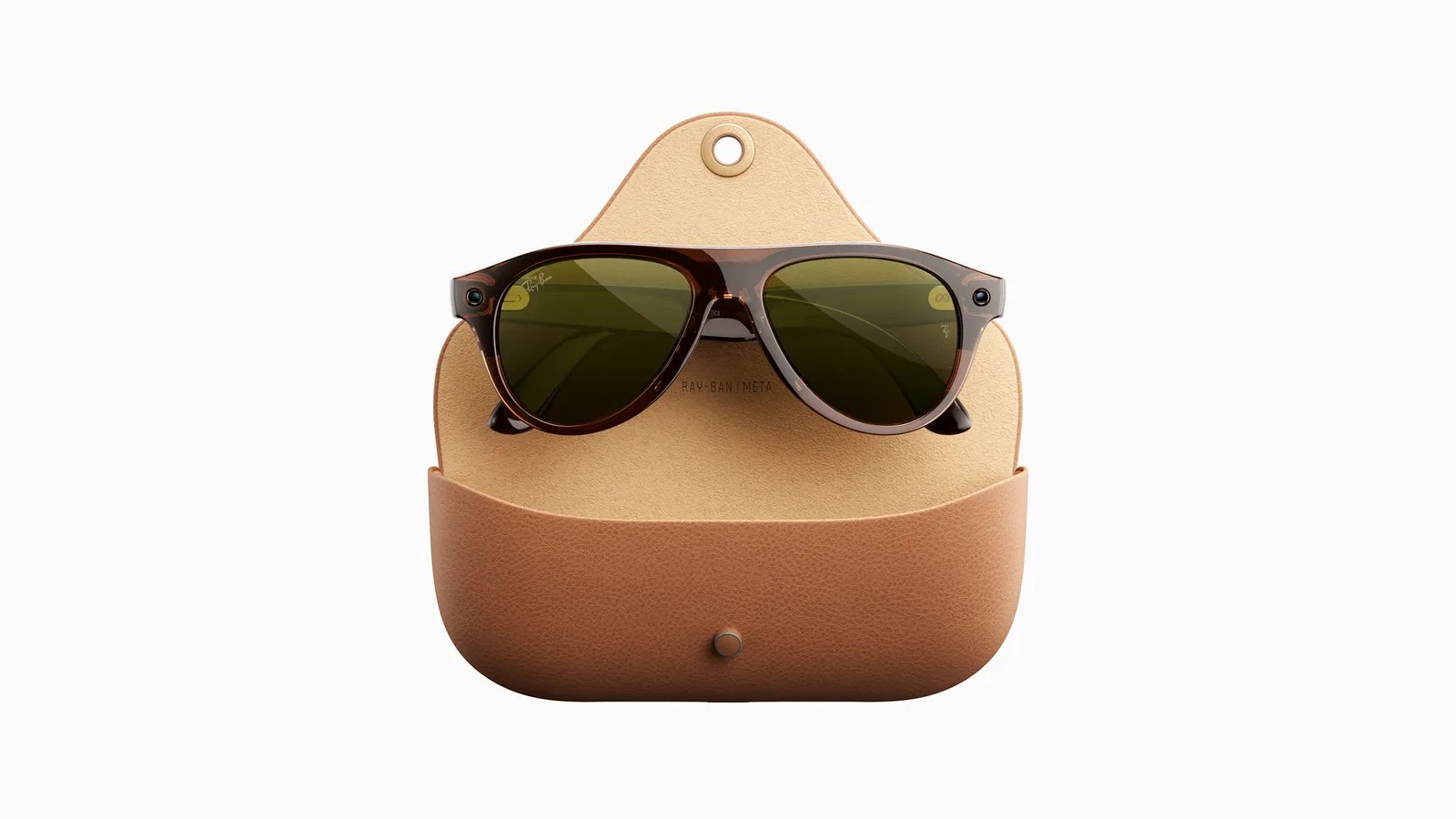
Ray-Ban Meta Gen 3 keeps the camera-based model and adds incremental hardware and accessibility features.
The glasses use 12 MP cameras that can take photos and record 3K video with Dolby Atmos support. Battery life rises to 9 hours, two hours more than the previous generation. A new six-microphone system is designed to improve sound quality and suppress background noise more effectively.
The most notable addition is Hearing Enhancement. It uses the built-in speakers to amplify speech and surrounding sounds, similar to the Nuance glasses from EssilorLuxottica.
The Gen 3 range is also expanding its styling:
Source: wired.com
The glasses are already on sale. Meta has not disclosed the price of the Gen 3 glasses under its own brand, which it introduced earlier this summer. That version was slightly cheaper than the Ray-Ban models but did not differ in features. Meta will announce preorder and sales dates later.
Three products, one unresolved balance
Meta also updated its Meta Ray-Ban Display glasses. With Meta AI integration, users will be able to create photorealistic holograms of their faces for uses such as video calls. The company also improved cycling features and navigation apps.
My read is that the lineup is less a single product strategy than a division of labor. VR Glasses carry Quest’s software into a lighter form, but their open field of view weakens the immersion that justified VR hardware in the first place. Ray-Ban Meta Audio removes the privacy liability by giving up the camera entirely. Gen 3 keeps the camera platform and tries to make it more useful through longer battery life, better microphones and hearing assistance.
The question Meta leaves quiet is how much of this experience can be comfortable and useful outside a demonstration. The $1 300 VR device depends on a separate computing unit, while the ordinary-looking models still divide the market between recording everything and recording nothing. Meta has made the glasses easier to categorize; it has not removed the tension between wearable convenience and what people are willing to place on their faces.
Source: wired.com
Daily AI news
Every day we pick what actually matters in AI and explain it plainly — no hype, no filler. Subscribe if you want to follow where the industry is going.
Only what matters — every day
Follow on X