
What the glasses make possible
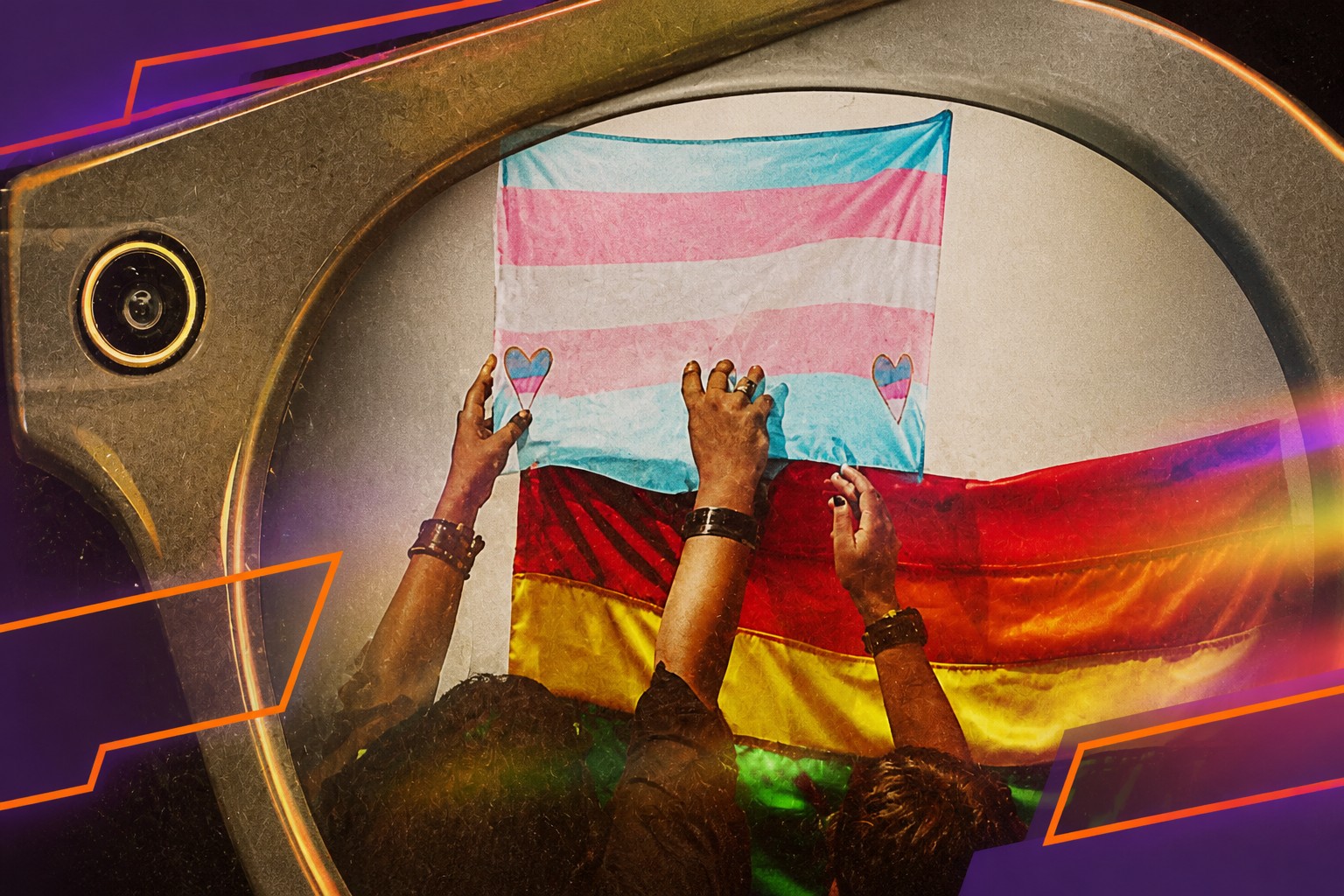
The recording happened at a spring protest against a bill that could have narrowed legal recognition for transgender people in India. The creator approached Shubnam, who were wearing a green sari and had a shaved head, and asked why they wore “women’s clothing.” Shubnam asked the creator to leave.
Only after seeing the Instagram video did they realize the conversation had been recorded on Meta’s glasses. Copies later spread to X and YouTube, where they remain available.
For Shubnam, the damage was not confined to the original post. They said one recording made without consent was enough to undo two decades of work building an independent life and identity. Since then, they have not left their neighborhood wearing a sari.
The risk is already unequal. Women and other marginalized groups are more likely to bear the consequences when inconspicuous devices record and distribute material without permission. In India, that risk lands on top of an existing surge in cyberstalking, intimate-image blackmail, deepfakes and other forms of online abuse.
Smart glasses are also becoming tools of state surveillance:
Several protesters who spoke to MIT Technology Review anonymously said they did not see the recording light on the AI-enabled Meta glasses worn by police.
The light is not the safeguard
Meta told MIT Technology Review that every pair has a recording indicator that flashes when a photo or video is being made that can be saved or sent. The company says the light cannot be disabled: if someone covers or damages it, the camera shuts off. It also says owners must follow the law and respect the privacy of people around them.
That defense shifts much of the burden onto everyone else. Janusz Swierczynski, a researcher at Oxford’s Saïd Business School who studies privacy and new technology, says Meta is effectively asking bystanders to protect themselves by spotting a small LED on the glasses’ arm.
Creators have already published tutorials showing how to cover or otherwise hide the light while continuing to record. Wired reported in March on a market for “stealth mode” modifications that physically disable or remove the LED.
Samir Parmar, a consultant for the Meri Trustline helpline, calls Meta’s approach risky. The organization works with Meta and YouTube to help people harmed by online content. In India, the rules around recording and consent remain contested, while digital literacy is uneven.
People are increasingly contacting the helpline after being recorded and distributed without consent in:
Parmar says perpetrators either harass people or stage “pranks” around those least able to object or understand how the technology can be used against them. Being in a public place is often treated as implied consent to photography or video, even when the resulting material is used to humiliate someone.
India’s laws do not yet account for this particular threat, says Apar Gupta, a lawyer and chief executive of the Internet Freedom Foundation. Rules covering voyeurism and the distribution of intimate images were designed for more obvious forms of abuse, such as secretly filming someone undressing, using a toilet or engaging in sexual activity.
They offer limited protection when someone is secretly filmed in an ordinary public place and the footage is then used to degrade them. Platform rules can provide another route to removal, but Gupta says Indian regulations allow platforms up to 36 hours to respond to some complaints. That may be enough time for a video to be downloaded, copied and reposted elsewhere.
The camera may not be the most important part
Reliance Jio, India’s largest telecom operator, says it will release a Meta competitor later this year for less than $105. Meta’s latest model costs $420 in India. International Data Corporation lists smart glasses among the fastest-growing devices in India’s wearable-electronics market.
That price gap will make the privacy problem broader, not necessarily easier to manage. I think the more important distinction is not between a $105 pair and a $420 pair, but between a device that visibly records and one that quietly interprets its surroundings.
According to the Financial Times, some internal Meta prototypes include AI features that continuously photograph and listen to the wearer’s environment, allowing the glasses to later “remember” what they saw or heard. Those functions would not have an external recording indicator.
Meta says it intends to keep the LED for active photography and video recording, but not for AI functions that analyze the environment. Its explanation is that a constantly flashing light would eventually become familiar and people would stop noticing it.
That creates a second privacy boundary. A bystander may see that a photograph is being taken, but have no way to know whether the device is also collecting information for an AI system.
Woodrow Hartzog, a Boston University law professor, says this logic could leave society permanently catching up. Technology companies can distribute such tools faster than society can understand the threat; by the time people adapt, the technology may already be normal.
My guess is that this is why Shubnam’s case matters beyond one viral video. The harm is not only that a stranger can record someone. It is that other people can become accustomed to seeing versions of them that they never chose to show.
Shubnam says that being defined by a story created by someone else, without their participation or consent, takes away control over how others perceive them. Smart glasses make that loss of control easier to produce, harder to detect and increasingly difficult to reverse.
Daily AI news
Every day we pick what actually matters in AI and explain it plainly — no hype, no filler. Subscribe if you want to follow where the industry is going.
Only what matters — every day
Follow on X