
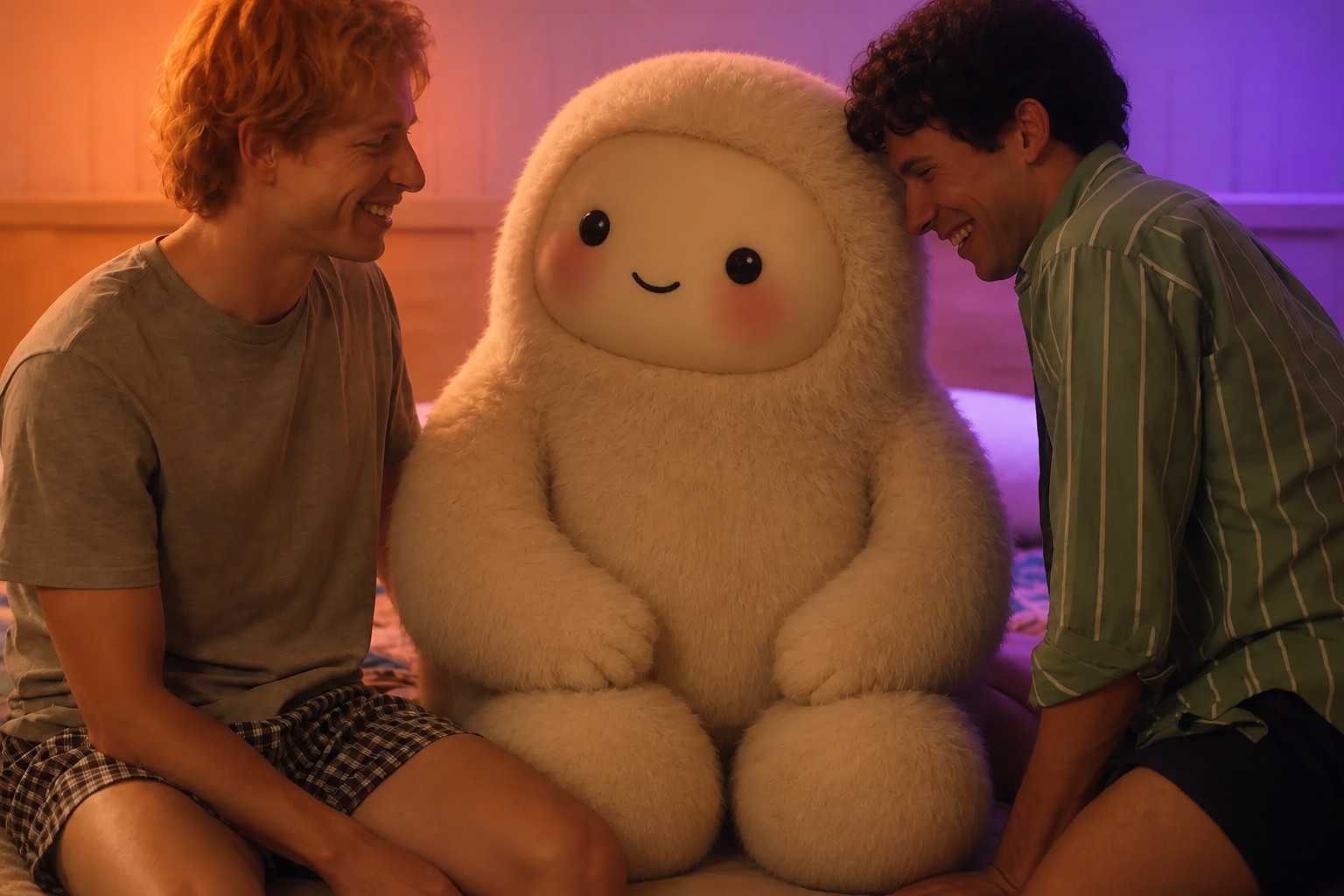
Meta makes the mascot the message
The character looks like something between a Labubu and a Fall Guys bean. Meta is actively trying to turn it into a viral meme, with Alexander Wang, head of Superintelligence Labs, leading the campaign.
OpenAI and Anthropic have not made a comparable mascot push. Microsoft tried something similar with Mico, a companion character for Copilot, but did not promote it at this scale.
Wang has repeatedly posted AI-generated memes featuring the furry Jolly. Some are deliberately provocative:
Wang captioned one post by saying that some people were too “thirsty for Muse,” even though his own campaign had created the conditions for exactly those memes. So far, that contradiction has helped rather than hurt the strategy.
Jolly spreads beyond Meta
The character has moved from official posts into user-generated content. One image shows Jolly waiting for a sexual encounter with its legs spread wide. Someone else generated a video of Wang stroking Jolly's swaying backside.
The biggest meme in the series reworked a well-known adult meme. Its caption said that many people wanted to try Muse but were stuck on the waiting list.
Other brands have joined the campaign:
Meta also released a feature that lets users customize Muse's mascot, completely change its appearance, and give it a voice.
The company has announced Charm as well, a Tamagotchi-like device that lets people carry a companion and personal assistant with them. Jolly is now appearing across Meta's services so frequently that users opening Instagram or Facebook are likely to encounter it.
The mascot is doing work the assistant has not
I think Meta's most interesting move here is not the character itself but the decision to make the character the public face of the product. Muse's capabilities are largely absent from this campaign. What people can see, share and remix is Jolly.
That gives Meta a distribution mechanism that an ordinary assistant launch lacks. A recognizable character can travel through brand collaborations, fan-made images and jokes without requiring anyone to explain why the underlying product matters. The waiting-list meme is particularly efficient: it turns limited access into evidence of demand.
My guess is that Meta wants Jolly to become a social object first and an interface second. Customization, voice and Charm all point in the same direction. They make the assistant feel less like a software feature and more like a companion that can appear across services and eventually follow the user into the physical world.
The risk is that Jolly becomes more memorable than Muse. Meta may be building cultural recognition for a mascot while leaving the actual reason to use the assistant unclear. The campaign has made people want to meet Jolly; it still has to give them a reason to stay with Muse.
Daily AI news
Every day we pick what actually matters in AI and explain it plainly — no hype, no filler. Subscribe if you want to follow where the industry is going.
Only what matters — every day
Follow on X