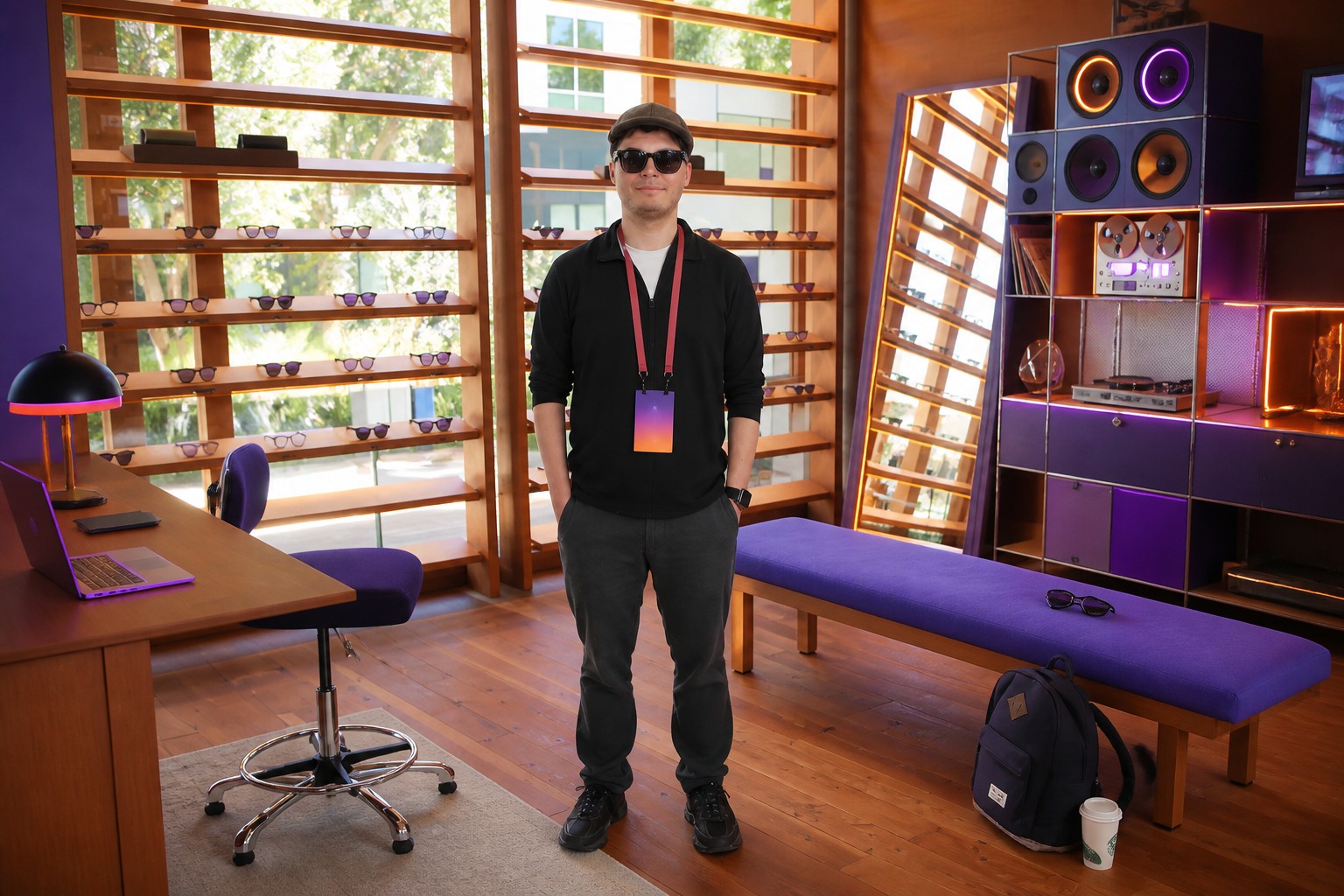
At Meta Connect, the company’s smart glasses were hard to miss: attendees wore them, and Meta put several new products in front of visitors. I tried two audio-only models, including unreleased glasses that pair with Meta’s Muse agent and a separate model designed to help people with hearing loss. Together, they show Meta pursuing a more practical pitch for smart glasses: not cameras on your face, but useful audio that can fit into ordinary routines.
The case for leaving out a camera
The unreleased glasses have six microphones, but no camera and no built-in way to record what is happening around the wearer. That distinction matters after criticism of camera-equipped glasses, which critics feared could be used for surveillance.
The pair I tried felt noticeably lighter than other smart glasses I have worn, and was comfortable. A Meta employee described music and calls as core uses: listen without earbuds or answer a call without taking out a phone.
Muse integration is not yet broadly available. When it arrives, wearers will be able to speak to the agent and give it tasks. Meta also plans to let users choose from several cute digital avatars to represent Muse in conversations.
I tried the feature. It was entertaining, but sometimes awkward. Muse worked best when addressed clearly and directly; when I spoke to the Meta employee at the same time, it mistook his remarks for commands and interrupted our conversation.
A hearing aid at $150
The second audio model is aimed at people with hearing loss. An estimated 50 million people in the US have some degree of hearing loss, giving this pair a more concrete use case than a general-purpose assistant.
A member of Meta’s research team said development took about five years. The planned price is $150, compared with hearing aids that can cost up to $1,600.
Before the demonstration, Meta asked me to put in earplugs to simulate hearing loss. Once I put on the glasses, the other person’s voice sounded louder. The wearer can switch between a directional mode, which emphasizes the person in front of them, and an omnidirectional mode that picks up sound from all sides.
The awkwardness is part of the test
Muse could handle a simple question about World War II with a brief, historically accurate answer, much like the mobile version of ChatGPT. In the right setting, it could also send emails or read a to-do list while someone shops for groceries or has a beer. But those examples depend on a basic condition: the wearer must be comfortable talking to their sunglasses in public.
I think the hearing-focused model has the clearer argument today. It addresses a specific need, while the agent glasses ask people to accept a new social habit as well as a new device. Meta CEO Mark Zuckerberg has made clear that he sees smart glasses as the future, and the company is trying to make them stylish, functional and useful. Yet smart glasses remain a niche product without a settled place in the market.
At Connect, it was easy to believe in that future among people already wearing the devices. The harder test is whether glasses can offer enough everyday value to make the rest of the world feel comfortable wearing them.
Daily AI news
Every day we pick what actually matters in AI and explain it plainly — no hype, no filler. Subscribe if you want to follow where the industry is going.
Only what matters — every day
Follow on X