
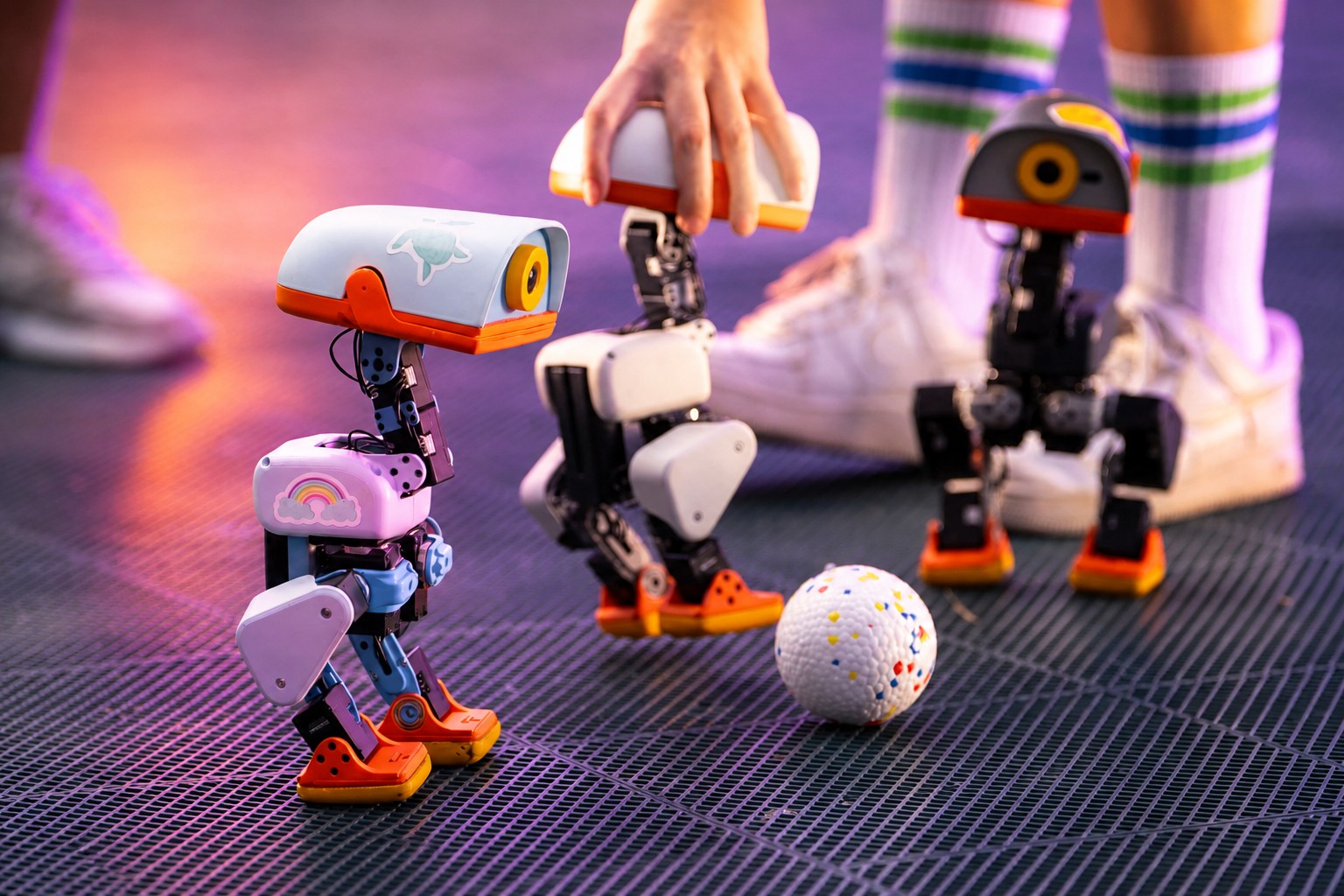
A robot built to be taught
Microduck was trained with Nvidia’s technology stack in simulation, where it learned basic actions: walking, sitting and standing up. Owners will be able to teach it new tricks and share them with the community.
The robot is Hugging Face’s second, following Reachy Mini. In promotional videos, adults play with Microduck as well as children. Delang suggested it could become the year’s best-selling robot.
The video post described the clip as a break after a week of criticism over AI’s alleged role in a series of cyberattacks. Its authors argued that AI can cause serious harm but can also entertain. The video shows Huang asking Microduck to do a somersault; its caption says AI agents on NVIDIA RTX Spark help bring the robot from simulation into the real world.
When @jensenhuang asks for a somersault, you deliver. 🦆 See how AI agents on NVIDIA RTX Spark help bring @huggingface 's Microduck from simulation to the real world. pic.twitter.com/W6qidApR2O
The appeal is clear; the use case less so
I think the 20,000 pre-orders say more about the pull of an approachable robot and a high-profile video than about demand for home robotics as a category. The announcement gives buyers a route to teach and share tricks, but says little about what Microduck will do beyond those demonstrations.
That gap matters. A robot that can learn a somersault is easy to sell as a delightful object; a robot people keep using needs a reason to stay in their lives after the first trick. Microduck’s holiday delivery will test whether the charm can carry that weight.
Daily AI news
Every day we pick what actually matters in AI and explain it plainly — no hype, no filler. Subscribe if you want to follow where the industry is going.
Only what matters — every day
Follow on X