
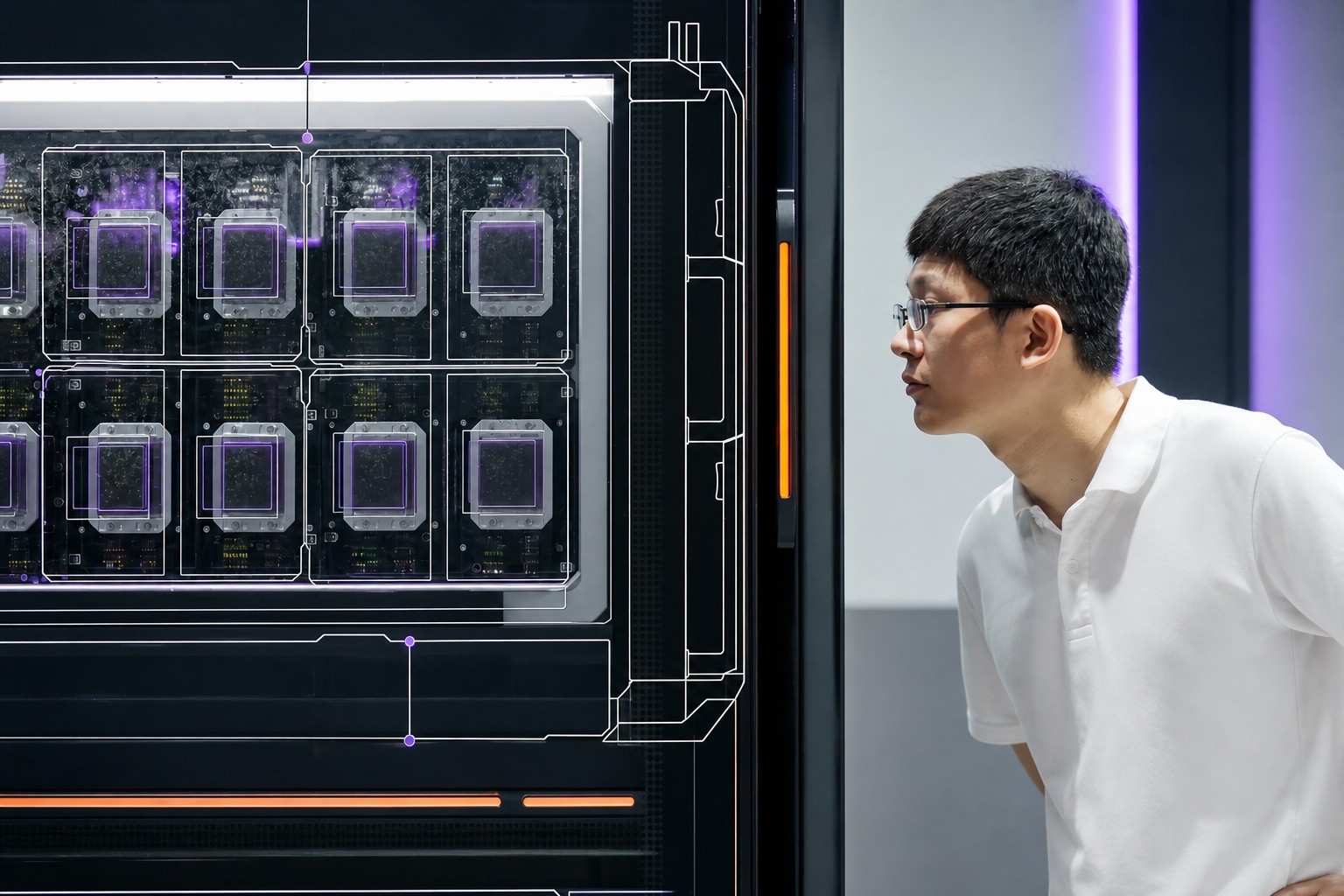
Moonshot released Kimi K3 as a free model, marketed as a peer to the leading American systems including the latest versions of OpenAI's ChatGPT. Two days after launch the company suspended new subscriptions, because it did not have the compute to serve the demand. A small operational failure, and also the sharpest piece of evidence yet for an argument now circulating in Western economic commentary: that after cheap goods and advanced manufacturing, China's third act is artificial intelligence.
The argument begins with a long record of wrong forecasts. Almost from the start of the Chinese boom, the West waited for its end, and produced explanation after explanation for why collapse was inevitable: overinvestment, enormous debt, a property market crash, political repression, and a growing middle class that would demand democracy. Those impressed by the growth rates consoled themselves with a different assumption, that advanced manufacturing would stay under Western control and China would be left assembling televisions. While the predicted collapse kept failing to arrive, the country became the workshop of the world.
That happened in two phases. China 1.0 ran on cheap industrial goods, where low labour costs gave the country its advantage and Western companies moved production to East Asia for margin. The argument credits that phase with consequences usually filed under domestic politics: without it, Donald Trump would probably still be a New York property developer, and Brexit might never have happened.
China 2.0 was the move upmarket, and it ended the idea that a developing economy is condemned to simple products forever. China took the solar panel market, became the world leader in batteries and electric vehicles, and stopped needing to import machine tools from Germany because it learned to build them. The rise of Alternative for Germany is bound up with the threat Chinese industry poses to German manufacturing jobs.
The critics are not wrong about the model's defects. It leans too heavily on investment and creates excess capacity, producing far more than a domestic market with low wages and a thin social safety net can absorb. The surplus has to be exported to sustain growth rates high enough that unemployment does not turn into unrest. At a recent meeting of G20 finance ministers China stood isolated, criticised from every direction for failing to grow domestic demand for its own output.
Now comes China 3.0, and this time the competition with the United States is over artificial intelligence itself. Edoardo Campanella of UniCredit describes a consistent strategy in Beijing built on three things: staying close to the technological frontier, spreading its models through the world economy, and shaping standards in international markets. If it works, Campanella argues, the effect is not confined to the world economy — it reaches the global balance of power.
Three consequences are already visible, on this reading. The United States has picked a strange moment to strain its alliances, imposing prohibitive tariffs on traditional partners in a race where it needs every ally it can get. Free Chinese models threaten world markets in a specific way: American technological advantage was the premise that justified enormous investment in US technology companies, and Wall Street valuations, set against rising oil prices, have priced in two beliefs at once — that AI will remake the economy, and that America will be the main beneficiary. If China can build models more cheaply and hand them out for nothing, investors start asking whether those valuations were ever supported. And Britain, if it wants manufacturing again, will have to learn industrial policy from the country that practised it.
The valuation channel is the strongest link in this chain and the least examined. A free model does not have to win a benchmark to do damage. It only has to cap what the paid ones can charge, and pricing power is the assumption underneath every revenue projection currently holding up the American AI trade. Nothing about that requires Chinese labs to reach the frontier first; it requires them to stay close enough that the gap stops being worth paying for.
The weak link sits in the same story, two days after launch. A model that has to close the door because it ran out of compute is demonstrating exactly the constraint the thesis says China is overcoming. The subscription pause reads as proof of demand and as evidence of a ceiling, and the argument only ever reads it in the first direction. Free distribution is a strategy only for as long as you can serve it, and Campanella's three points describe what Beijing wants its models to do without saying where the compute comes from when a free model achieves global uptake. Moonshot hit that wall almost immediately.
The lesson drawn for Britain is about patience rather than technology. When China began building up its industry roughly half a century ago, it knew it was a developing country, did not understate the scale of the task, made a plan and followed it. It backed promising sectors rather than leaving industrial strategy to speculators, and used every instrument available: subsidies, tariffs, currency controls, state investment. The result is an industrial policy that grew from cheap goods to cover very nearly everything, against a British record over the same half-century of not doing this at all.
That is the uncomfortable shape of it. The country with the industrial policy is the one that can afford to give the product away, and the countries without one have priced their equity markets on the assumption that they will never have to compete with free.