
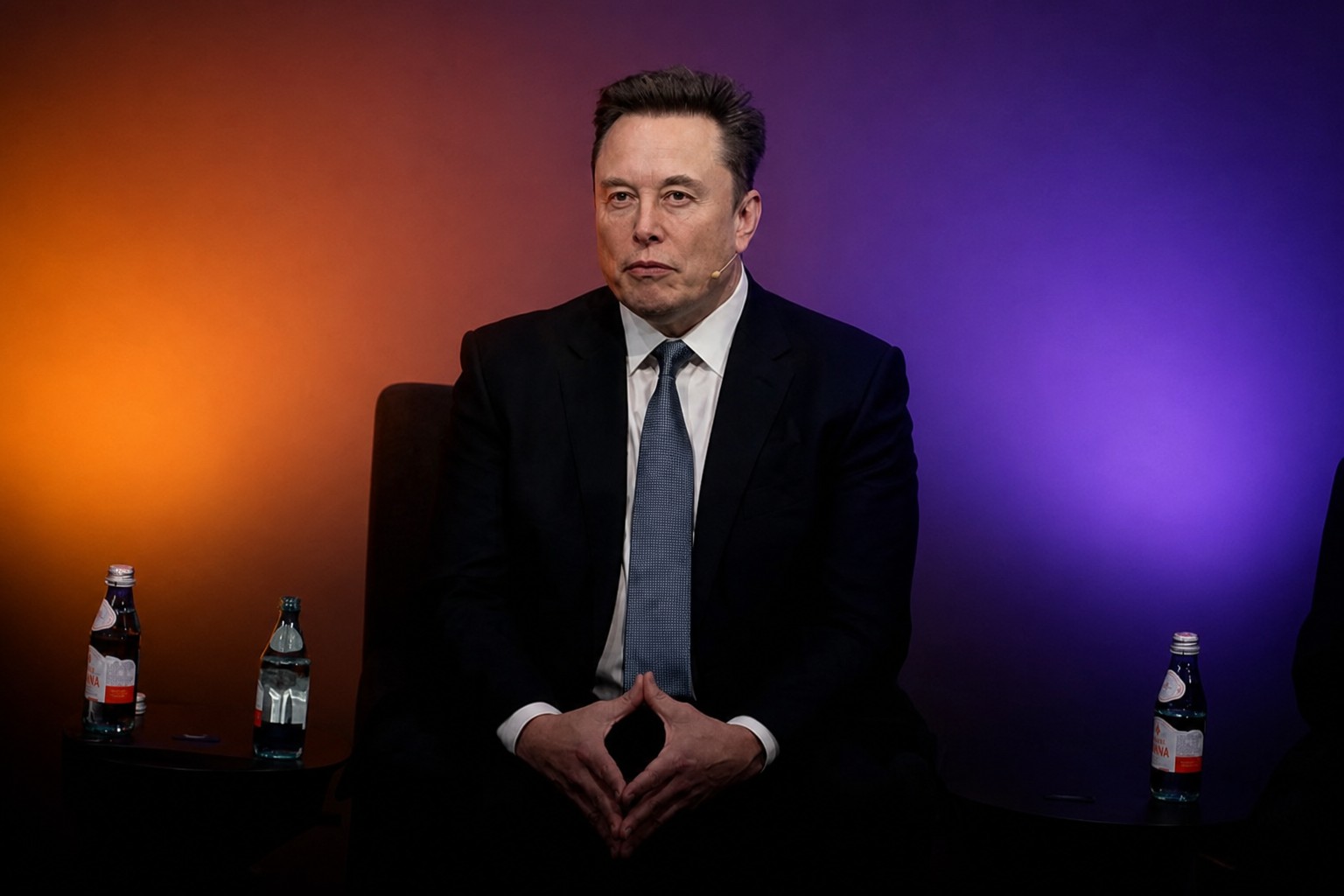
Elon Musk confirmed on Saturday that SpaceX is building a plant in Bastrop, Texas, after The Information published an investigation into it. The publication had found job postings that referred explicitly to a foundry for producing turbine blades and vanes. Corey Trinetti, a company-vetting specialist who publishes detailed reviews of AI infrastructure sites in his newsletter, added that SpaceX bought roughly 830 acres of land next to its existing Starlink factory in Bastrop between March and June. Musk's claim is that if SpaceX casts these parts itself, new gas turbines can start running up to 18 months earlier.
Musk framed it on X as a bridge. SpaceX and Tesla, he wrote, are building solar manufacturing capacity of 100 GW a year each as fast as they can, but natural gas will still be needed for the next several years to supplement solar and to bootstrap its infrastructure. The constraint right now, he said, is the production of blades and vanes for gas turbines.
The constraint is real, and it has moved. GPUs are still short — the newest Nvidia Blackwell chips carry waits of several months — but a second limit has appeared behind them, and it is the physical power system. The International Energy Agency projects that global electricity consumption by data centres will roughly double by 2030. GE Vernova, which builds gas turbines, says its capacity is effectively sold out through 2030, mostly because of demand from AI infrastructure.
The consequence is already visible in how the largest operators behave. Amazon, Google, Meta, OpenAI and Microsoft increasingly build their own gas plants next to their sites rather than wait for a grid connection. After years of investing in wind and solar, they are betting on natural gas to get new data centres running sooner.
What Musk proposes to make is genuinely hard, and the difficulty is the point. In the hottest section of a gas turbine, blades operate at roughly 3,000 to 3,600 degrees Fahrenheit — about 800 degrees above the melting point of the metal alloy they are made from. They survive because of internal cooling channels, thermal barrier coatings and a particular way of casting each blade. Only four companies in the world have mastered that process at industrial scale, and all of their capacity is currently taken.
Each blade has to be cast as a single continuous crystal. It forms slowly inside a vacuum furnace and must contain no microscopic seams, the kind of flaw that makes ordinary cast metal fail under load. Even the small blades used in aircraft engines are difficult to produce this way. Parts for power plant turbines are considerably larger, which makes producing them at volume and without defects harder still.
If SpaceX pulls it off, a Musk company will hold a manufacturing capability that every other builder of AI infrastructure currently rents from a group of four suppliers. That gives SpaceXAI an advantage that competitors with larger balance sheets but no factories of their own would struggle to replicate quickly.
The cost side arrives on the same schedule. Getting gas turbines online faster means emissions arriving faster, and installations already running are drawing federal lawsuits and peer-reviewed air pollution research.
In Memphis, SpaceXAI has been using gas turbines to power its Colossus data centres since 2024. The NAACP has repeatedly accused the company of operating those turbines without the permits and pollution controls required under federal law. The organisation points out that such units emit smog-forming compounds along with hazardous chemicals including formaldehyde, pollutants linked to asthma, respiratory disease and certain cancers. The site sits next to neighbourhoods already heavily exposed to industrial pollution. Researchers at the University of Memphis said that within their limited analysis, air pollution attributable to the data centre had become "slightly worse".
Memphis is simply the most visible case. The same dispute now follows gas turbines wherever they have become the standard answer to a power shortfall. In Virginia's Data Center Alley, a study commissioned by the Piedmont Environmental Council and run through COBRA, the EPA's own health impact model, examined what a single facility with eight continuously running gas turbines could do. Its emissions could reach more than 2.5 million people across several counties, with the heaviest burden falling on communities that are already vulnerable. The study estimates the pollution could cause an additional 3.4 to 6.5 premature deaths a year, with health-related losses of $53 million to $99 million annually.
The 18 months is the entire pitch, and it cuts both ways. Accelerating a turbine by 18 months does not remove emissions from the schedule; it moves them forward. The Virginia modelling prices one eight-turbine facility at a few deaths and tens of millions of dollars a year. Pulling the whole buildout forward by a year and a half, across however many facilities a foundry ends up supplying, is a quantity nobody in this announcement has attempted to state. It is the arithmetic a permitting authority will eventually do on someone's behalf.
Two other things are absent from Musk's post. He gave no timeline for the foundry itself, and no indication of whether SpaceX would sell castings to the rest of the industry or keep the output for the Musk companies. The second answer determines whether this is a supply chain being widened or a chokepoint being privatised. His framing — solar first, gas as a temporary supplement — also sits awkwardly against what is actually under construction in Bastrop, which is a gas turbine parts plant.
Musk is betting that a process only four companies have industrialised is a manufacturing problem rather than a physical one — the same instinct that has him building solar capacity by the hundred gigawatts rather than buying it. If he is right, the binding constraint on AI infrastructure stops being the turbine order book and becomes the permit — and the fights already running in Memphis and Northern Virginia stop being local disputes and start setting the pace for everyone.