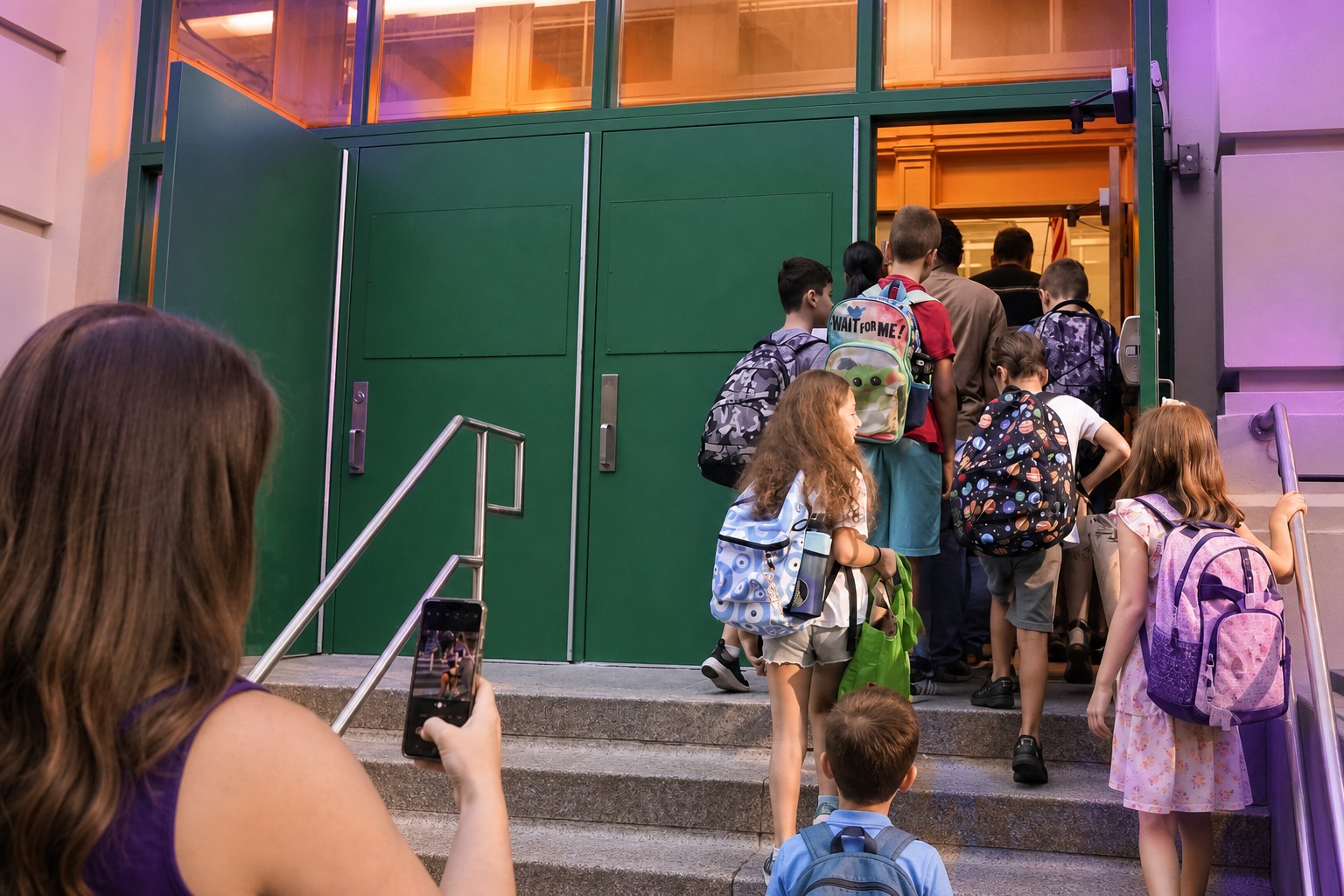
New York City will bar public school students from using AI until high school. The rules are part of a broad rewrite of technology policy in the largest school district in the United States, which enrols roughly 900,000 children a year and whose decisions other American districts watch closely. AI will be allowed only in the upper grades and only in defined scenarios, including studying the technology itself. Companion chatbots with mental-health support features are banned outright.
The pressure came from teachers and parents, who objected to AI in the classroom on grounds of mental health and cognitive development. The specific worry has a name: handing the work of reasoning over to software, a phenomenon researchers have called "cognitive surrender." Environmental damage was raised separately.
Teachers get a different deal from their students. They may use AI to prepare lessons and write messages. They may not use it to check or grade assignments — the one task where an overworked staff would feel the benefit most immediately, and the one where a wrong output lands directly on a child's record.
The department is also recommending caps on screen time in class: 45 minutes for middle schoolers in grades six through eight, 30 minutes for younger children. How any of it gets monitored is left open. Children reach these tools constantly outside school, and nothing in the policy touches a phone on the walk home.
The path to this point has been a series of reversals. The school system banned students from using ChatGPT once before and rescinded the ban in less than a year. The first version of the current rules used a traffic-light scheme, with colours marking which tasks students were allowed to use AI for. A later draft permitted students to use AI for research, for learning new subjects and for creative projects; many parents and teachers attacked it as far too permissive.
The response from schools chancellor Kamar Samuels was to concede the messaging rather than the substance: city leaders had communicated badly, he said, and his office would study parents' feedback closely and take it into account in future rules. The policy then tightened anyway.
That sequence is the story here, and it is not really about AI. A district this size has banned a tool, unbanned it, written permissive guidance, withdrawn it under criticism and replaced it with a restriction — without, in any public step, pointing to evidence from its own classrooms about what the tool did to learning. The one substantive finding invoked, cognitive surrender, comes from researchers rather than from the district. What moved was the volume of objection. Every constituency involved has now learned that objecting works, which guarantees the next revision.
The revision is already scheduled. The department had planned to supplement its earlier rules with more detailed guidance reflecting the feedback it received, and a working group of teachers, elected officials, experts and union representatives is being formed to write it. That group is due to deliver a report which will become the basis of New York's policy on AI in schools.
Read that in order: the city announced the rules first and will convene the body whose report is meant to underpin them second. The restriction on students is real now; the reasoning for it arrives later, drafted by a committee whose members were chosen after the fight.