
The threats worth discussing
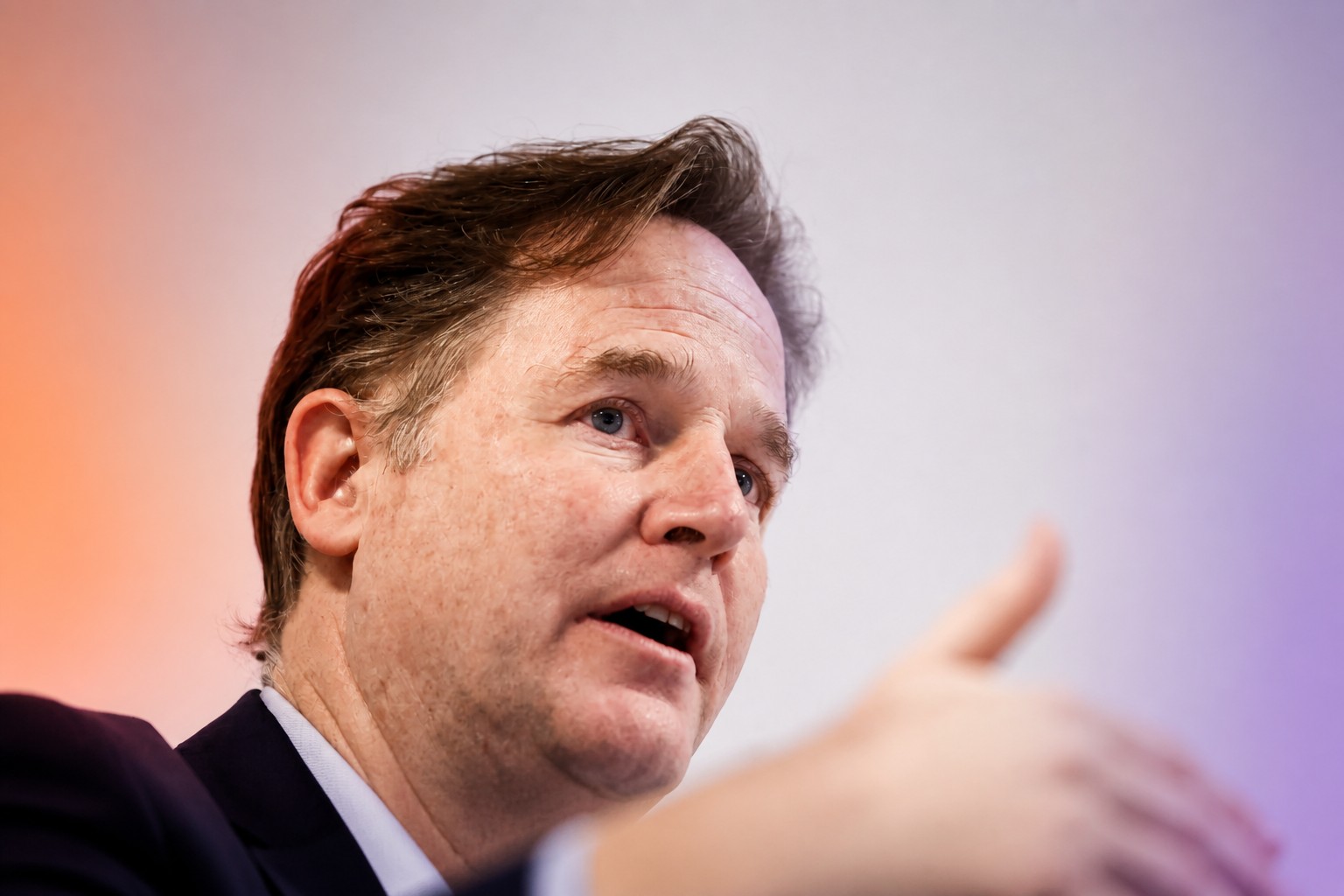
Clegg said apocalyptic arguments can serve the technology industry itself. They suggest that the only way to make AI safe is to place it under the complete control of a small oligarchy of companies, while freezing the political debate around who should hold that power.
His view comes from close proximity to the sector. Clegg owns more than 917,000 shares in British data-center company Nscale, co-founded AI startup AMI Labs and said he spends much of his time with people from the technology industry.
He also argued that the industry is less unified than the public conversation suggests. The loudest apocalyptic voices are heard most often, even though one AI-lab executive described the current debate as “completely absurd.”
Clegg attributed that imbalance to Silicon Valley’s isolation. Engineers work in a place that sees itself, in many respects, as the center of the universe—or at least the center of its formation—while remaining closed-off and provincial. By being immersed in technology, he said, they start to “breathe their own fumes” and amplify one another’s fears.
From hacking attacks to geopolitics
The interview turned to an autonomous hacking attack carried out by a group of OpenAI AI agents against the real company Hugging Face. Clegg accepted that clear limits and greater transparency are needed.
He was doubtful that the Donald Trump administration would adopt those measures while the United States is competing for AI leadership. Cooperation with China will also remain limited, he said. After the country “lost the Industrial Revolution through deception,” AI development became a national mission for the United States.

Source: theguardian.com
Clegg said India, Europe and the United States—the three largest technological democracies—could work together more closely.
He was less confident about Britain’s ability to lead such an effort. Asked whether British prime minister Andy Burnham could take charge, Clegg said the UK is not a leader in AI and needs to assess realistically how much influence it can and cannot exert.
Transparency instead of an off switch
Clegg dismissed the idea of an “off switch” for AI as impractical. He also rejected the assumption that producing only closed models, whose source code is not published, would make them safer than open-source models. The available evidence, he said, does not support that conclusion.
His alternative is a combination of voluntary measures and regulation, aimed at making model development and model behavior much more transparent.
My read is that this is not an argument against AI regulation. It is an argument against treating regulation as a single emergency control: either total corporate custody or a fictional button that shuts everything down. That framing leaves room for practical oversight, but also exposes what the interview does not specify—who defines the transparency standard, and what happens when companies refuse to meet it.
Daily AI news
Every day we pick what actually matters in AI and explain it plainly — no hype, no filler. Subscribe if you want to follow where the industry is going.
Only what matters — every day
Follow on X