
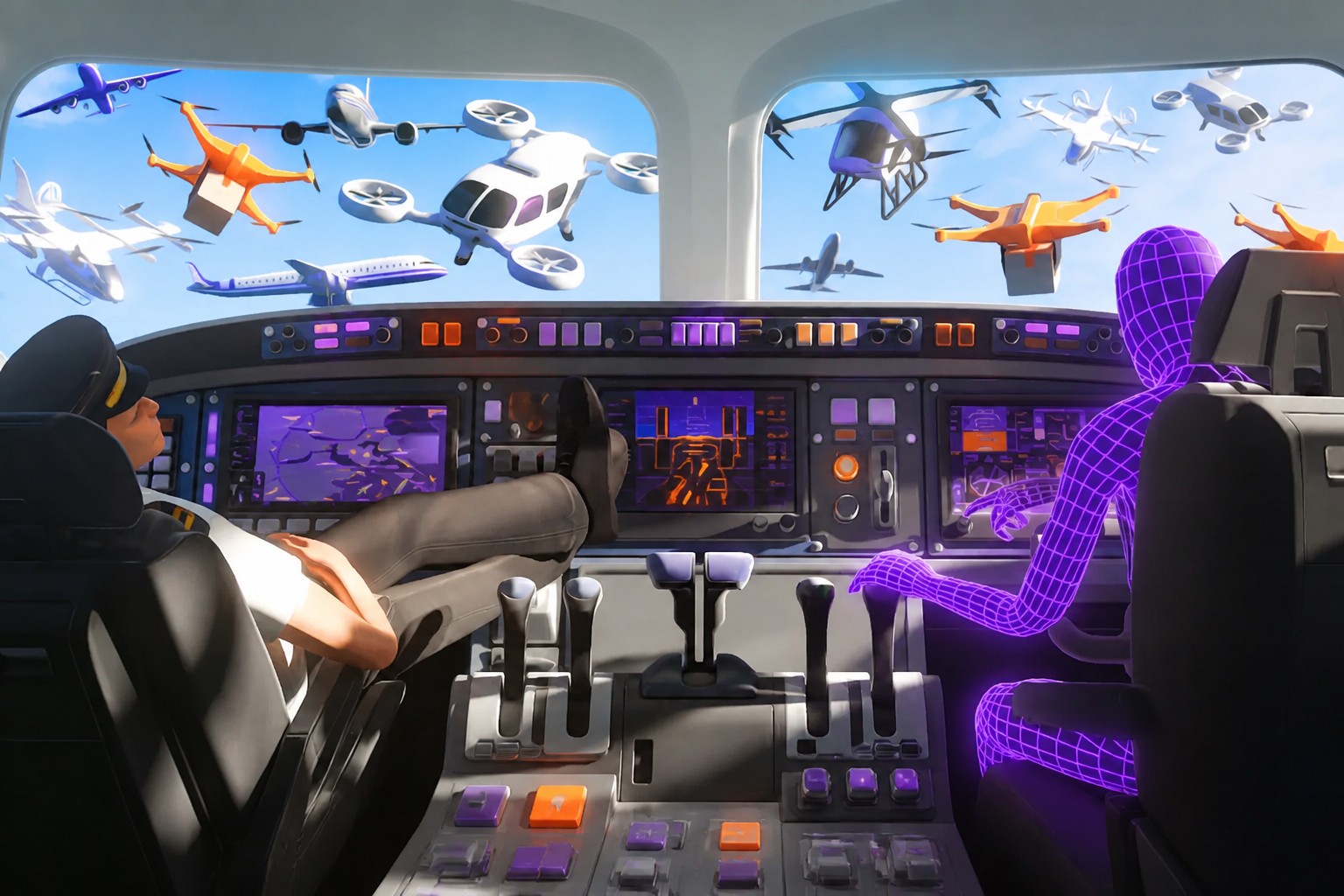
On September 27, US Transportation Secretary Sean Duffy posted a video on X about SMART, a new AI-powered air traffic management system. Nearly three weeks later, the Federal Aviation Administration (FAA) halted flights nationwide after a communications failure threw airline schedules into chaos. Officials said they found no signs of a cyberattack or a link between SMART and the failure. But Homeland Security Secretary Markwayne Mullin could not rule out the possibility that an AI failure had caused it.
AI enters aviation: from pilotless flights to air traffic control systems
SMART is just one example of how AI is changing aviation. In September, a Joby Aviation Cessna Caravan flew 3,200 miles from California through Texas and South Carolina to North Carolina, avoiding congested airspace and thunderstorms. The aircraft was under automated control throughout: a safety pilot was on board but did not need to intervene.
Preparing the airspace
Interest in aviation automation grew in the early 2000s, as higher-capacity batteries and compact electronics made drones more accessible and capable. Authorities began preparing for uncrewed and piloted aircraft to share the airspace.
In 2007, the US government launched the Next Generation Air Transportation System, or NextGen, a sweeping overhaul of the air transport system. One of its requirements called for aircraft in the US to be equipped with ADS-B by 2020. The system regularly transmits an aircraft’s location and direction of travel over radio.
Source: wired.com
After plans for air infrastructure development emerged, Amazon and Walmart began working on drone delivery. In 2014, Google introduced Project Wing. By 2018, its drones were delivering food, coffee and medicine to 164 homes near Canberra, Australia. The following year, the pilot program expanded to Christiansburg, Virginia. Deliveries were expensive and slow, but at this stage Google was gaining operational experience rather than building a finished business.
At the same time, startups were developing electric vertical takeoff and landing aircraft, or electric air taxis. Essentially, these are large drones designed for short trips carrying a small number of people. For now, they have seats for pilots. By 2022, 600 models were in development, and manufacturers were promising that short flights would become cheap and routine.
Joby was among the leaders in the field. In 2020, the company unveiled its S4 design. Its plan called for the aircraft to carry a pilot and four passengers for more than 100 miles at speeds of up to 200 miles per hour. The S4 made its first flight last year.
The launch of air taxis seemed close, but timelines kept slipping. Developing an autonomous aircraft was not enough: the industry also needed suitable airspace, people trained to operate or monitor the aircraft, and an economic model that could make the service profitable.
Why aviation changes gradually
Silicon Valley’s pace differs from aviation’s customary caution. According to Mary Schiavo, an aviation lawyer and former inspector general of the Department of Transportation, the industry’s rules put reliability first because accidents can have severe consequences. Certification and airworthiness approval require evidence of safety, so changes are usually introduced gradually. The FAA has been reluctant to allow untested uncrewed aircraft into the national airspace.
In Europe, plans to reduce the number of pilots in the cockpit met resistance. In 2017, Airbus and Dassault asked the European Union Aviation Safety Agency (EASA) to consider allowing passenger aircraft to fly with one pilot. Under Airbus’s proposal, automated systems would take over the second pilot’s work and replace them entirely if necessary.
Pilots opposed the initiative. The European Cockpit Association said reducing the crew would remove an independent safety professional from the cockpit and increase airlines’ influence over decisions currently made by pilots. Last year, EASA postponed the plan.
Meanwhile, since 2023 the FAA has been issuing permits for drone deliveries beyond operators’ visual line of sight. Temporary rules could become permanent by the end of this year. In August, Amazon announced plans to expand drone delivery to 500 locations across the country by year-end. Walmart plans to offer the service from 270 stores by the end of 2027.
A more ambitious scenario envisions hundreds of thousands of drones serving most or all of the US population. Last year, Anthony Whitone, chief operating officer of DroneUp, told Sherwood News that drone delivery could become widespread in five to ten years.
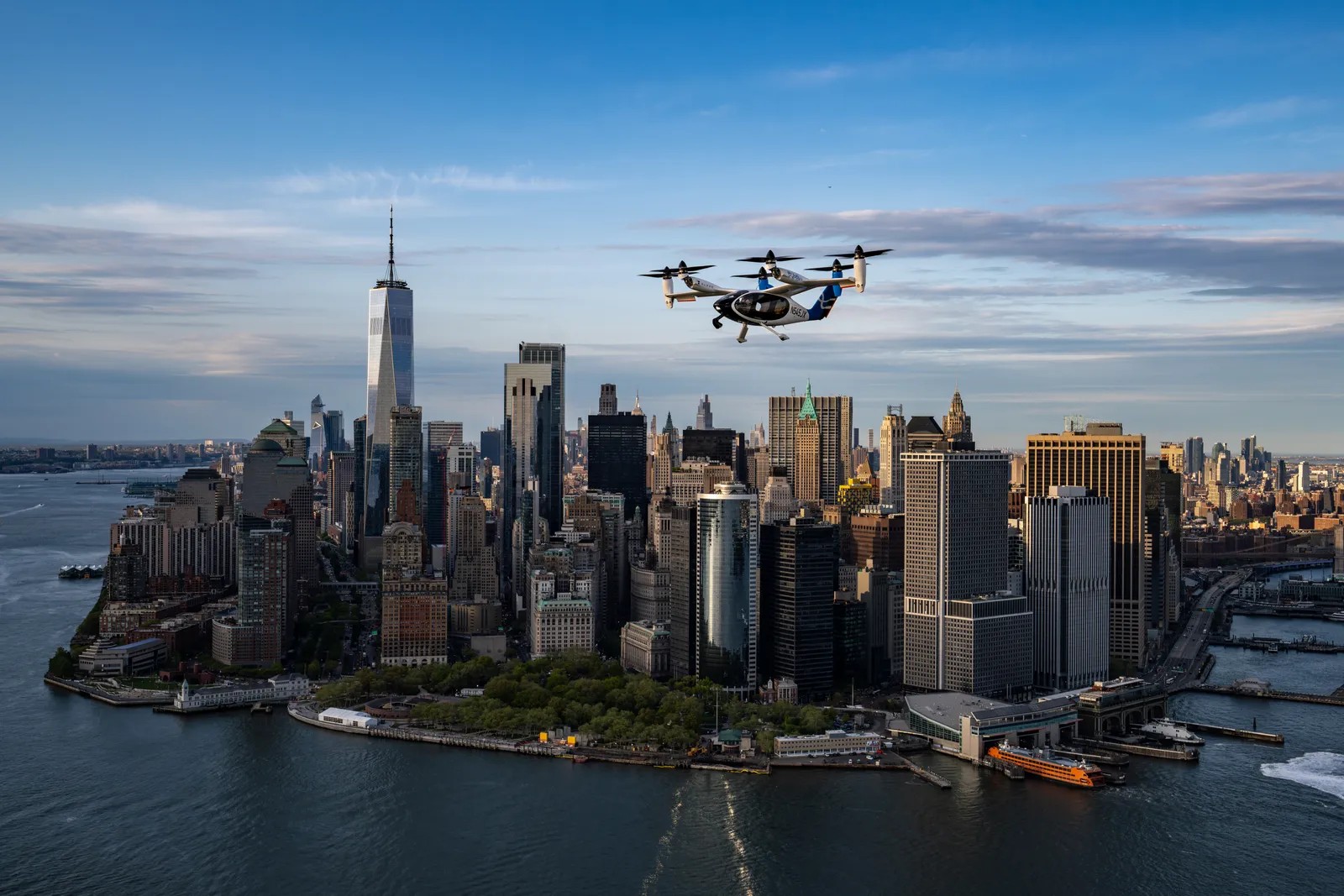
Joby and other air taxi developers are moving more slowly, but they continue to test their aircraft. In April, Joby completed New York’s first flight of an electric vertical takeoff and landing aircraft between different sites: from John F. Kennedy International Airport to three heliports in Manhattan. The company has conducted similar flights in California and Texas as part of the federal eIPP program to integrate electric air taxis. The Trump administration launched the program in March this year to test the capabilities of advanced drones and electric air taxis.
Joby representatives say the test flights are only the first stage in bringing the S4 into service. Next will come demonstration flights with passengers who do not pay, then flights with paying passengers, followed by regular service between destinations. All these stages are permitted under eIPP, but the level of oversight will increase gradually.
The first flights will be piloted. But paying one pilot to carry a few passengers is expensive, so the aircraft will need to learn to fly autonomously to make the business viable. Automating aircraft is harder than automating cars: an unexpected failure in the control system could cost lives.
SMART and other AI tools
In the near term, AI is likely to enter passenger aviation mainly through operational systems, not at the controls of air taxis. Palantir, Jeppesen and Thales sell AI-powered software that helps regulators, airlines and air traffic controllers analyze large datasets, identify risks, and plan aircraft and crew schedules.
In September, the FAA said it had deployed software from Boston-based Air Space Intelligence. The system is called Strategic Management of Airspace, Routes and Trajectories — SMART. It uses predictive AI to identify scheduling problems in advance and make controllers’ work easier, but it is not supposed to make decisions for them. FAA Administrator Brian Bedford said combining SMART with an equipment upgrade should help reduce delays, better manage air traffic, and preserve airspace capacity while maintaining safety standards.
Critics worry that the software could send operators meaningless data that they might mistake for valid information. A former FAA employee who asked to remain anonymous linked SMART’s rollout to the policies of the Trump administration, the Department of Government Efficiency and Elon Musk, and said new technologies were being introduced without understanding the complexity of the national airspace system.
On October 13, media reports said, nearly two dozen Democrats in Congress sent a letter to the US Government Accountability Office asking it to review SMART. They feared the system could “hallucinate” safety-critical information.
There is also the question of how SMART will affect the shortage of air traffic controllers. The FAA expects the technology to help address the shortfall by reducing staffing needs. But other industries have yet to see the promised productivity gains from AI materialize. Even if SMART does not directly replace people, efficiency gains could be used to justify staff cuts. In May, the FAA lowered its target for active air traffic controllers from 14,633, set for 2024, to 12,563, citing new staffing models and scheduling tools.
Mary Schiavo considers SMART a useful improvement. She says aviation today faces midair collisions, aircraft runway incursions, numerous dangerous near-misses, delays, ground stops, losses of required separation, and long waits for taxiing or takeoff clearance.
Michael McCormick, a professor of air traffic management at Embry-Riddle Aeronautical University, also sees value in forecasting. If a computing system analyzes an aircraft’s entire route, it can identify potential conflicts in advance. The earlier a controller learns about a possible problem, he explained, the less effort it takes to resolve it.
Where reliability has its limits
Building a system that works well most of the time and achieving the reliability aviation requires are different challenges. Researchers are now studying deterministic neural networks: they are trained in advance, and their model weights are fixed before they are used in real-world conditions. These systems do not hallucinate, but they can fail in other ways. In a 2021 paper, Collins Aerospace researcher Darren Cofer noted that in situations not encountered during training, a model could produce unexpected and potentially dangerous results.
The risks will grow when AI starts making real-time air traffic control decisions. This will most likely happen first on individual routes near drone bases and electric air taxi sites. McCormick says conventional air traffic control will not be able to handle the volume and complexity of the work if large numbers of autonomous aircraft take to the skies.
Two systems will operate in parallel: one using human decisions, the other using AI decisions. This will make it possible to compare them in real time. But any computer system can potentially be hacked, and AI capable of proposing new solutions could invent important details. If no human is in the loop, an obvious error might be spotted too late.
Dataist's take: AI already helps analyze data flows and plan aviation operations, but moving to autonomous flight control sets a much higher bar for reliability. The source offers no basis for concluding that these systems are ready to replace pilots or air traffic controllers: even SMART is officially intended to support decisions, not make them.
Daily AI news
Every day we pick what actually matters in AI and explain it plainly — no hype, no filler. Subscribe if you want to follow where the industry is going.
Only what matters — every day
Follow on X