

The grid is now the schedule
Nscale is building the site, which the UK government presented in 2025 as the country’s largest sovereign AI data center. The company said it remains committed to the project and has cleared the scaffolding yard that was still operating at the proposed construction site when The Guardian reported on it in March.
That was the project’s earlier warning sign. The more consequential problem is now electrical: UKPN has reportedly told Nscale that the network will not support the required capacity before the beginning or middle of the 2030s.
Nscale is considering generating electricity directly at the site and trying to accelerate its grid connection. The company expects to raise $35 billion (£26 billion) this year through an initial public offering, making the project’s ability to move from public showcase to operating infrastructure more than a local construction detail.
A national bottleneck
The Lawton site is requesting up to 90 MW, roughly equivalent to the consumption of 315,000 homes. That is large for one facility, but the wider queue makes clear that this is not just Nscale’s problem.
Ofgem said in June that 315 data centers were waiting to connect to the national electricity system. Their combined demand was 73 GW, compared with peak electricity consumption of 45 GW across the country.
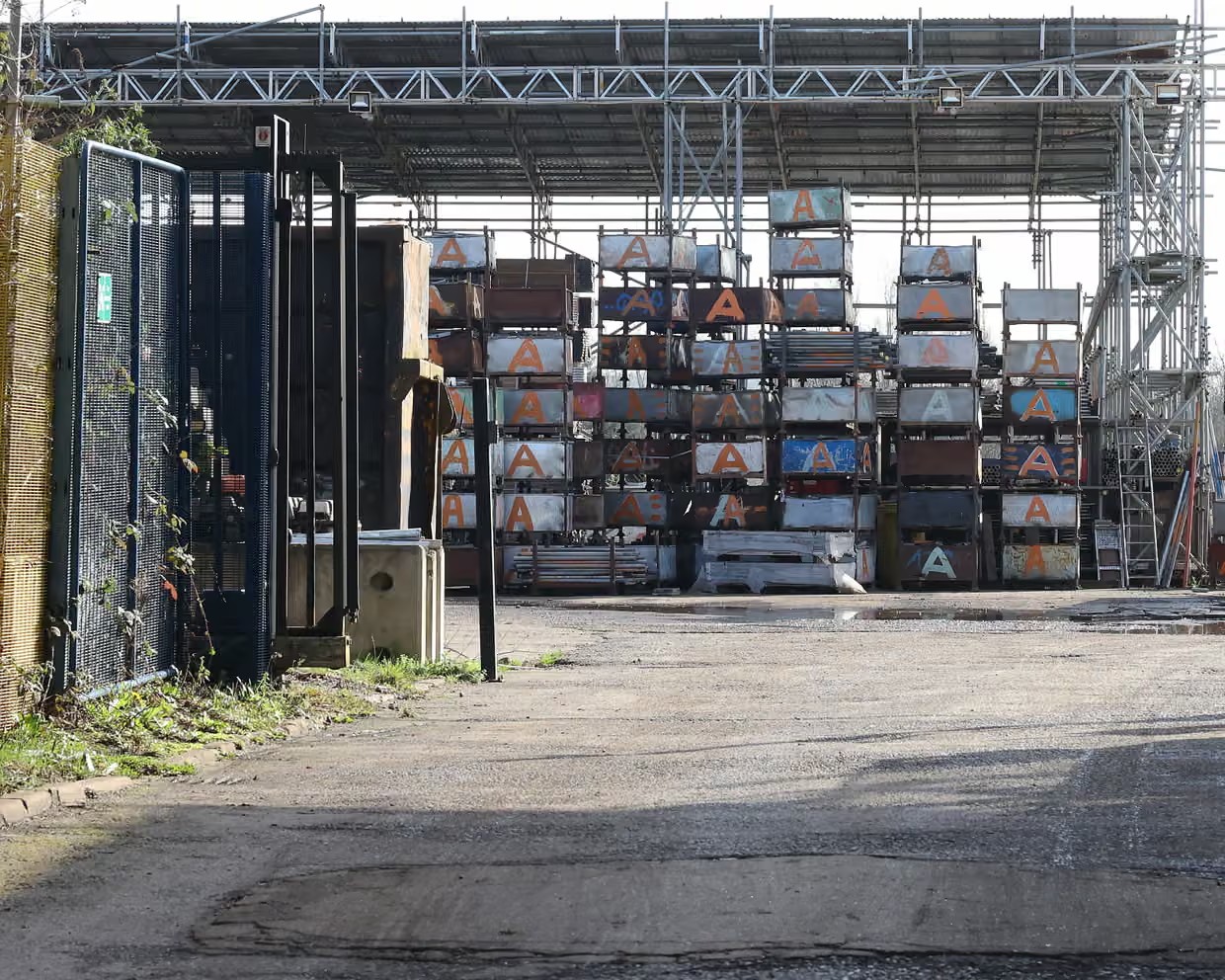
The scaffolding company, which was operating on the site. Photograph: Martin Godwin/The Guardian
Source: theguardian.com
UKPN declined to comment on the individual project. It said that many data centers connect to its distribution network but must wait for work on the broader national transmission network before they can operate reliably. Large-load sites can therefore be ready at the local level and still be blocked by infrastructure beyond their boundary.
National Grid said it was working with the government-owned National Energy System Operator, distribution network operators and customers to find ways to accelerate connections and support economic growth. A government representative said Neso and Ofgem were reforming the application process so projects that need connections most urgently could get them first.
The government also said it was addressing the effects of decades of underinvestment and carrying out the largest modernization of the energy network in many years.
The missing timetable
The Lawton project was useful to the government in 2025 because it made an AI strategy tangible: a large sovereign facility, presented as central infrastructure for technologies such as chatbots. But the project now exposes the gap between announcing compute capacity and delivering it.
I think the important number is not the site’s 90 MW request by itself. It is the potential wait measured in years. A 2027 launch slipping toward the middle of the 2030s would leave the computer’s schedule governed by grid construction rather than by chips, buildings or software.
Nscale’s proposed on-site generation may offer a route around that constraint, but the company has not said how much of the required capacity it could provide or whether it would eliminate the need for the wider network upgrades. That is the quiet part of the announcement, and the detail that will determine whether this is a temporary connection delay or a fundamental limit on the project.
The UK can call Lawton a national AI asset, but until the electricity arrives, it remains a promise attached to a power queue.
Daily AI news
Every day we pick what actually matters in AI and explain it plainly — no hype, no filler. Subscribe if you want to follow where the industry is going.
Only what matters — every day
Follow on X