
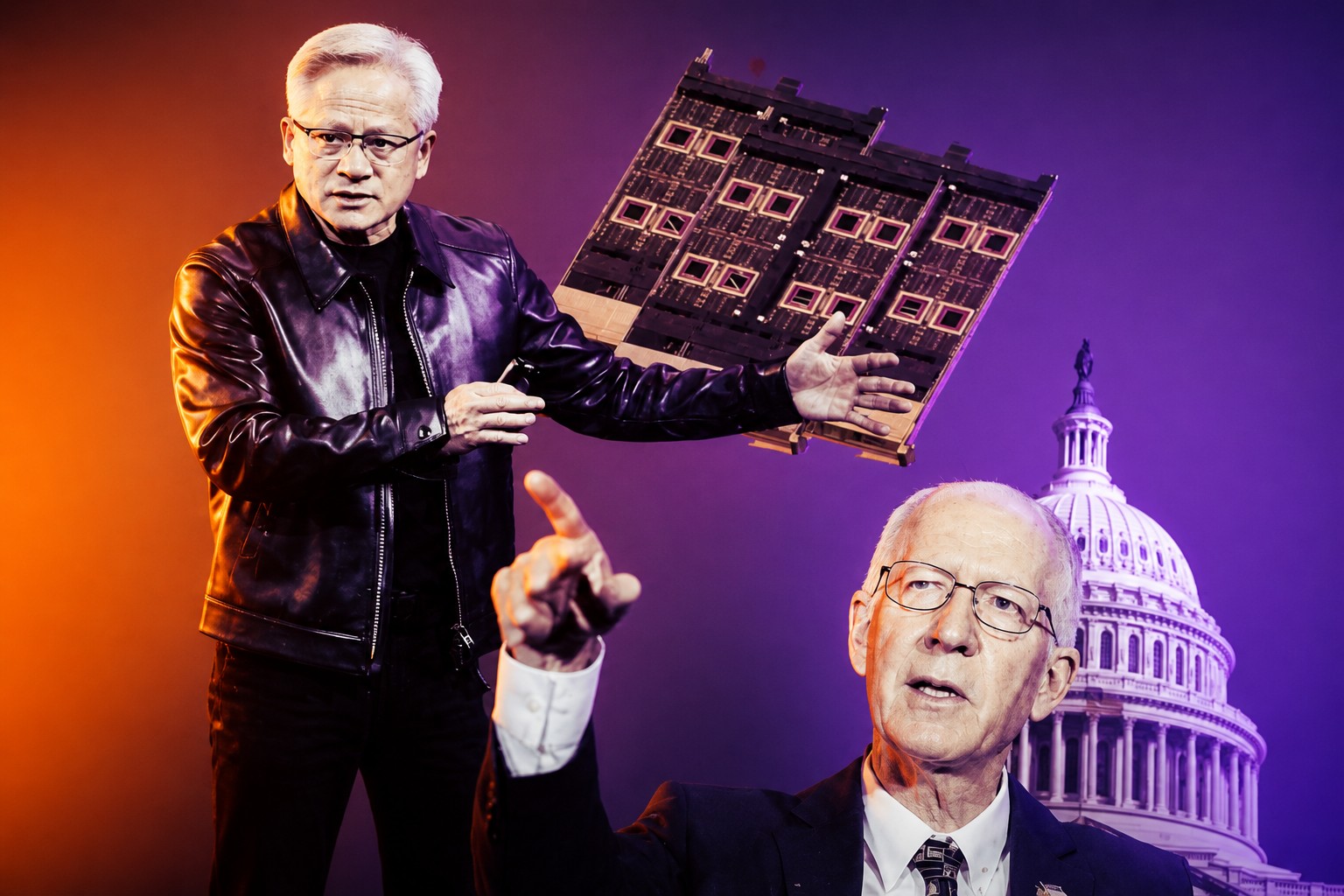
Nvidia representatives told Congressman Bill Foster in private conversations that the company is technically capable of tracking the location of advanced chips to combat smuggling into China. Nvidia has not confirmed this publicly, and the Semiconductor Industry Association, of which it is a member, has called such measures “potentially infeasible.” Foster supports the Chip Security Act, which would require checks on chip locations. The bill is one of three supply-chain security proposals that could be included in the US defense budget.
Nvidia acknowledged it can track chip locations
What Nvidia told Foster
Foster is a Democrat, a member of the House Committee on Science, Space, and Technology, and one of the co-sponsors of the Chip Security Act. He said Nvidia representatives discussed the technical feasibility of protecting chips from smuggling with him. They did not provide written confirmation, but their response during the conversation led Foster to understand that the company considered the idea feasible. This is a more direct acknowledgment of tracking capabilities than Nvidia has made publicly.
When the bill was introduced in May 2025, lawmakers said the necessary technology already existed. Nvidia did not confirm this publicly. In March 2026, the Semiconductor Industry Association opposed the bill, calling the tracking requirements new, untested, and potentially infeasible.
Some of Nvidia’s products for customers, however, show that the company can track chip operations across different locations. In December 2025, it introduced Fleet Intelligence, a tool that lets customers monitor advanced chips across multiple data centers. Nvidia confirmed to Reuters that the data can identify the country where a chip is located, but declined to say whether the technology could help prevent smuggling.
Nvidia did not respond to MIT Technology Review’s requests for comment on Foster’s remarks. In early October, as lawmakers were reportedly growing more concerned about the company’s role in smuggling, the publication asked whether Fleet Intelligence could be used to prevent it. Nvidia did not answer directly, saying that cases of restricted US goods being diverted were insignificant compared with the computing resources already available to China.
The investigation involving Megaspeed
A new round of debate centers on several people and companies suspected of involvement in chip smuggling. Alice Huang, who media reports say had an affair with Jensen Huang, runs Singapore-based Megaspeed. The company is under investigation over suspected shipments of advanced graphics processors to China.
Reports say the US Commerce Department’s investigation into Megaspeed was suspended after Nvidia intervened. The company was also reported to have bought chips from Supermicro, a supplier that installs Nvidia products in servers.
How the bill proposes to track chips
The Chip Security Act outlines several ways to check chip locations:
The last method would be the hardest to circumvent: a graphics processor would have to transmit a signal indicating its location when powered on. In September, Georgetown University’s Center for Security and Emerging Technology called this option the most cost-effective.
Foster said he did not ask Nvidia representatives why the company does not implement these tools itself if it considers them technically feasible.
Even if the bill’s requirements are included in the Senate defense budget, tracking would show investigators where chips are located but would not let them disable the chips if they were found to have been smuggled. Foster plans to introduce a stricter bill in the new year. It would require a license to operate advanced graphics processors: before connecting, a chip would have to verify that the license is valid.
Foster said recent events involving Nvidia had increased support for the bill among his colleagues. He expects companies to face political pressure to thoroughly verify the geographic location of their chips.
Dataist's take: The measures under discussion could identify a chip’s location, but not stop it from operating after an illegal shipment is detected. Foster’s proposed licensing requirement is meant to close that gap, but it has yet to be introduced and considered.
Daily AI news
Every day we pick what actually matters in AI and explain it plainly — no hype, no filler. Subscribe if you want to follow where the industry is going.
Only what matters — every day
Follow on X