
Paradromics will use Nvidia Jetson modules and Holoscan software in its brain-computer interfaces. Decoding brain signals currently requires a cart full of electronics plugged into a wall outlet. Paradromics plans to move the computing into a small unit that can be mounted on a wheelchair in about a year. Eventually, the electronics could shrink enough to fit in a phone. Nvidia’s technology is also expected to reduce delays in converting signals into speech and let AI models run without an internet connection.
Nvidia aims to make brain-computer interfaces smaller
From brain signals to speech
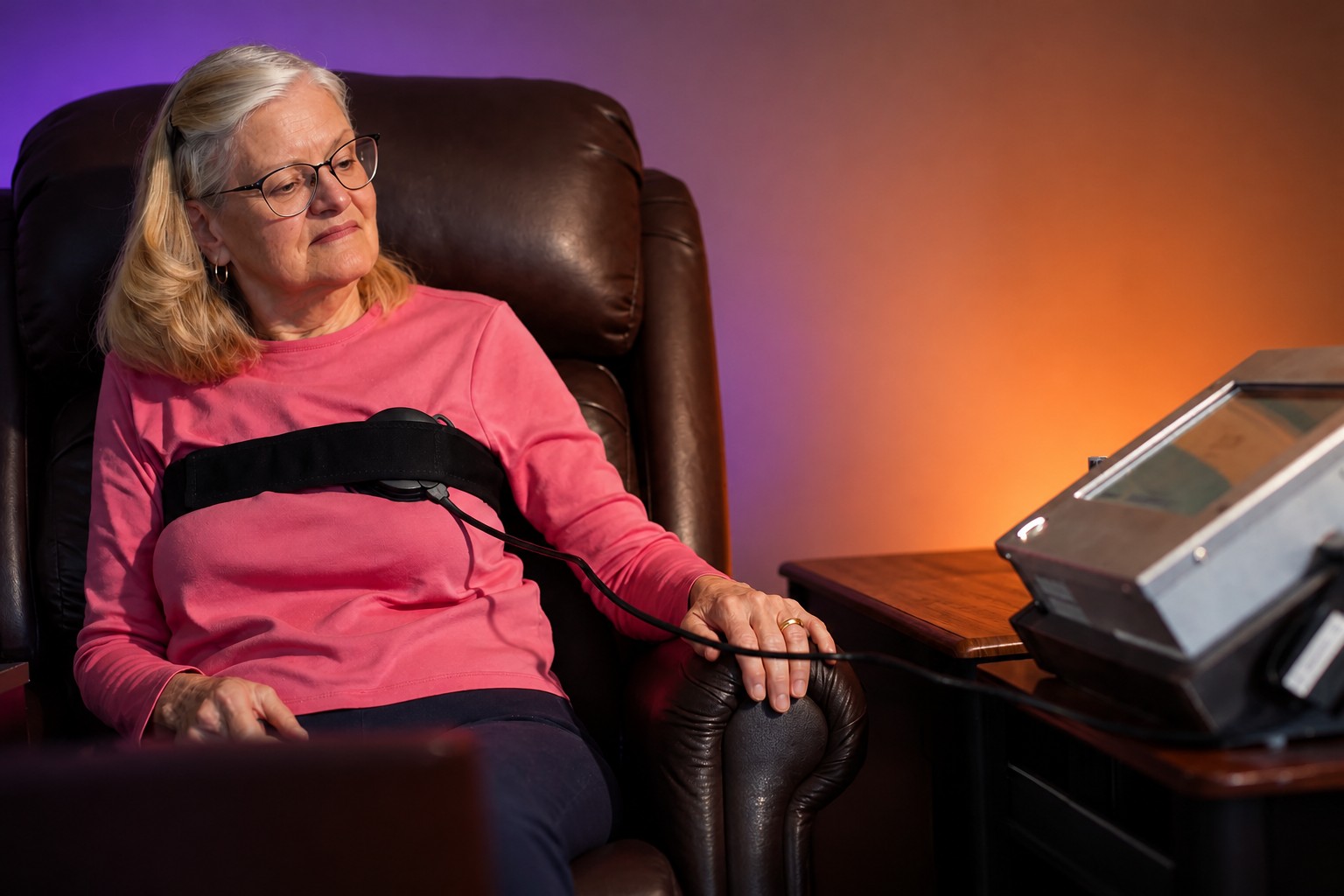
Mary, who lives in Michigan and has motor neuron disease, has a chip about the size of a dime implanted in her brain. She has difficulty speaking, but her Paradromics implant picks up brain signals produced when she tries to say words. More than 400 built-in electrodes collect the signals, and a computer uses AI to determine what Mary is trying to say. The words appear on a screen, then the computer speaks them in a synthesized voice.
Decoding the signals takes substantial computing power. The system is currently connected to a cart full of electronics that has to be plugged into a wall outlet; Mary can use the interface only when she is near it. Paradromics founder and CEO Matt Angle expects the equipment to be replaced by a small unit on a wheelchair in a year. Eventually, he says, the electronics could fit in a phone.
Today, Austin-based Paradromics announced a partnership with Nvidia: it will use the company’s hardware and software to process brain data. The announcement came amid changes in Nvidia’s leadership and federal scrutiny of the company following the departure of its longtime CEO, Jensen Huang. The source links his resignation to a romantic relationship with someone suspected of spying for China.
Angle says Paradromics chose Nvidia’s technology because brain-computer interfaces generate large volumes of valuable data that need to be turned into useful applications. He calls the field a clear example of edge computing: data is processed and stored on devices near where it is generated, rather than sent to a remote cloud or data center. Angle says the goal is to do this processing on increasingly compact, energy-efficient devices.
Processing close to the user
Reducing the size and power consumption of the equipment is one of the main challenges for brain-computer interfaces. Although these systems are more compact than the setups used in early academic labs, they still need external electronics. Lighter, more mobile devices would let patients use them in different places.
To that end, Paradromics plans to use Nvidia’s low-power Jetson computing module. It will make it possible to decode speech on a small device near the user. The company will also use Holoscan, Nvidia software for processing data from AI sensors. It is intended to enable interaction with computers and other devices with low latency.
Brain-computer interfaces will need to work alongside other sensors, including cameras and microphones. Holoscan will combine data streams so applications can take both brain signals and the surrounding context into account.
David Nvolny, Nvidia’s director of business development for healthcare and medicine, told WIRED by email that complex brain signals need to be translated into meaningful actions in real time. Even small delays can make communication feel unnatural, while the signals themselves change over time, so AI needs to keep adapting to each person. Nvidia’s technology processes neural signals and runs AI models in real time.
Low latency is especially important for speech-based brain-computer interfaces: without it, users may struggle to hold a natural conversation. The partnership will also give Paradromics the option to build Nvidia’s foundational models into its system. According to Paradromics chief scientific officer Vikash Gilja, these models could make synthesized speech more expressive and natural. If the models run locally on Nvidia equipment, users will not need an internet connection.
Nvidia is also working with other companies in the brain-computer interface field, including Synchron. Nvolny said Nvidia will not have access to brain data through these partnerships.
Dataist's take: The partnership targets a practical limitation of current brain-computer interfaces: their reliance on bulky equipment and a power outlet. But compact devices are still a plan, not an achieved result. The companies deny that Nvidia will have access to brain data.
Daily AI news
Every day we pick what actually matters in AI and explain it plainly — no hype, no filler. Subscribe if you want to follow where the industry is going.
Only what matters — every day
Follow on X