The latency trade-off
Nemotron 3 Diarization offers four buffer settings, ranging from 30.4 seconds down to 0.32 seconds. The shorter the buffer, the faster the system can respond—but, as the source notes, accuracy generally falls.
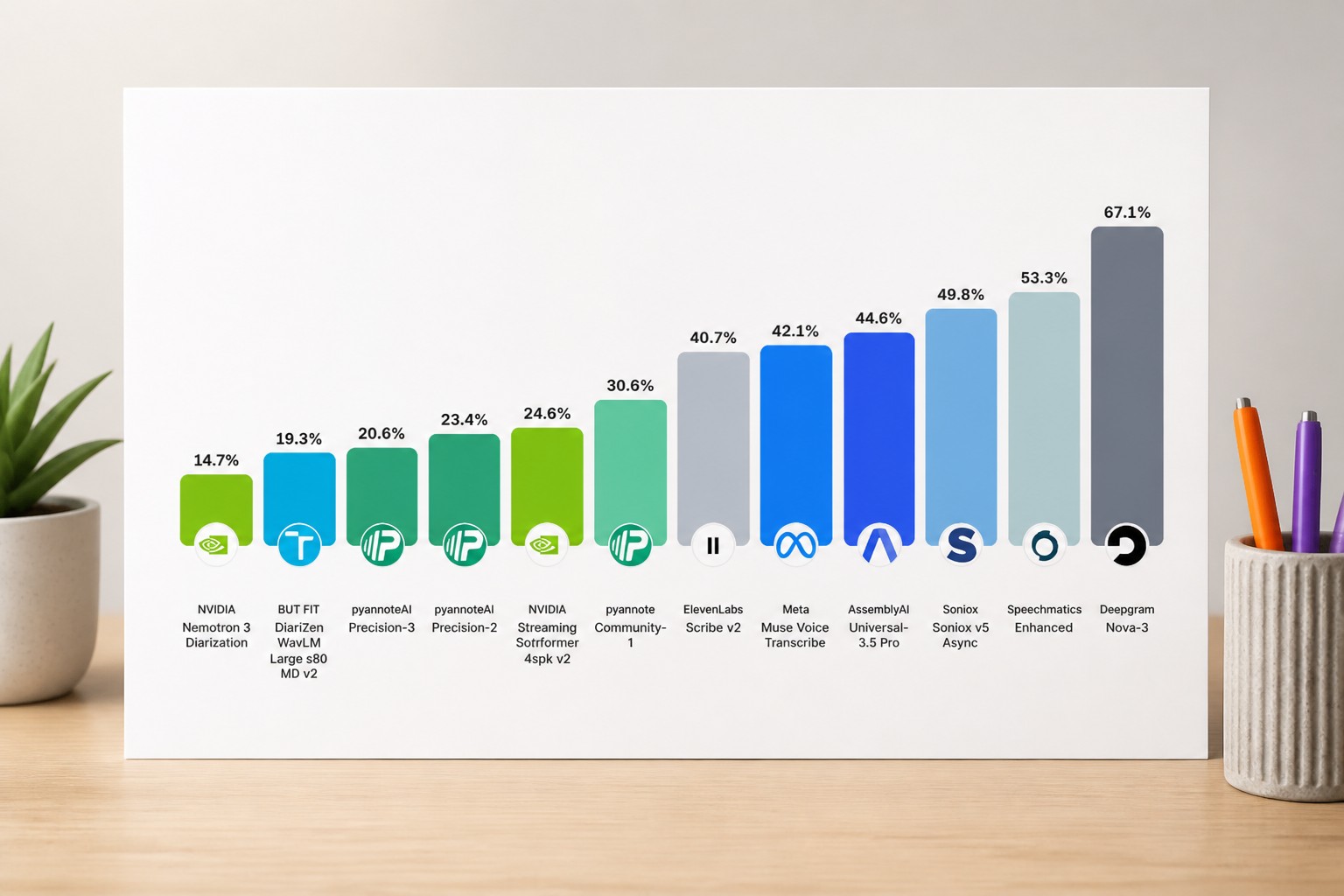
That trade-off matters because the benchmark is unforgiving. Diarization-Bench counts both overlapping speech and even small timing errors when the speaker changes. Nemotron’s 14.72% error rate puts it ahead of the next-best system, at 19.3%.
What the comparison does—and doesn’t—show
At a 1.04-second buffer, Nemotron 3 Diarization reduces errors by an average of 41% versus Streaming Sortformer, Nvidia’s previous model. That result spans eight test scenarios, but it does not establish how much accuracy the model gives up at its shortest buffer settings.
I think the headline result is less informative than the latency curve Nvidia hasn’t provided here: a leading benchmark score tells us where the model ranks, not what users should expect when they prioritize responsiveness. The useful question is how error rates change across the four buffer settings. Until that comparison is clear, the model’s real-time promise comes with a practical tension: the faster the response, the less certain the transcript’s speaker labels may be.
Daily AI news
Every day we pick what actually matters in AI and explain it plainly — no hype, no filler. Subscribe if you want to follow where the industry is going.
Only what matters — every day
Follow on X