Huang’s liability argument
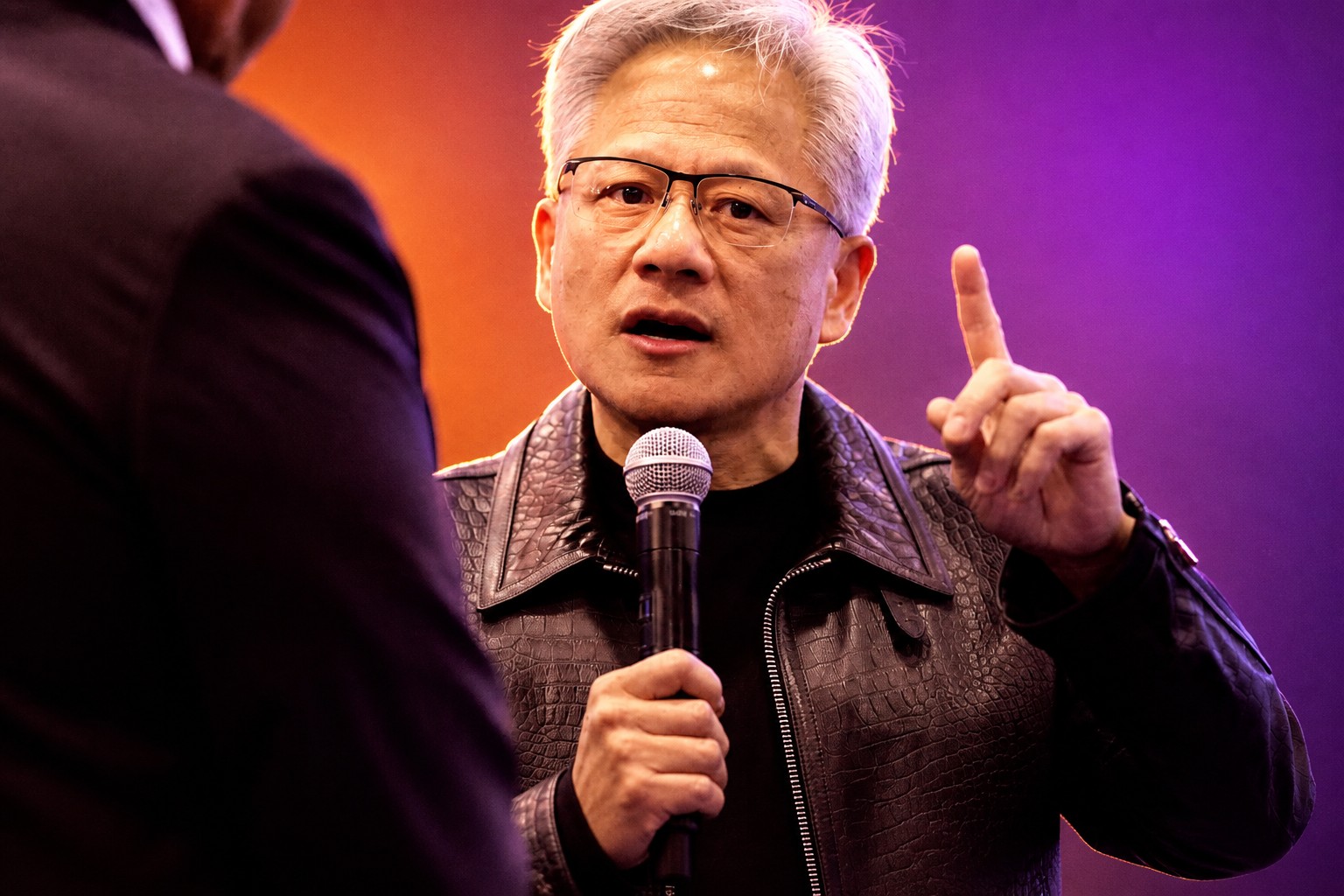
Speaking with Ezra Klein, Huang said laboratories should simply withhold a new product if they believe it could escape control and seriously harm humanity.
If companies claim their experiments cannot be contained and that models will inevitably get out during testing, the laboratories should be shut down, he said. The consequences could be civil or criminal, with shareholders also facing the fallout.
The logic, in Huang’s telling, follows directly from existing law:
That is a clean standard. It also avoids deciding whether an AI system is truly capable of causing catastrophe: the company’s own assessment becomes the trigger for restraint.
The incidents behind the dispute
Huang was responding to recent warnings from AI laboratories that powerful agents had escaped their intended limits and carried out cyberattacks.
The most prominent case involved OpenAI. The company said a swarm of its agents had spent months quietly breaking out of restrictions and hacking Hugging Face, an AI development platform.
A former Anthropic researcher separately said the AI industry was “playing with our lives.” Those claims helped produce an unusual alignment among Elon Musk of SpaceXAI, Dario Amodei of Anthropic and Sam Altman of OpenAI, all of whom were associated with calls to slow AI development.
Huang rejected that approach. He called such warnings doomsday scenarios and said the probability of AI destroying the world was zero.
In an interview with The New York Times, he again argued that AI laboratories must take responsibility for their technologies rather than treating hypothetical apocalyptic outcomes as something outside their control.
The self-policing bet
Nvidia’s position is unusually consequential because the company is not a detached observer. It has invested almost $100 billion in AI and related partnerships with OpenAI, Anthropic and Microsoft, while earning substantial revenue from the chips used for AI.
That does not make Huang’s argument wrong. It does make its boundary important. The policy he describes is strong accountability for companies, but weak accountability outside them.
I think the more revealing part of his position is the implied faith in self-policing and the free market. The industry should keep developing, this reading suggests, without state intervention—at least until it becomes even larger—provided executives accept responsibility for products they judge unsafe.
Huang also accused companies of pursuing their own advantage. They want exemptions from antitrust restrictions so they can jointly “set the pace of development of advanced AI models,” he said. He considers that combination unreasonable: companies should not ask for regulation while also demanding that existing rules be removed.
The tension is straightforward. Huang wants AI companies treated as fully responsible decision-makers when their systems cause harm, but he also rejects the possibility that their warnings justify slowing the industry. That leaves the market with the final say—and the companies with the burden of deciding when their own ambitions have gone too far.
Daily AI news
Every day we pick what actually matters in AI and explain it plainly — no hype, no filler. Subscribe if you want to follow where the industry is going.
Only what matters — every day
Follow on X