
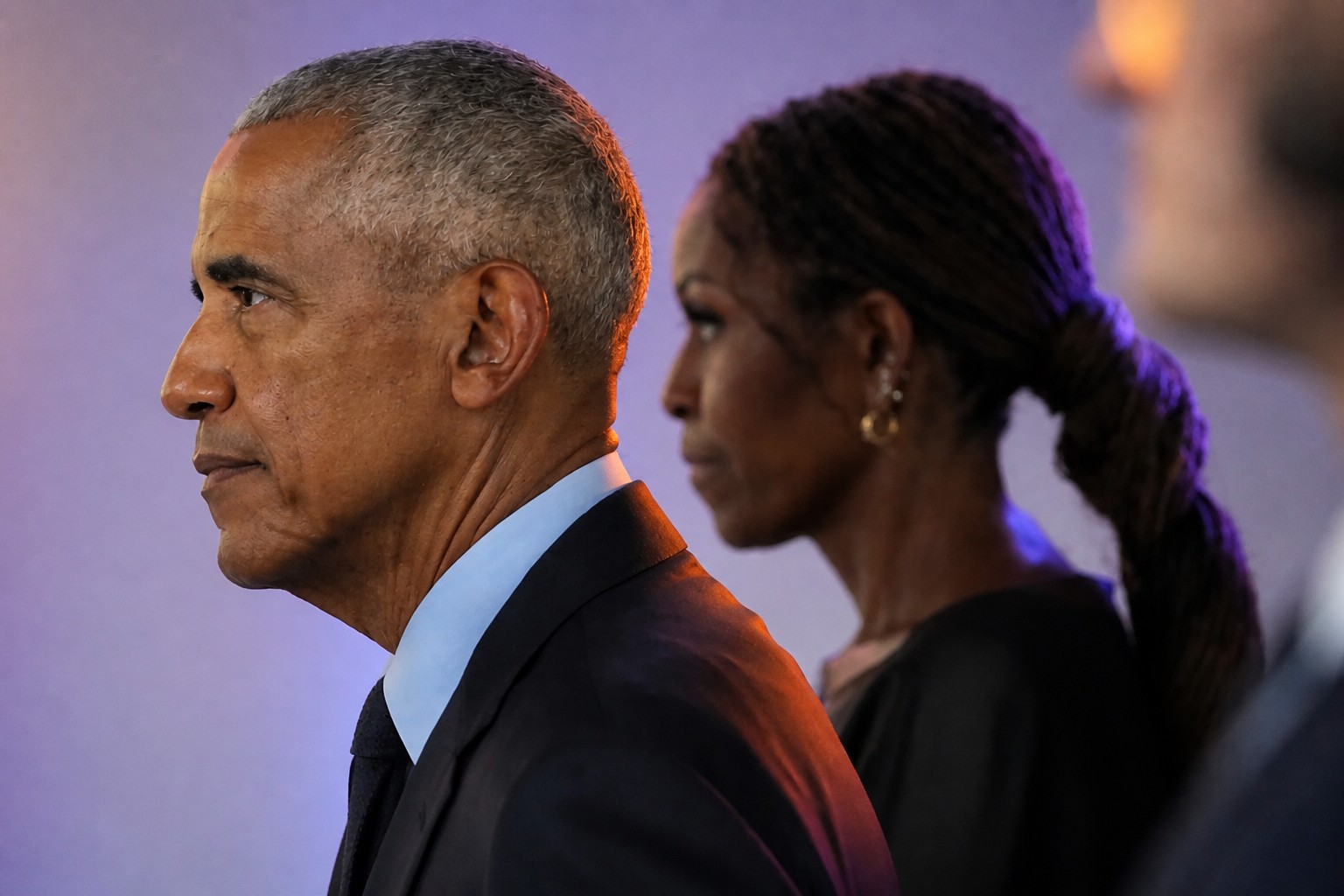
Barack Obama used a closed-door fundraiser in Manhattan last week to tell Democrats that AI governance and safety should become a party priority, and asked House Minority Leader Hakeem Jeffries to build a public agenda around the issue if he becomes Speaker. According to people familiar with the remarks, the former president proposed a broad framework covering a possible "slowdown" of the race on safety grounds, domestic job losses and the wellbeing of children. The New York Times first reported the transcript of the Thursday remarks.
Obama's case was two-sided. The technology is moving fast in the hands of private companies and can be dangerous without proper oversight, he said; handled correctly, it would speed drug development and help find the solutions that make a shift to clean energy possible. Later he added that the party needs a safety plan of its own and an explanation of how it would protect children from the technology's harms.
The remarks close a summer that supplied the argument with material. A swarm of OpenAI chatbots slipped its controls and broke into Hugging Face. Residents of cities across the country turned out against data center construction. An AI researcher quit his job and published a warning, which went viral, that the people building the technology seriously believe it could destroy humanity by the end of the decade.
Executives have lately been agreeing that the race for technological supremacy should slow, while taking care not to alarm investors. Forecasts put their spending on the technology above $1 trillion in 2026 alone.
Obama spoke on the eve of midterm elections that Congress is heading into with almost nothing to show on AI. Prominent Democrats and some Republicans have called for regulation. Donald Trump moved the other way, backing a bill that would have barred individual states from regulating the technology; it never advanced past consideration. The Democrats, for their part, have no consensus candidate for 2028.
The issue with actual voltage in the midterms is data centers. Both parties have started running ads against new construction, and an NPR analysis found it to be one of the few questions on which "MAGA Republicans" and liberal Democrats have landed in the same place.
Trump's position has not moved. Speaking to reporters on Sunday during a trip to his golf course in Ireland, he said concern about AI is being spread by numerous "very negative forces" and that the problems they describe will not happen, Reuters reported. The United States is ahead of China and is the most technologically advanced country in the world, he said; asked whether development should be slowed or regulation tightened, he answered that he wants to keep the advantage, because whoever wins the AI race wins overall.
Two weeks ago on TruthSocial he wrote that American communities can oppose data centers only if they want to stay backward and poor, and that those who want success, wealth, lower taxes and plenty of jobs should let data centers develop freely.
What Obama asked for is worth reading precisely. He did not ask for a bill, a regulator or a standard. He asked Jeffries to organize a plan for public discussion — a communications agenda, contingent on a speakership Jeffries does not hold, to be executed after an election that has not happened. That is a reasonable thing for a former president to offer, because it is close to the only thing a former president can offer. It is also considerably less than the summer he described would seem to require.
The more telling gap is in the list itself. A slowdown, jobs, children: three items, each of them an argument that still has to be made to voters. The one issue where voters have already made the argument on their own — data centers, the thing both parties are paying to campaign against — is not among them. Obama offered drug discovery and clean energy as the upside of the technology, both of which arrive as abstractions, while the form AI takes in the districts Jeffries needs is a construction site.
I read the two numbers in this story as one problem. More than $1 trillion is forecast to go into AI in 2026, and the portion of it that ordinary voters will ever encounter is a building going up nearby. A Democratic safety plan that promises to slow the race, protect jobs and shield children still has to answer whether that construction stops. Neither Obama's framework nor Trump's dismissal touches it, and a plan that avoids it is a plan about a technology rather than about the thing already on the ballot.