
A companion with a narrow brief
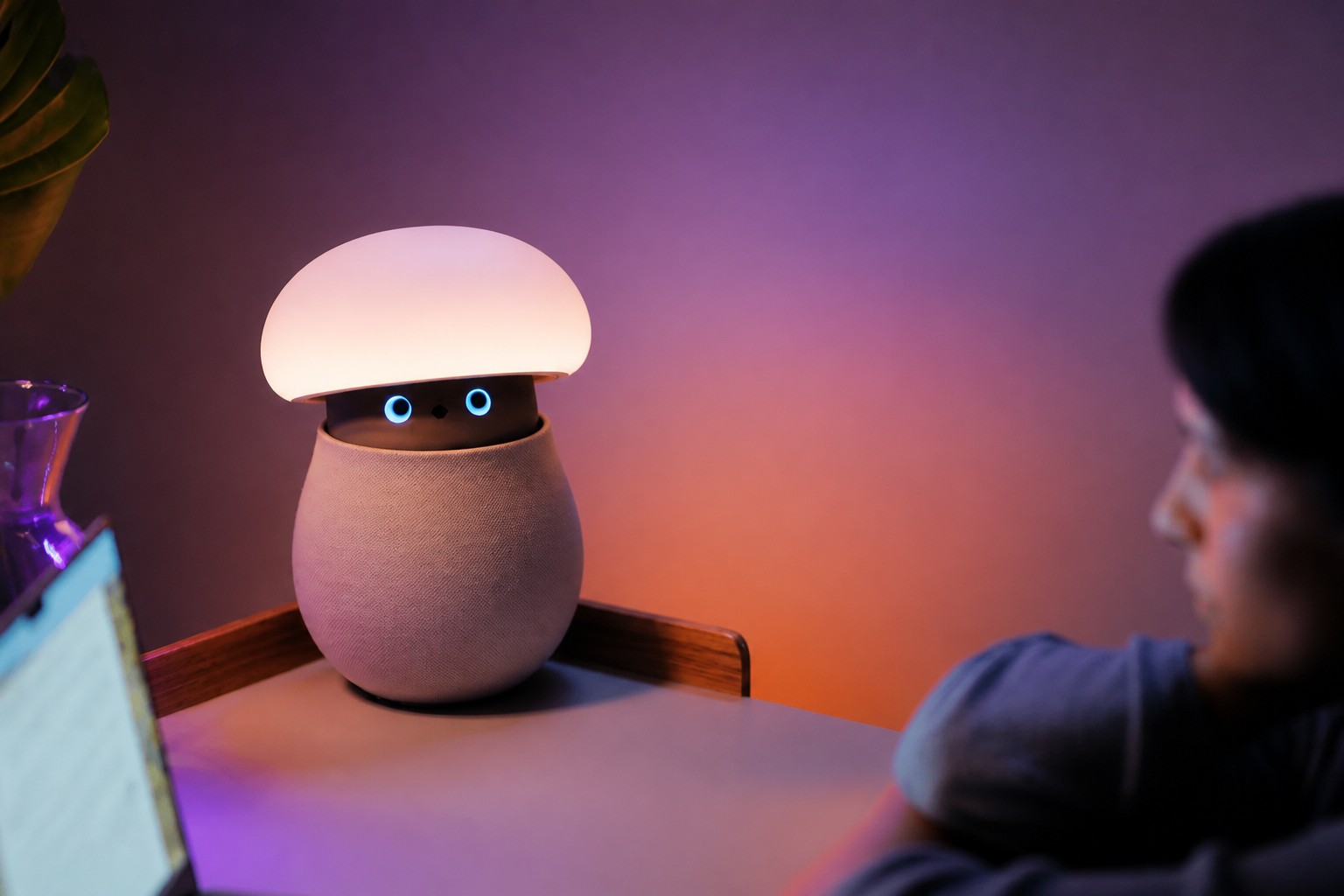
Mori’s head rises when its microphone detects someone entering. Its movable eyes and diamond-shaped nose — which is also a camera — follow people around the room. Touch the head and the face retracts; Mori becomes a nightlight and plays a nature soundscape.
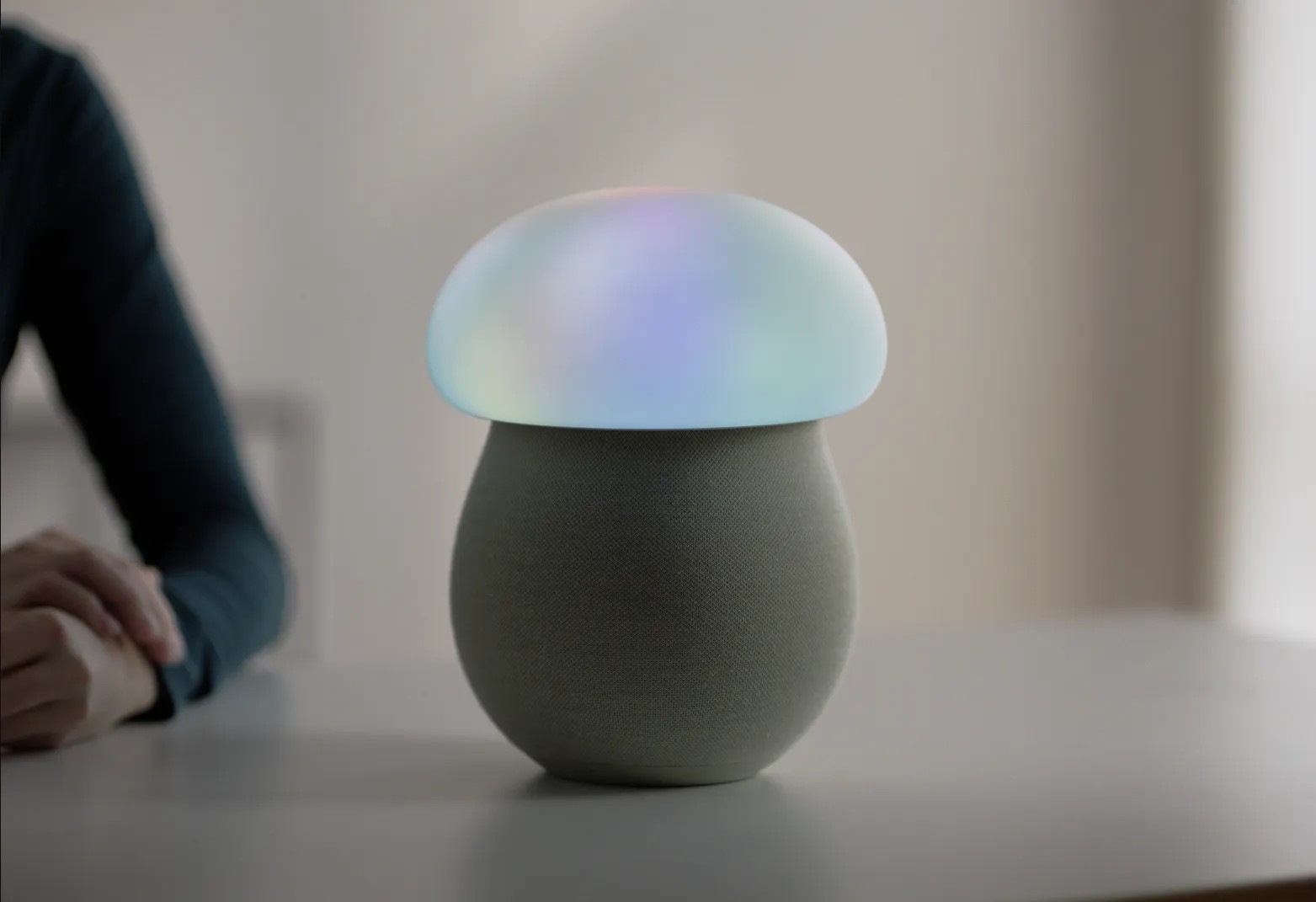
The nearly 12-inch device can glow in colors inspired by rain, forests, fire and wind. It can react to music or television, and it can try to draw someone away from their phone with the sound of leaves rustling. OKA says it can also stay quiet during a phone call or an argument.
That last feature is free. Nature soundscapes require a subscription. Without one, Mori is a camera-equipped nightlight that can still move and react to people.
OKA, or One Kind Artifact, is an experimental technology startup operating in Cambridge, Massachusetts, and Shenzhen, China. CEO Hua Wang told WIRED that the company plans to make five experimental “artifacts”; Mori is the first. Wang previously managed Meipai, a video-sharing app from Chinese phone maker Meitu, and co-founded Bondee, a social app that has since shut down.
The Founder’s Edition costs $649 and includes a two-year warranty and two years of Mori’s service. Only a few hundred are being made. A standard version will cost $799, without subscription features included.
What Mori sees, and keeps
Mori’s AI runs on several local large language models. Its camera and microphones help it interpret what is happening and decide when to interact. OKA calls this “attentive intelligence”: Mori remembers its owner and adapts over time, may act more shy around guests, and forgets someone it has not seen for a month.
Wang says the internet connection is only for firmware updates. Mori processes images and audio locally, then deletes the files. Face data used to distinguish an owner from a guest is encrypted on the device and not sent online. The camera turns off when Mori is a nightlight; a double tap on its head switches off the microphone. It runs on a battery or can stay plugged in.
Some possible additions are still just possibilities. Wang says Mori might connect to Oura Ring data to infer when someone needs relaxing sounds, or to Spotify to play different content. Voice commands could also arrive, letting someone ask for nature sounds without touching the robot.
The value of doing less
The product’s restraint is its defining feature, but also its hardest sell. Mori cannot fetch slippers or tell the time; even its nature sounds sit behind a subscription. My read is that OKA is asking buyers to pay not for capability, but for a particular kind of presence: a device that notices them, then tries not to take over the room.
That puts Mori in the company of pet robots rather than assistants. Chris Harrison, director of the Future Interfaces Group at Carnegie Mellon University, points to Sony’s Aibo, released in 1999, as an early digital companion. He argues that AI now gives such devices more ability to recognize human actions and emotions. Harrison also compares Mori to a goldfish or hamster: people can enjoy caring for and interacting with a pet without expecting complex behavior.
Wang’s stated goal is to help people feel more connected to nature and to one another. He says many people leave a television on so a room does not feel empty, and that Mori is aimed more at younger people than at children or older adults. The company’s ambition is broader than a nightlight; the first device, though, has to make the case for a $649 companion whose main offer is quiet company.
What I’d want to know is whether that companionship holds up after the novelty fades — and whether enough owners will pay a subscription for the part of Mori most closely tied to OKA’s promise.
Source: wired.com
Daily AI news
Every day we pick what actually matters in AI and explain it plainly — no hype, no filler. Subscribe if you want to follow where the industry is going.
Only what matters — every day
Follow on X