

Ollie, a family AI assistant based in San Diego, has become one of the first consumer-facing services of its kind to pass a SOC 2 audit — the standard under which an independent auditor confirms that a company has formal procedures for protecting customer data and operating its systems securely. Some corporate AI assistants already run data-protection measures; the audit is rare on the consumer side of this market. Co-founder and chief executive Bill Lennon told TechCrunch that trust and privacy are preconditions for the product, that Ollie charges a subscription precisely so the user understands the assistant works for him, and that the company does not hand user data to third parties.
The certification is meant to answer a specific worry: that a service sitting on a family's calendar and inbox is quietly collecting that material for other purposes, model training among them.
Source: techcrunch.com
Ollie is entering a crowded category. Text-message assistants trying to embed themselves in daily life include Poke, which Cognition acquired, along with Fambot, Ohai, Folk, Saner.ai and Tomo. A second cluster — Town, Lindy, Reclaim.ai — aims at work, calendars and email. And then there is Instinct, which raised $350 million at a $2.5 billion valuation before it even launched.
Ollie raised $7.5 million in a seed round, most of it from Khosla Ventures, with AI House also participating. That is close to a fiftieth of what its loudest competitor brought in pre-launch, which is the context in which the privacy positioning should be read: it is the differentiator available to the company that cannot win on capital or distribution.
It is also a real one, because the competition has handed it over. Instinct drew criticism for terms of service and a privacy policy granting the company a "perpetual and irrevocable" license to access, use, store, copy, transmit, publish, distribute and modify a user's material — including for training AI models.
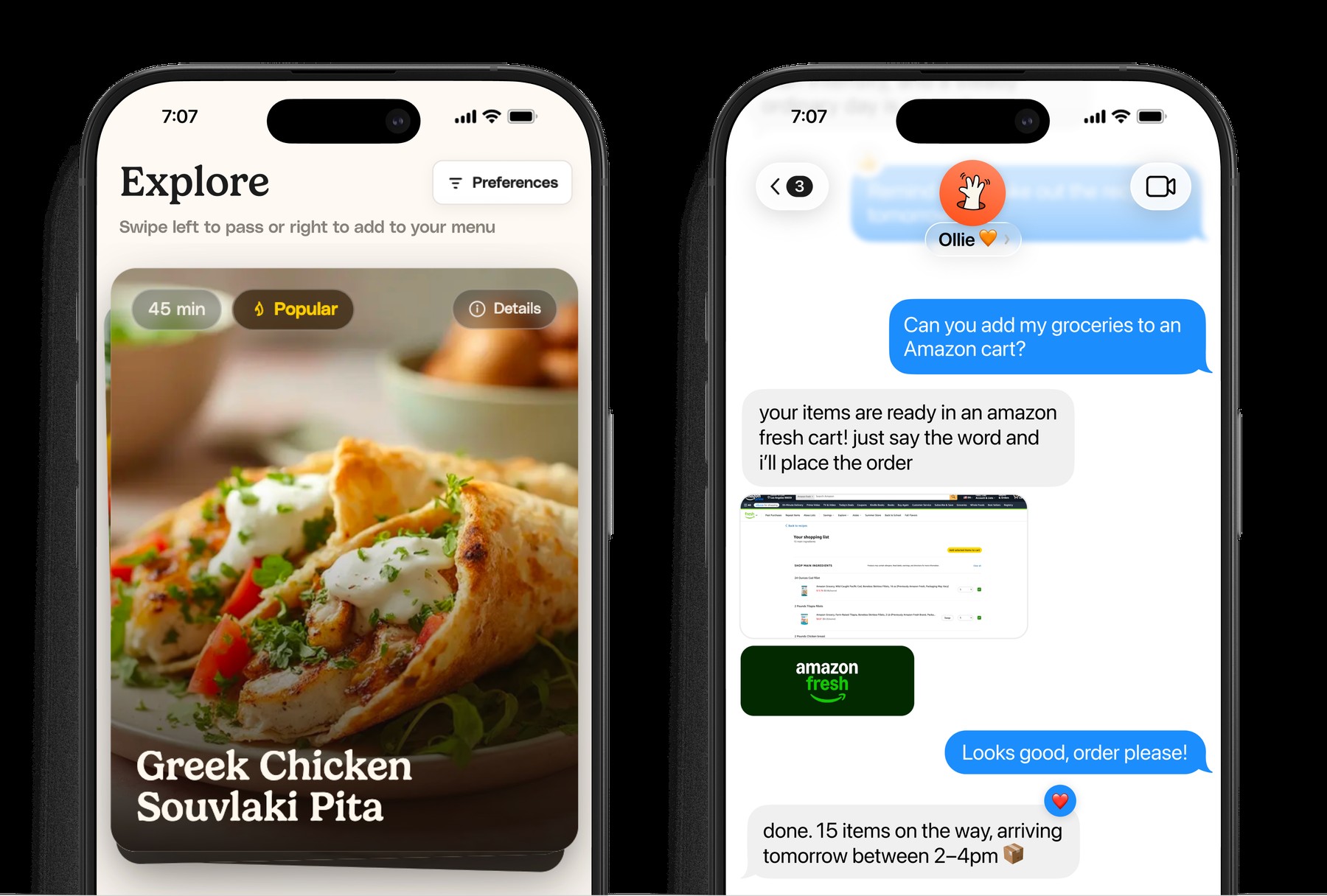
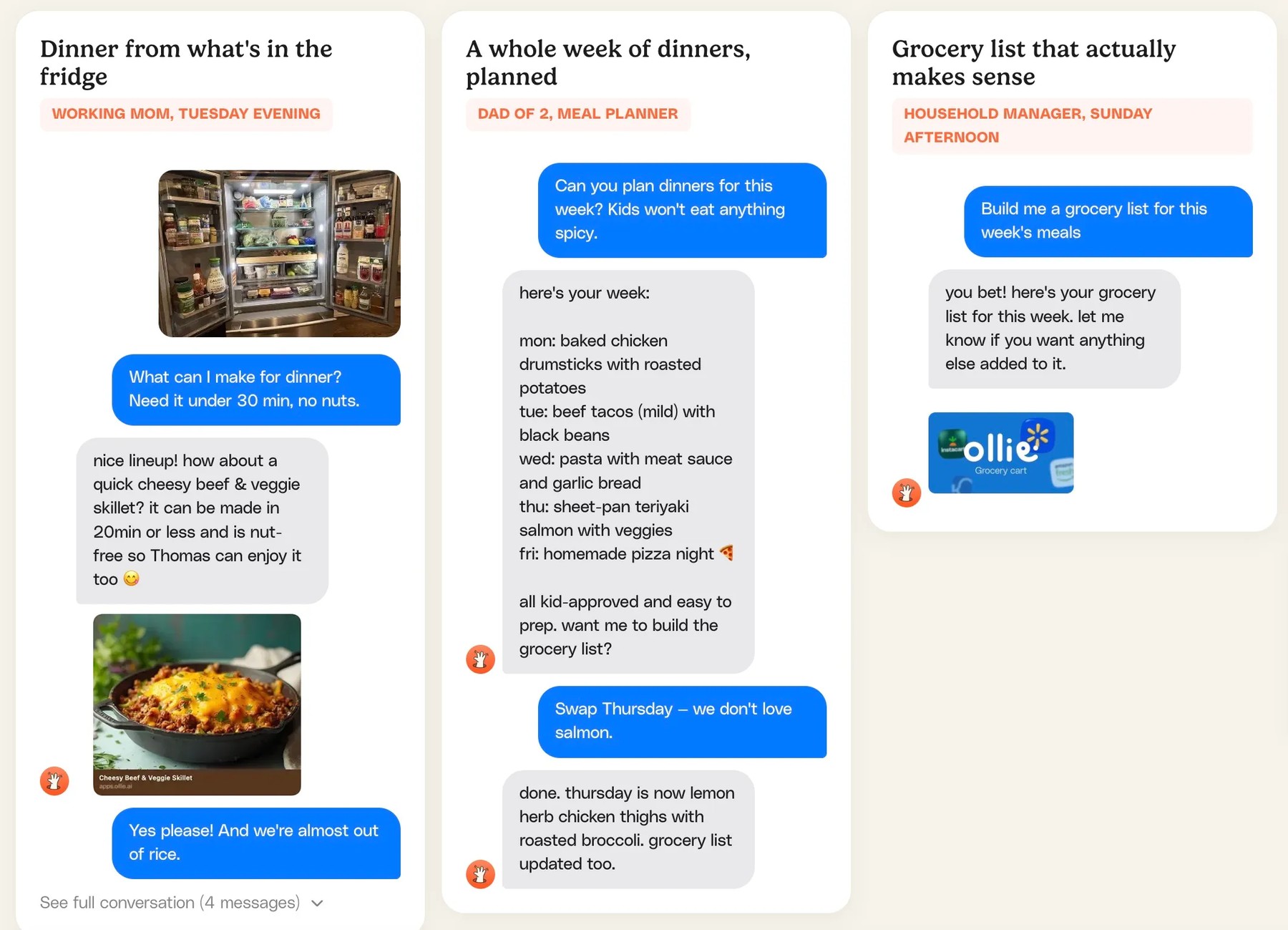
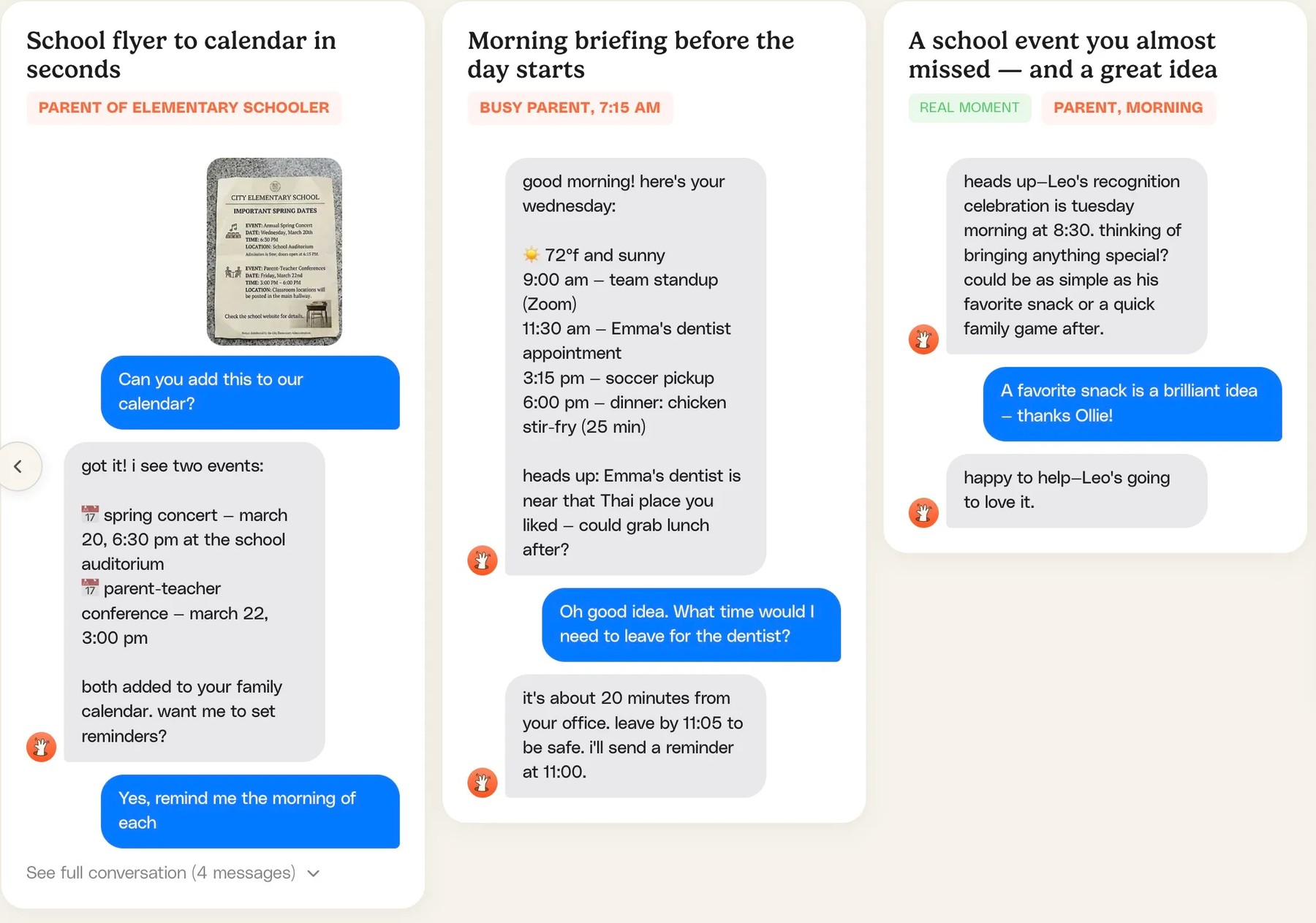
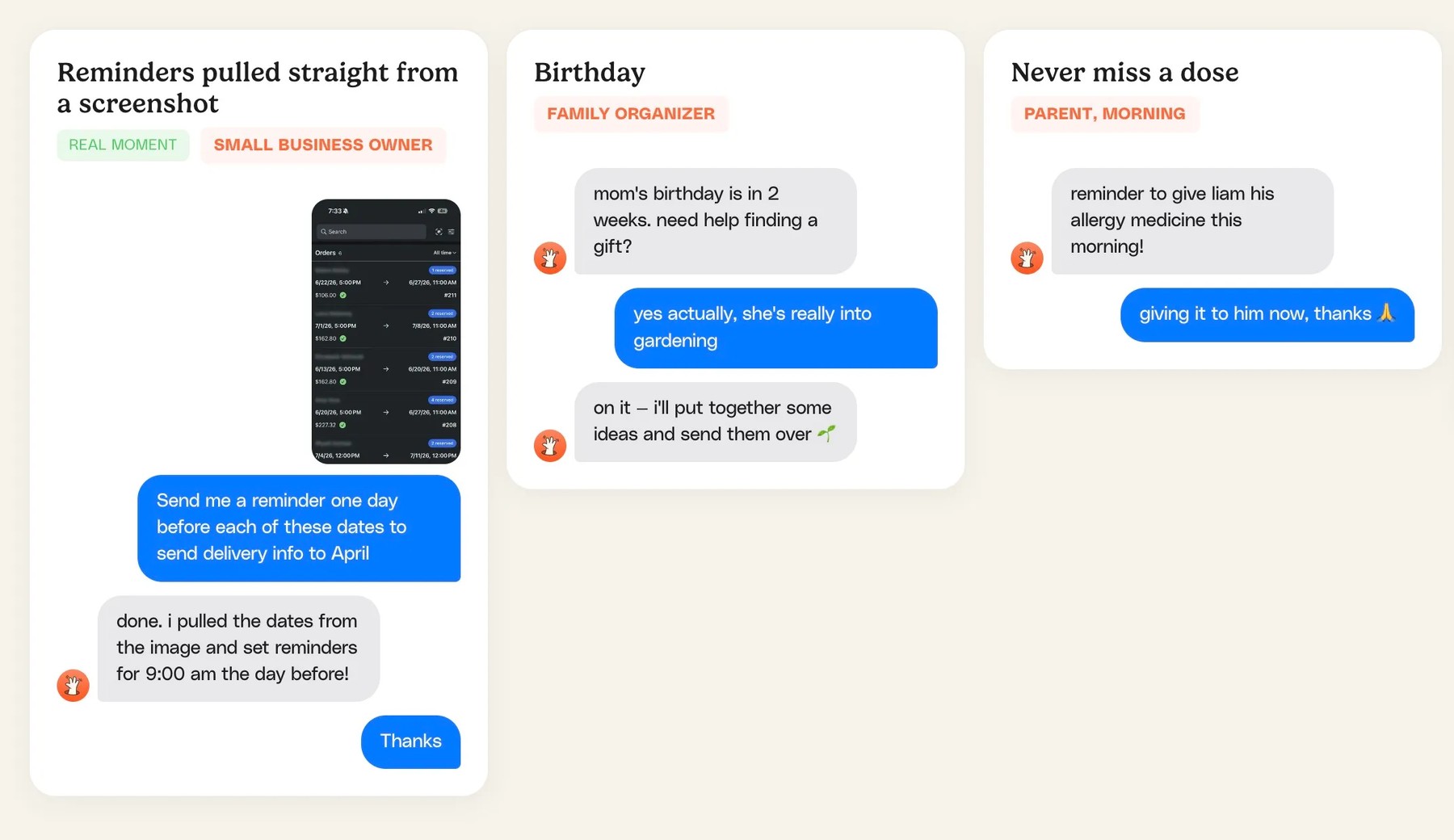
What Ollie actually holds today is narrower than the argument around it suggests. The assistant connects to calendars and email to organize schedules and tell users what their day looks like, and through group chats it helps plan meals, buy groceries, track open items, book appointments and pay bills. Managing a household budget is on the roadmap.
Lennon argues that refusing to share data is the advantage over rivals: personal information of this kind is too sensitive, and without user trust the service cannot grow.
Source: techcrunch.com
The engineering follows from that. Ollie does not ask for usernames and passwords. When the assistant needs to sign in somewhere on the user's behalf, it runs its own browser in the cloud and sends the user a link to that remote session; payments and purchases work the same way. The cost is friction — for some operations the person still logs in by hand every time. Lennon expects technology to close that gap, describing the eventual fix as the secure issuance of temporary access keys so credentials are not re-entered at each step. Until then, Ollie has a balance to find between convenience and trust, and it needs to build that trust before anyone lets the assistant near a bank account through something like Plaid.
Lennon holds a PhD in AI and came out of fintech; he sold his previous company, Groundwork, a neobank for nonprofits. That background is directly relevant to where the product is heading.
Source: techcrunch.com
Here is where I would push back on the framing. A SOC 2 report attests to process — that controls exist and are followed — not to purpose. It does not certify that a company refrains from training on customer data; that part is a promise in a contract, made by Lennon, not a finding by an auditor. The certification is a reasonable signal that Ollie takes the problem seriously and a poor substitute for reading what its terms actually permit.
The harder point is that privacy discipline is cheap while the stakes are low. Guarding a family's grocery list and soccer schedule costs a startup very little. The commitment gets tested when the assistant starts moving money, which is exactly the direction Ollie says it is going, and where the incentive to monetize what it knows grows with every account it touches.
Whether people want to delegate any of this remains unsettled. Lennon says retention among Ollie's paying subscribers is comparable to leading subscription AI services, but he declined to disclose how many users or paying customers there are, citing competitive pressure. A retention rate without a denominator is a claim, not evidence.
Reliability is the nearer obstacle. In testing, Instinct was asked to compare hotel prices and book a room and quoted rates that were simply wrong. Ollie, in the same period, went silent when its text-message provider's infrastructure failed. A new consumer service typically gets one chance: if the app does not work, the user moves on. Lennon agreed this is an industry-wide problem — large language models are probabilistic, so unreliable answers are inherent, and developers have to build a protective shell around the agent to catch and prevent failures. He compared the work to fixing a thousand small problems one at a time.
Which sets up the bind. Ollie's pitch is that trust is what earns access to the sensitive data that makes an assistant genuinely useful, but trust is not lost to a privacy policy — it is lost to an assistant that stops answering, or books the wrong hotel, on the one afternoon a family relied on it. The audit protects the data. Nothing yet protects the moment the product fails.