
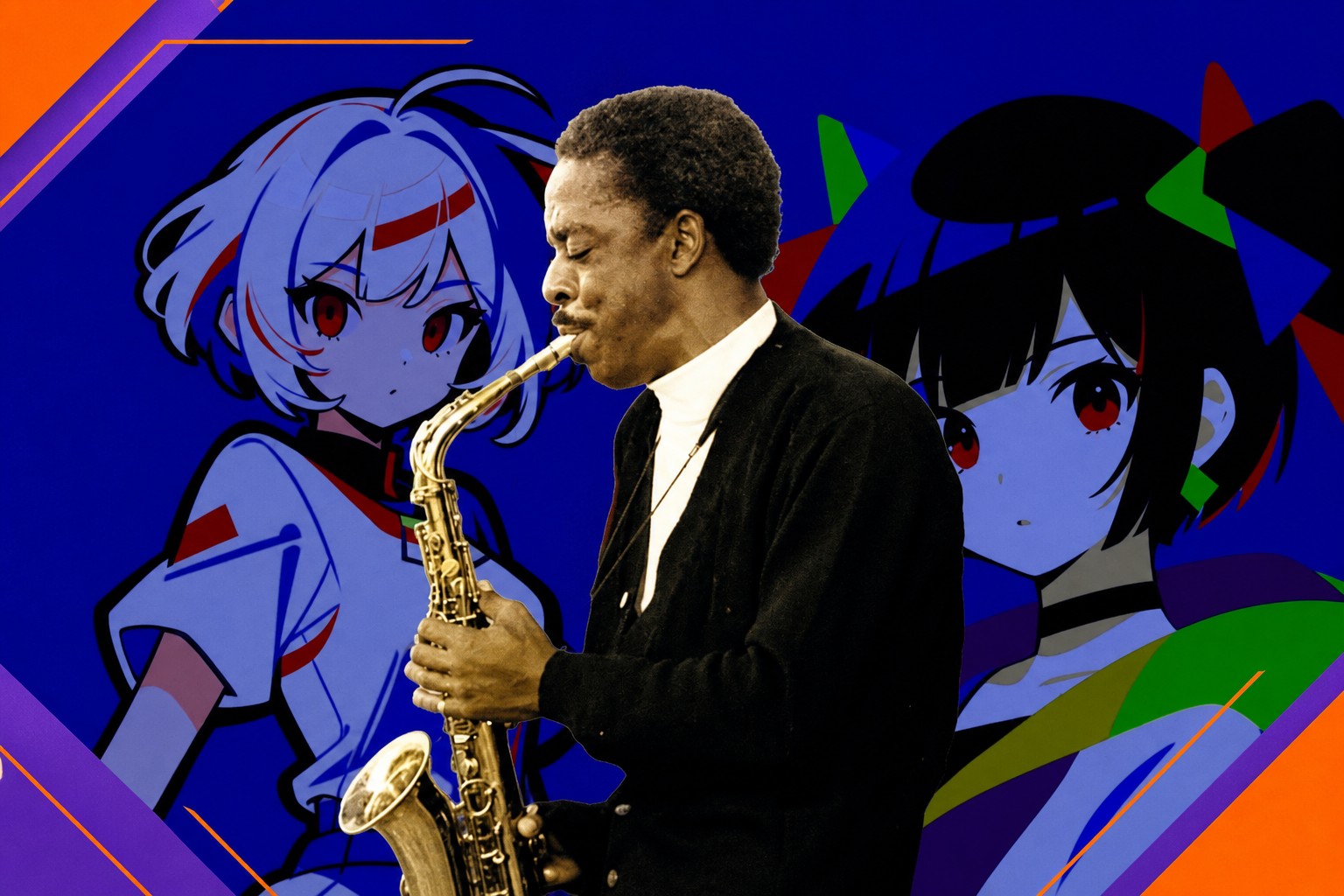
Someone spent this year uploading AI-generated songs into the Spotify, Amazon Music and YouTube profiles of jazz musicians who are in no position to object. Two tracks credited to alto saxophonist Sonny Criss, who died in 1977, went up with covers showing an anime girl. Four more appeared under the name of clarinetist Jimmie Noone, dead since 1944. Every upload is dated 2026 and carries the copyright of a publisher calling itself "Ami bacuk". Spotify removed most of it after Futurism asked — roughly a year after the company announced protections against exactly this.
The Criss uploads are the ones worth studying, because they are good enough to pass. "Tell me why" and "but a heartache" are jazz: alto saxophone, a rhythm section, a relaxed feel. They are not renamed Criss recordings, and music-recognition services return no match, which makes their origin close to untraceable. The credited writer is "Zainul Irpan", a pairing of two common names of Arabic origin. Set aside the covers — bright anime against the calm, sober artwork of real bebop albums — and a listener scrolling a profile has very little to go on.
That matters because of who Criss was. He picked up the saxophone at 11 and began professionally by filling in with bandleader Johnny Otis's ensemble, later playing alongside Charlie Parker, Miles Davis, Cole Porter and Dizzy Gillespie. He never became a household name, but he left a large, steadily developing catalogue that places him among the notable bebop players of his generation. A catalogue like that has listeners and nobody watching the door.

A screenshot of Sonny Criss's artist profile on Spotify with two new singles carrying AI-generated anime girl covers
Source: futurism.com
The fakes reached his Spotify page, his Amazon Music page and his YouTube topic channel. On YouTube the uploader went one step further and replaced the artist photograph with one of the generated anime girls.
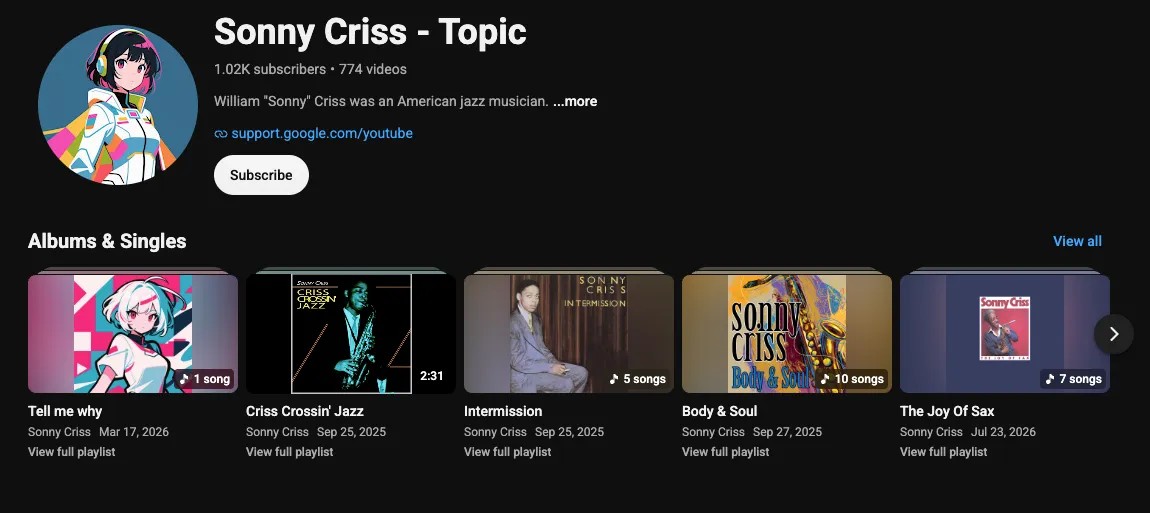
A YouTube screenshot of a single bearing an AI-generated anime girl, attributed to the well-known bebop musician Sonny Criss
Source: futurism.com
With Jimmie Noone the imitation stops trying. On 3 April 2026, "Ami bacuk" put out four tracks under his name: "You Have Hurt Him", "You Have Hurt Him 2", "He's still there" and "He's still there 2". They are forgettable pop ballads with a female vocal that is probably also AI-generated, over mournful piano — nothing to do with a Black clarinetist who led Dixieland bands until his death in 1944. The anime was swapped for corporate Memphis-style artwork, likewise generated, which sits badly against the black-and-white photographs on his real covers.
Jean Carne — her name turns up in places as Carn — got a third variant. The R&B and jazz singer's AI uploads landed on YouTube Music rather than a topic channel, but the signature is identical: generated music under generated images. As with Criss it is inoffensive alto-sax jazz, and it is missing the one thing she is known for, a five-octave voice. Some of the new tracks look stitched together from fragments of Backstreet Boys lyrics; two are titled "I never wanna hear you say" and "I want it that way". There is also a supposed joint EP with the American soul duo Mel and Tim, "This night with you", holding three tracks — "My nightmare", "My secret" and "My everything" — under the same tasteless generated covers. Red Nichols's profile was hit as well.
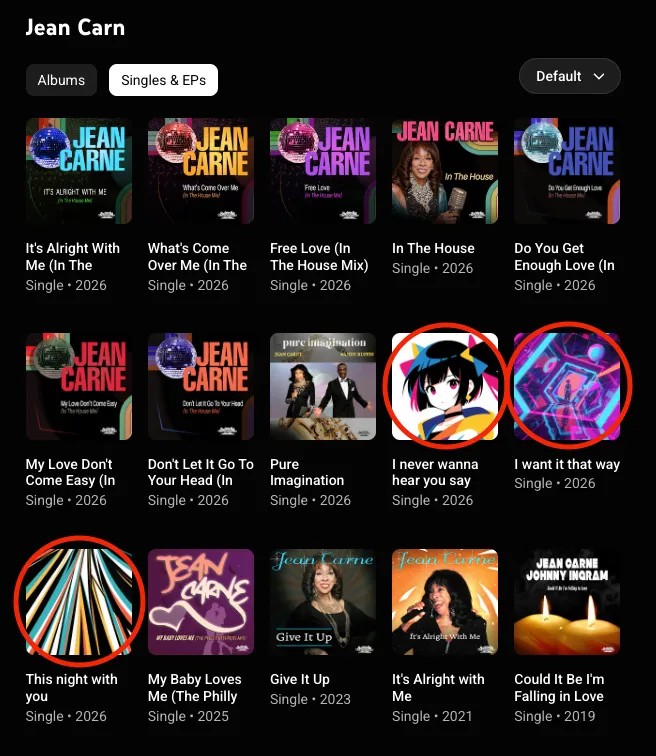
A screenshot of Jean Carne's artist profile on Spotify, where three AI-generated tracks are circled in red among several real songs
Source: futurism.com
This is a quieter operation than the one Futurism reported last year, when the Australian prog-rock band King Gizzard & the Lizard Wizard was duplicated by an entirely AI-generated profile called "King Lizard Wizard". No fake band here, no fake name to notice — just material inserted into pages that already have an audience. The choice of targets is its own argument. Jazz came out of a Black spiritual tradition, and its commercial history runs through the exploitation of gifted African American musicians on behalf of wealthy white capitalists. Catalogues whose owners have stopped developing them now offer the same thing to a different kind of operator: a name with listeners attached and nobody to complain.
Spotify's position on this is not new. Through 2025 the company dealt with a sharp increase in AI-made songs, albums and profiles, and in September it shipped an update meant to protect artists, songwriters and producers from outside use of their names. It said specifically that it was hardening defenses against uploaders illegally delivering music — AI-made or otherwise — into another artist's profile. A spokesperson told Futurism the uploads had been taken off the artist profiles, that protecting artist identity remains a priority, and that the company continues to invest in detection and prevention. The spokesperson also described a coming feature, Artist Profile Protection, which will let artists opt in to reviewing incoming releases and approve or reject them before they appear on their page.
Opt-in review is the right feature arriving with the wrong default, and arriving late. Distribution in music is genuinely complicated, but "does this artist want this record on their page" is not an exotic question to ask, and a platform that shipped an anti-impersonation update in September 2025 was still hosting anime-covered fakes on a dead saxophonist's page in 2026. The more revealing detail is what happened after the inquiry. Most "Ami bacuk" material disappeared from Spotify, with one exception: the Jean Carne uploads, which were moved to a separate profile named "Jean Carn" and no longer show up in the real artist's discography. That is relocation, not removal. The fraud kept its catalogue and got a new address one letter away from the person it was impersonating.
Notably absent from everything said publicly is money. Spotify's statement covers takedown, priority and investment in detection; it says nothing about what these uploads earned while they sat on those pages, or who received it. The uploads were dated 2026, several were live long enough to be found and written about, and streaming pays on plays. Nor has anyone offered a reason why these four musicians in particular. The operation looks small, but given the scale of past streaming fraud, a handful of tracks under four names is more plausibly a sample than the whole of it.
At the time of writing the anime girls are still on Criss's YouTube profile, and Google, which owns the platform, did not respond to a request for comment. A saxophonist who died in 1977 is currently represented there by a cartoon someone's model drew — on a service where Spotify's forthcoming opt-in switch, whenever it ships, will do nothing at all.