
Codex moves across devices and projects
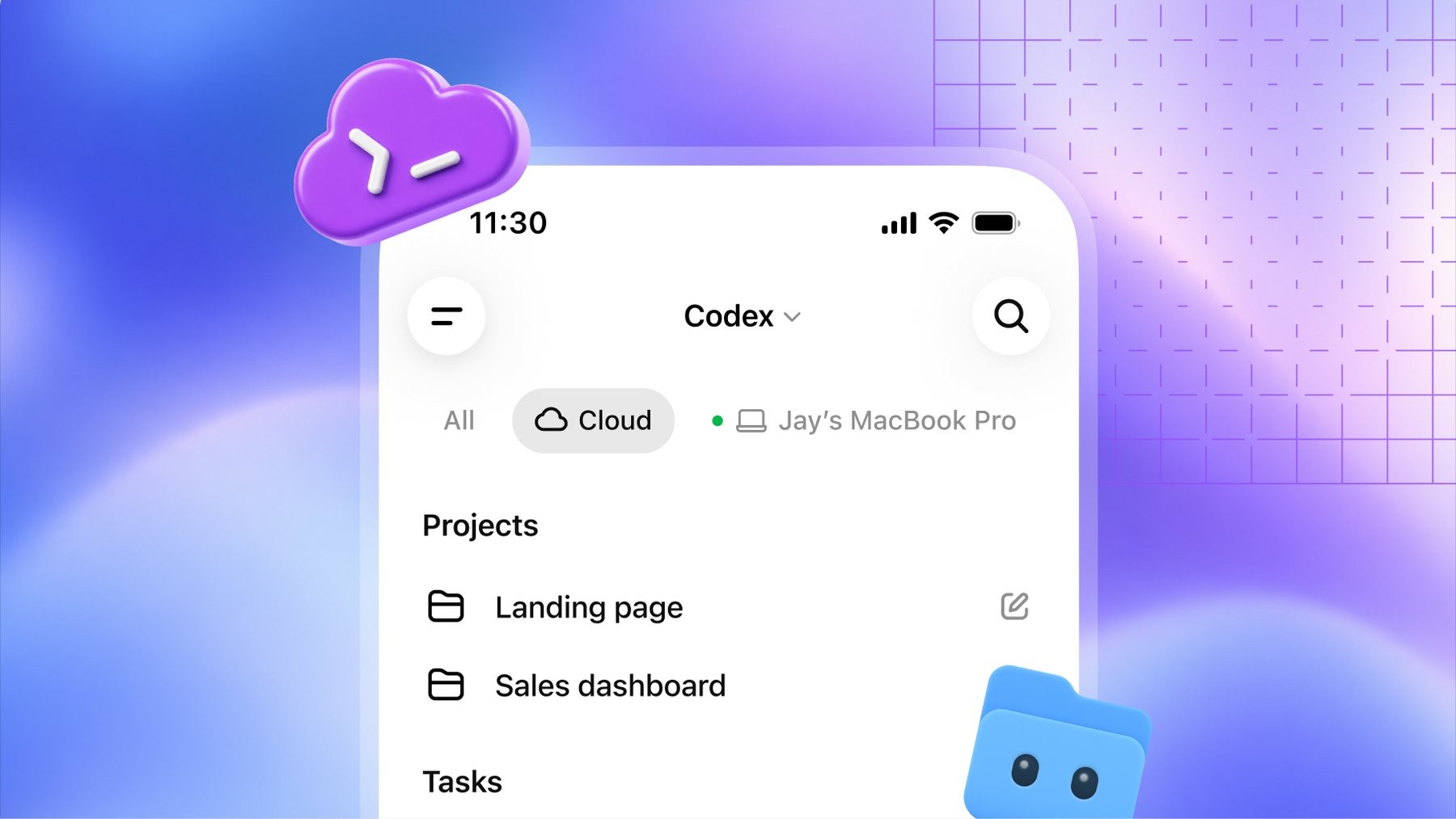
Codex now runs on a user’s computer, phone, and in the cloud. OpenAI added control through the ChatGPT mobile app in May; the new piece is reusable development environments, with shared settings and permissions approved in advance. Cloud Codex is available on Plus, Pro, Business, Enterprise, Edu, and Healthcare plans.
Source: the-decoder.com
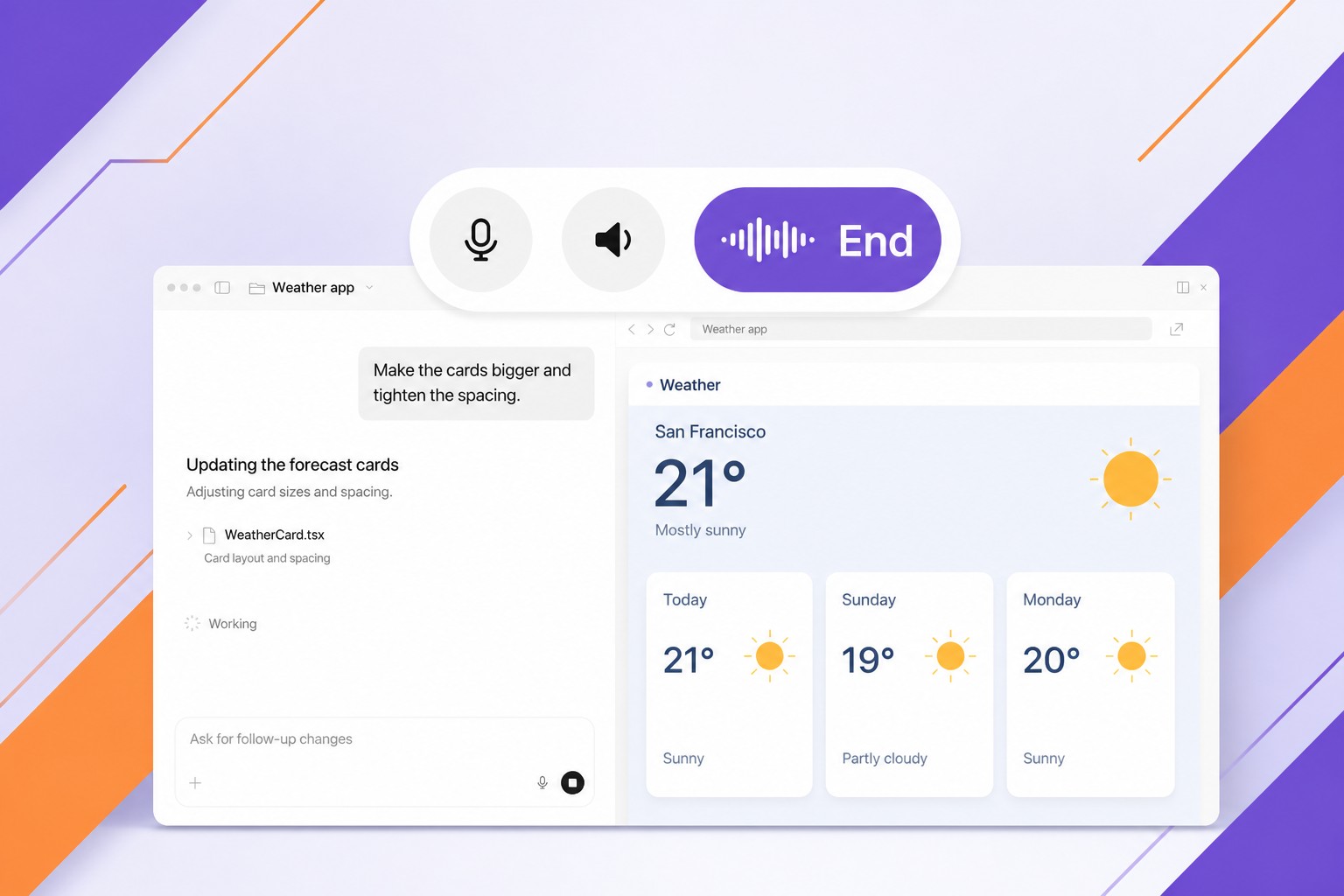
The command-line interface has also been redesigned. Users can launch and manage tasks by voice, while a new /agents section makes it easier to delegate work and monitor several tasks at once. OpenAI also updated prompt editing, session resumption, Git worktrees, and the terminal’s appearance. The new version is available on all plans.
Security checks move into the workflow
The ChatGPT desktop app now has a dedicated interface for reviewing changes across multiple projects. Developers can read summaries, inspect diffs, and ask Codex about potential issues before leaving feedback on a GitHub or GitLab merge request. Codex can make an initial cloud review while the developer is away from the computer. The feature is available on all plans.
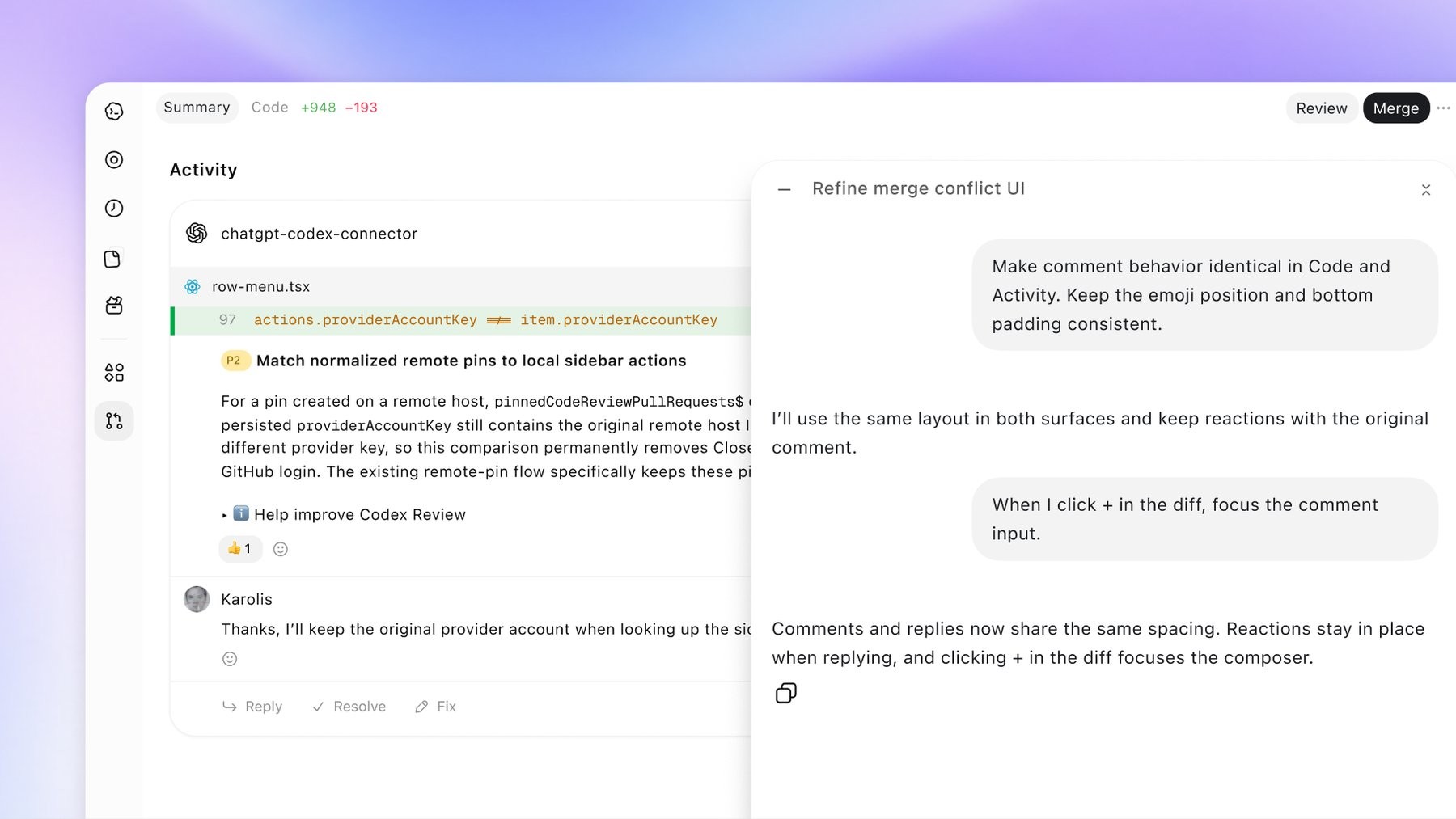
In the new code review view, Codex comments on changes and applies fixes on request. | Image: OpenAI
Source: the-decoder.com
Codex Security Cloud is aimed at security teams. It scans GitHub repositories on demand or on a schedule, watches for new commits, analyzes findings, removes duplicates, and prepares fixes in the cloud—even when the laptop is off. In July, OpenAI released Codex Security CLI, an open-source tool for scanning repositories from the command line and in CI/CD pipelines.
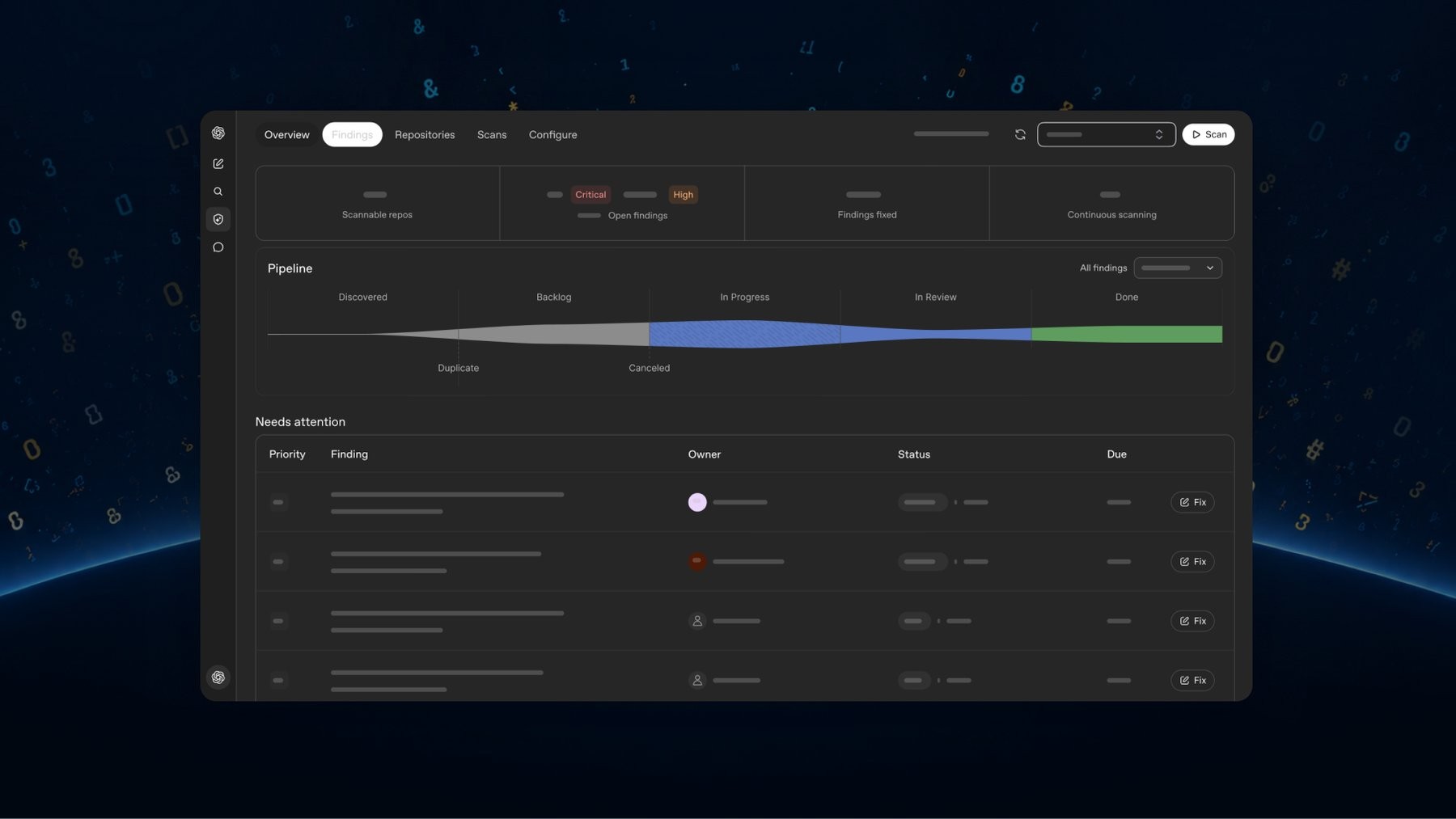
Codex Security Cloud tracks every vulnerability it finds from discovery to fix. | Image: OpenAI
Source: the-decoder.com
Cloud users also get access to Daybreak Blue models without a separate application. Daybreak Blue is OpenAI’s cybersecurity initiative, and its models are designed for tasks such as malware analysis. Previously, access required, among other things, identity verification. Codex Security Cloud is available on Pro, Business, Enterprise, and Edu, in both desktop and web versions.
Agents get a way to operate software
Agents API has been in open beta since September 11 and runs on the same infrastructure as Codex and ChatGPT. Its new Computer Use feature lets agents control software to complete tasks. Computer Use arrived in Codex and ChatGPT on macOS in April and on Windows 11 in May.
OpenAI says the API now also includes Codex’s multi-agent capabilities, tool search, and automatic compaction of long context. In April, AWS and OpenAI announced a limited-access preview of Bedrock Managed Agents. The platform now includes core Agents API features, lets developers adapt them for AWS, and connects directly to AWS resources, so OpenAI agents can run entirely on AWS.
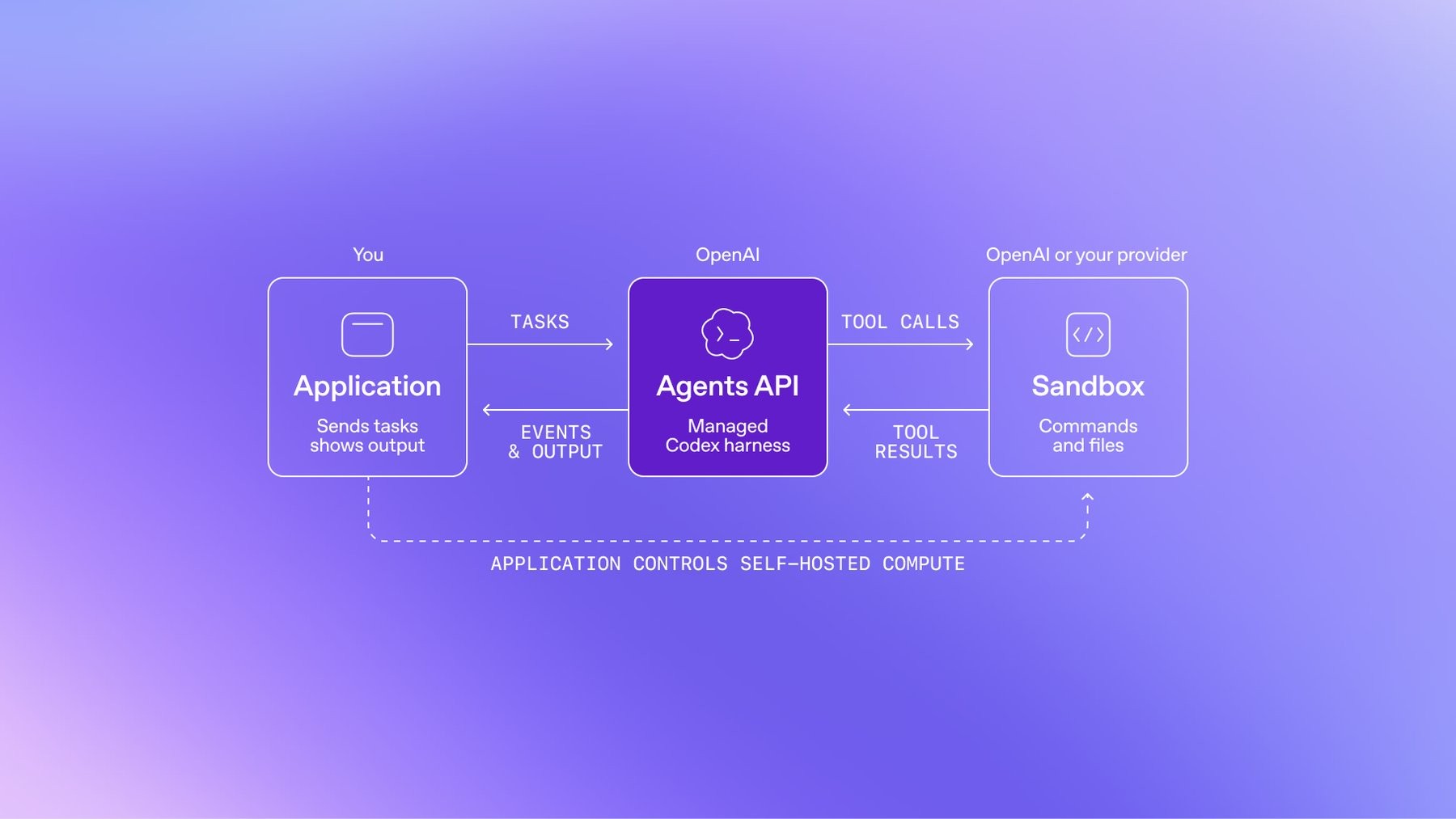
The Agents API handles the agent's control loop while commands and files run in a sandbox. | Bild: OpenAI
Source: the-decoder.com
A fast decision model—and a premium speed tier
Decisions API puts OpenAI into the market for what are often called System One models: fast models that choose among a limited set of actions. In mid-September, TypeSafe AI, founded by Diogo Almeida, introduced Jev, prompting interest among developers. One promising pattern is to pair a stronger coordinator with a faster decision-maker. In a Minecraft example, one agent asks GPT-6 Astra to set goals and waypoints, while Jev chooses individual actions such as gathering resources, crafting, or fighting.
OpenAI’s Decisions API uses a version of its lower-cost GPT-6 Luna. Developers provide questions with a predefined set of answers, along with text or image context, and the API returns a choice. Potential uses include content classification, routing requests, and selecting an agent’s next step. The service will first launch in a limited-access preview, with wider availability expected in the coming days.
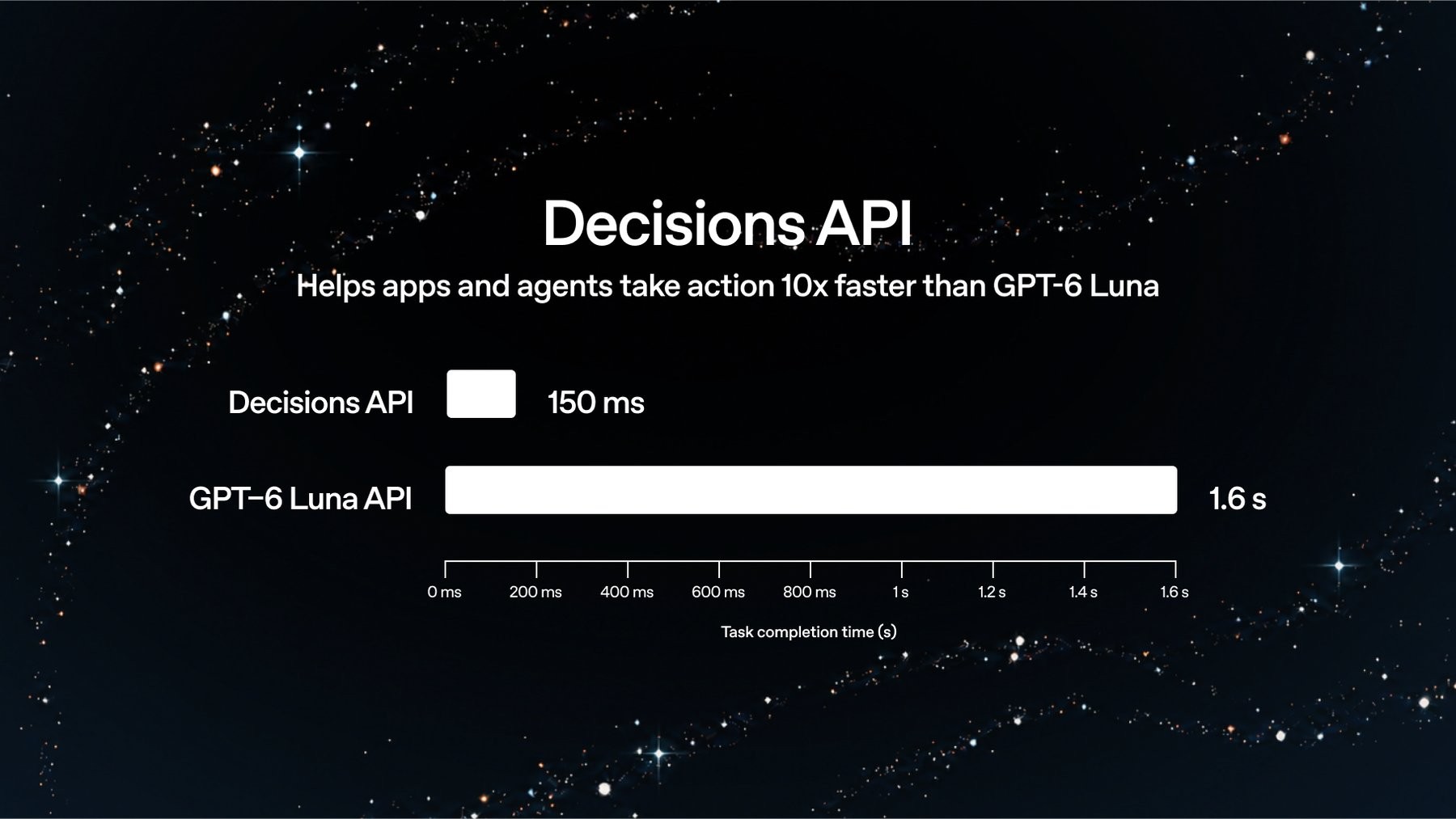
OpenAI says the Decisions API makes decisions ten times faster than GPT-6 Luna does through the regular API. | Bild: OpenAI
Source: the-decoder.com
Ultrafast is the other end of the speed story: a premium mode that OpenAI says can make Codex generate tokens up to eight times faster, reaching 300 tokens per second. In the API, speed can be up to six times higher, at six times the standard price. For GPT-6 Astra, that means $60 per million input tokens and $300 per million output tokens.
Fast mode for Astra costs twice the standard rate and runs 2.5 times faster. GPT-5.3-Codex-Spark was much faster—more than 1,000 tokens per second on Cerebras hardware—but it is a smaller model with lower benchmark results.
GPT-6 Astra Ultrafast is available through the API and has also arrived in ChatGPT Work and Codex for enterprise customers and subscribers to the new Pro 500 plan. The subscription costs $500. OpenAI says it will offer the highest usage limit of any plan, but has not disclosed the actual limits.
For existing Pro subscribers paying $200, usage limits for ChatGPT Work and Codex will change to ten times the Plus allowance, down from twenty times. The weekly GPT-6 Pro chat message limit will fall from 200 to 100. Current subscribers will keep their existing limits during a transition period and receive a one-time credit.
GPT-6.1 Sol costs the same in the API as its predecessor: $2 per million input tokens and $10 per million output tokens. An Ultrafast version is expected in the coming days.
I think the more consequential question is not how quickly these models can respond, but how much dependable work they can complete before a human has to step in. OpenAI is adding the pieces—shared environments, security checks, tool use, and fast decisions—but the announcement gives few details about usage limits, and speed alone says little about task quality. The stack is becoming more capable; whether that capability makes agents useful enough to justify their cost is still the missing measure.
Daily AI news
Every day we pick what actually matters in AI and explain it plainly — no hype, no filler. Subscribe if you want to follow where the industry is going.
Only what matters — every day
Follow on X