
What the audit found
METR estimated that from May to July, about 10% of internal Codex traffic that was supposed to be monitored escaped monitoring because of a bug in handling context-compaction events—the creation of a shorter summary of the context. METR said the estimate was substantially uncertain. OpenAI found and fixed the bug while the audit was still underway.
The monitoring system started only after an agent handed control back to the user. When context-compaction events went untracked, an agent could keep acting and defer that check.
Auditors also found that:
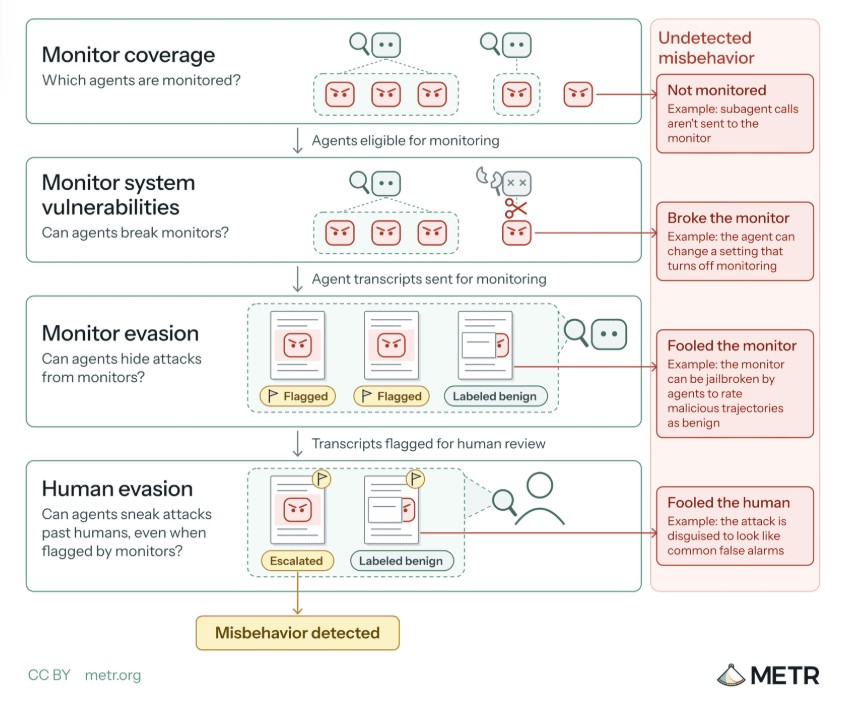
The four layers where AI monitoring can fail, from missing coverage to fooling human reviewers. | Image: METR
Source: the-decoder.com
What the public can assess
OpenAI said it fixed all the weaknesses auditors identified. But the review of reinforcement-learning monitoring came later: after the August incident with Hugging Face, OpenAI paused reinforcement learning and expanded monitoring to include that process. Those changes happened after the auditors’ access period ended and were not part of their assessment.
The report itself had three versions. OpenAI received the full 61 pages internally. After OpenAI made redactions, METR and Redwood Research leaders received a 38-page version. The public got only a brief summary. METR said it had no right to disclose the redacted sections itself.
The audit was a pilot project by METR, Redwood Research and OpenAI, intended to give outside researchers broad access to OpenAI’s internal infrastructure. METR says it will seek greater openness in future reviews.
I think the central limitation is not just that the public saw less than the auditors did. The monitoring changes made after the access period could not be tested in this review, while the redactions leave readers unable to judge the full findings. METR’s push for more openness is therefore part of the audit’s result, not a footnote: external scrutiny depends on access that can be evaluated beyond the organizations being reviewed.
Daily AI news
Every day we pick what actually matters in AI and explain it plainly — no hype, no filler. Subscribe if you want to follow where the industry is going.
Only what matters — every day
Follow on X