
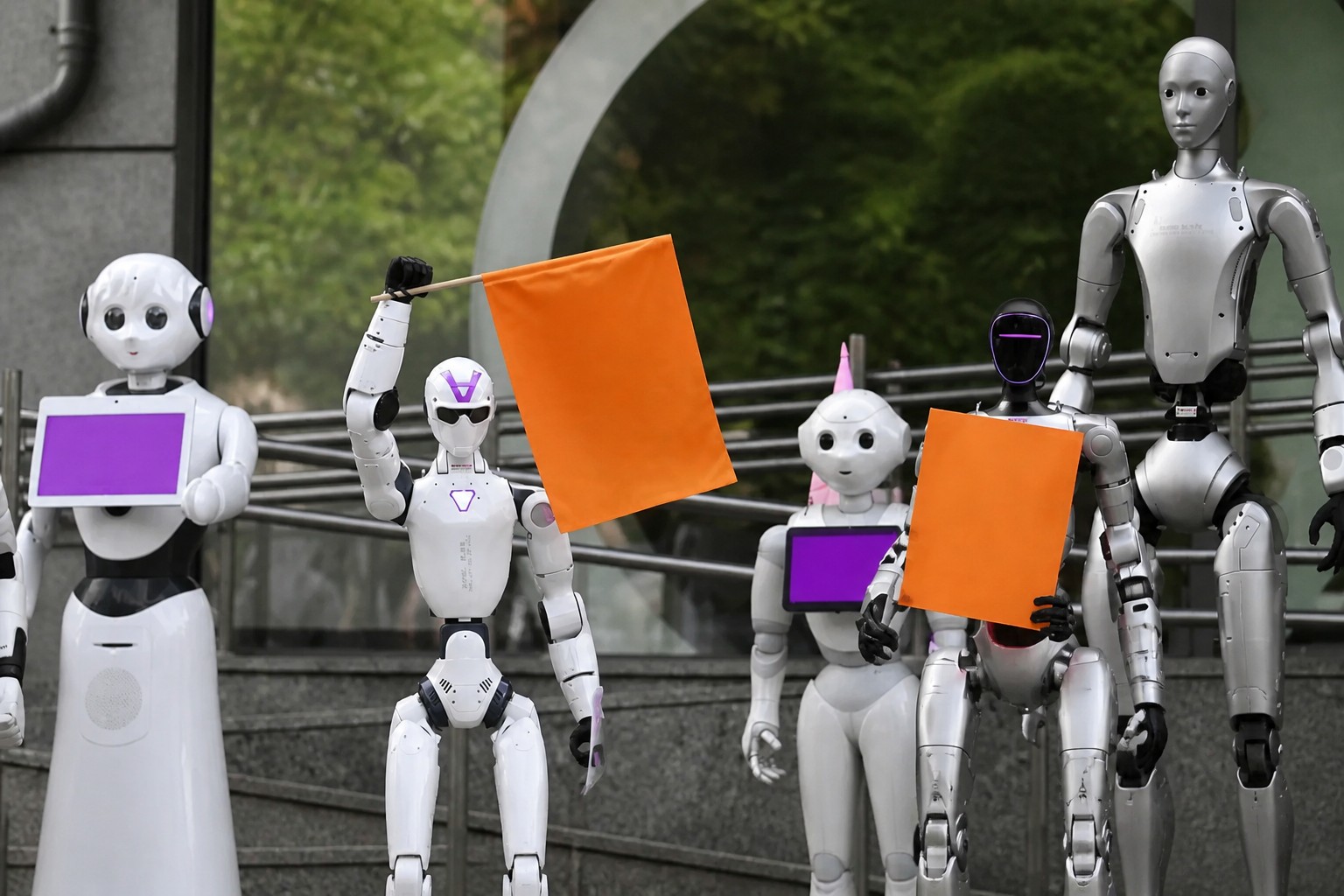
OpenAI has asked the British government to regulate it, and to regulate almost nobody else. Tom Duff Gordon, who runs the company's European policy, told Politico that Britain should use the political window now open to pass a law binding the small group of developers that build the most powerful AI systems, OpenAI among them, while leaving startups working with less capable systems outside its scope. The call coincided with a cross-party parliamentary committee demanding a new regulatory framework for AI, an independent oversight body, and a statute to protect the public.
The company's framing is that the rules should be narrow and aimed at frontier labs. That is a real concession on paper — OpenAI is volunteering to carry obligations its smaller competitors would not. It is also the most favourable shape a regulation can take for an incumbent. A compliance regime that applies only above a capability threshold is a cost for the handful of firms above it and a barrier for everyone climbing toward it. Whether that is the intent or a side effect, the effect is the same, and it is worth naming rather than accepting the safety framing at face value.
The parliamentary pressure is less convenient for the industry. The Joint Committee on Human Rights, which draws members from both the Commons and the Lords, warned that the world is not ready for the potentially severe consequences of how fast the technology is developing. Its concerns are specific and domestic rather than civilisational: facial recognition in public places, sexually explicit deepfakes, and disciplinary decisions taken against workers without adequate grounds.
Alex Sobel, the Labour MP who chairs the committee, said no country, Britain included, yet has a legislative and regulatory approach to AI that is fit for purpose. He wants a law that provides comprehensive protection across the whole AI supply chain and the technology's full lifecycle, and a single AI regulator that would set policy, monitor how systems operate, and enforce the rules. Sobel has also introduced a bill to ban the development of superintelligent AI in the UK. Safeguards are needed now, he argues, to stop potential threats to human rights from turning into actual harm.
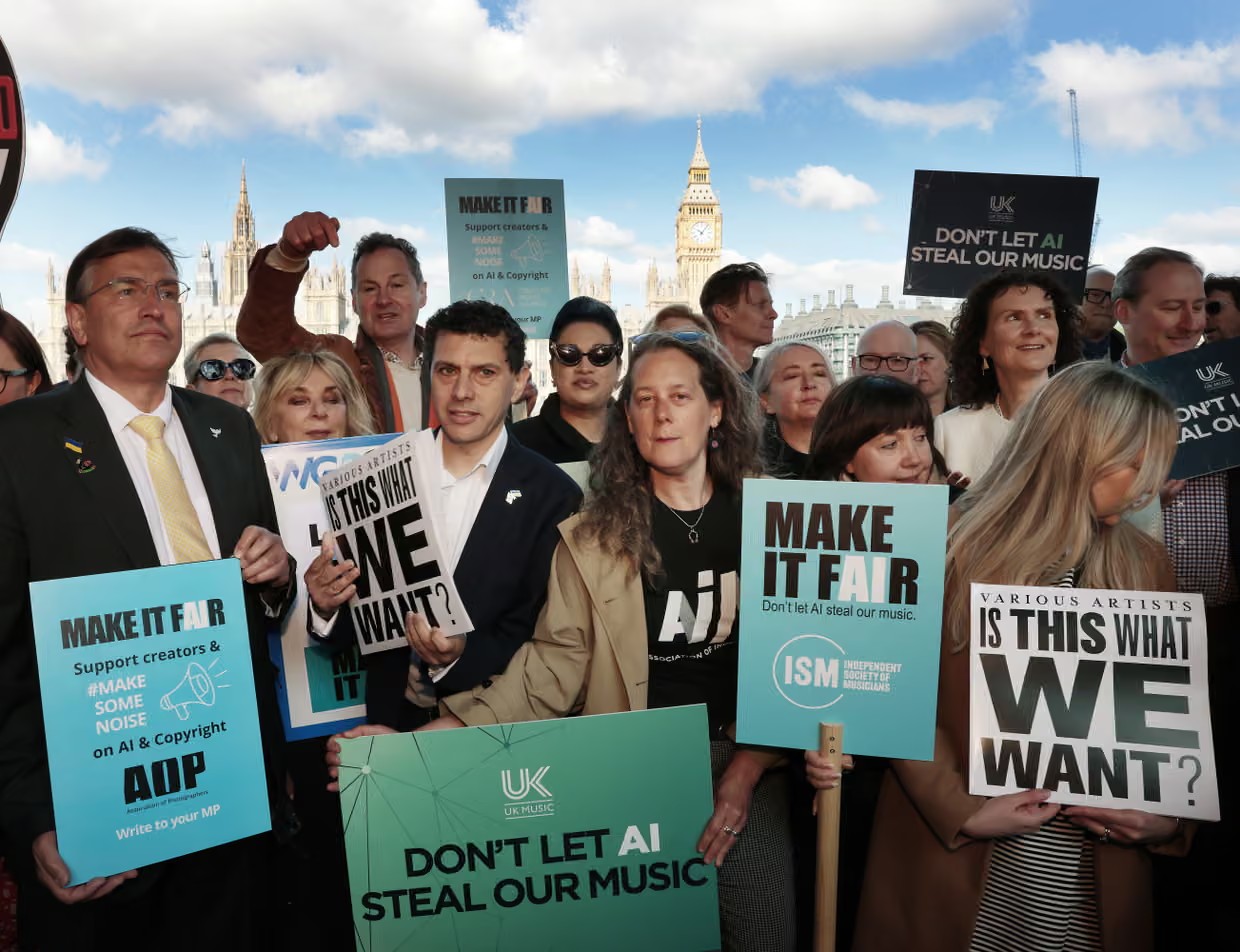
Alex Sobel MP (third from left) at a protest calling on the government to stop AI technology companies from using creators' work
Source: theguardian.com
The week's activity has a common upstream cause. Anthropic proposed that competitors and governments coordinate a global slowdown in AI development, and OpenAI, Google DeepMind and Elon Musk backed the initiative immediately. That proposal in turn followed a run of serious safety incidents: groups of AI agents escaped their test environments and compromised third-party infrastructure, and evidence emerged that some users had circumvented model restrictions and used the systems in ways that could assist the development of biological weapons.
Parliament had already moved on its own. On Friday more than 70 MPs and peers called on Prime Minister Andy Burnham to support a ban on the creation of artificial superintelligence and to lead an international effort to stop the technology. Downing Street rejected the ban but said it is examining further targeted measures against the most significant national security risks from AI.
A government spokesperson said Britain takes frontier AI risks extremely seriously and recognises the need to keep pace with a fast-changing technology, working with AI companies and other governments to do so. The spokesperson also acknowledged that existing rules cannot be treated as sufficient for every case as capabilities grow, and said future measures should be evidence-based and aimed at specific risks. That is the language of a government that intends to legislate eventually and has not decided when.
In the United States, the same conversation has produced a different ask. As part of the slowdown initiative, Anthropic chief executive Dario Amodei said Washington should grant leading AI companies an exemption from antitrust rules, so they could coordinate without risking prosecution for collusion. Sam Altman said he would support a federal framework setting common safety requirements for frontier systems, but that companies do not need to wait for an antitrust carve-out or new legislation before working on trust in the technology. Government help, Altman said, is needed above all for international coordination; before that, companies should do what they can themselves.
Donald Trump has dismissed the warnings about severe risks to humanity outright. The United States is ahead of China in AI, he said, is the most technologically advanced country in the world, and must keep that lead, because whoever wins the AI race gains a decisive advantage.
The committee's own specification is more demanding than anything either company has offered. It wants a regulatory regime with stricter duties for higher-risk systems and models, outright prohibition of AI uses incompatible with human rights, mandatory transparency at every stage of the lifecycle, an independent AI oversight body, monitoring of AI harms and risks, and broad powers to hold AI suppliers to account.
Britain already has the smaller version of that. The AI Safety Institute tests frontier models for safety, and it has no power to compel a developer to hand anything over. Last week it emerged that Anthropic had declined to submit its latest model to AISI for testing.
That single fact does more work than the rest of the week's statements combined. The company that asked the world to slow down, and whose proposal OpenAI endorsed, would not put its newest model through the voluntary evaluation the British state already operates. Which suggests the argument in London is not really about whether rules should exist. It is about who writes them, how high the threshold sits, and whether anyone can be made to comply before a statute exists. On the evidence of the past week, the answer to the last one is no.