
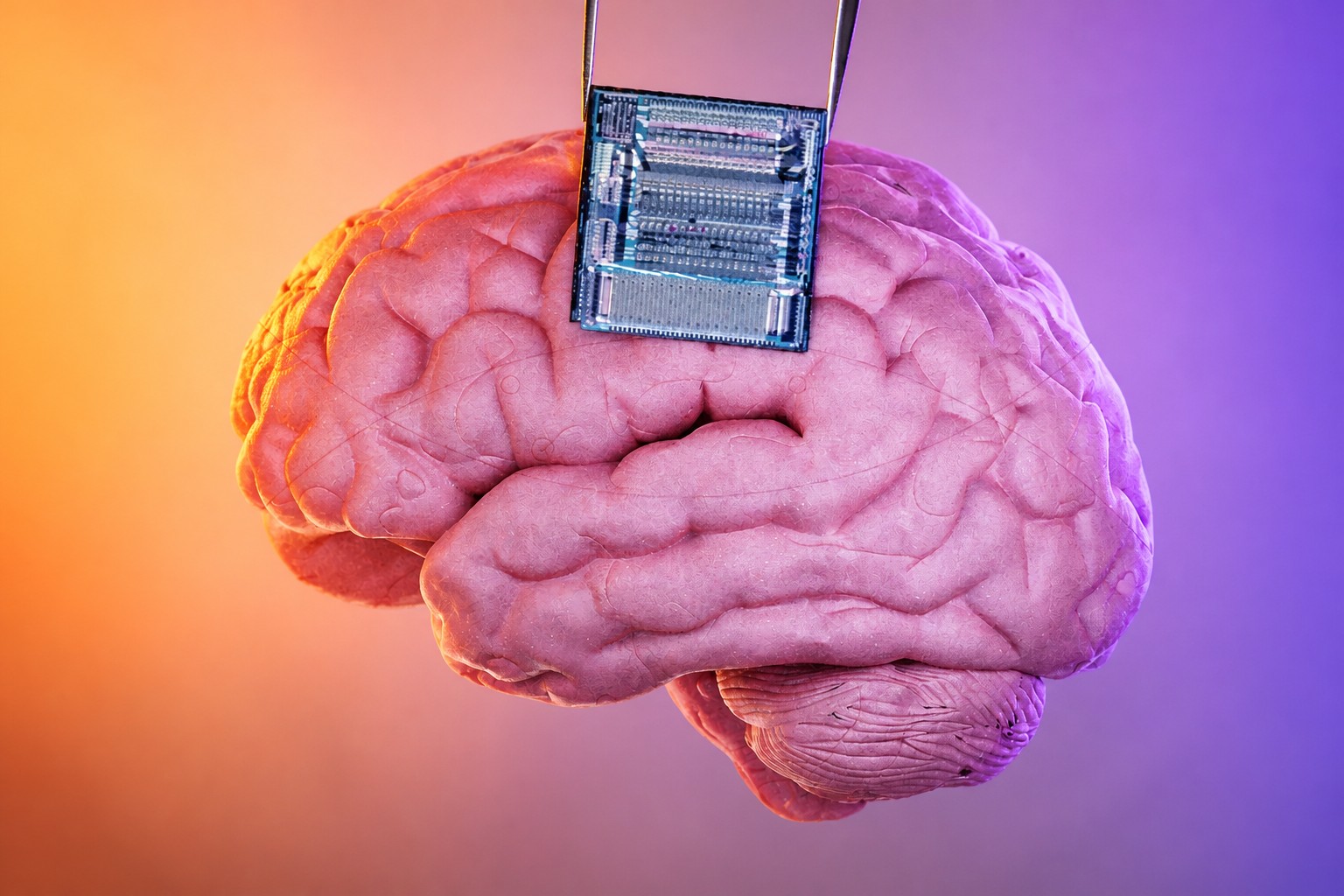
From neural signals to cancer monitoring
Coherence says its models can detect weak electrical signals linked to brain tumors and determine whether a cancer is growing, shrinking or returning. The results so far come from animals; the company is adapting the work for human research.
Its first test in people was brief. Last summer, the company placed an implant in three patients undergoing tumor removal at Royal Melbourne Hospital in Australia, then removed it about 30 minutes later. The test was an initial safety assessment. Coherence is now testing the device’s ability to record and stimulate signals in seven more patients.
The longer-term plan is more ambitious: an implant that can identify cancer-related signals and deliver weak electrical pulses intended to stop tumors from growing. Coherence plans to use its new funding for a clinical trial involving long-term implants in patients with glioblastoma, an aggressive brain cancer. It also wants to develop implants for cancers elsewhere in the body.
OpenAI Startup Fund partner Ian Hathaway said the fund supports Coherence’s mission and sees its approach to building therapies that improve with data as innovative.
A different kind of brain-computer bet
OpenAI’s investment follows its January announcement of a direct investment in Merge Labs, which raised $252 million in initial funding to develop ultrasound technology for reading information from the brain. OpenAI said it would work with Merge Labs on scientific foundation models and other advanced tools.
Coherence has a different stated focus: a device intended to monitor and potentially treat cancer. The distinction matters because brain-computer interfaces can produce large volumes of neural data that are difficult for people to analyze unaided. AI models can process raw signals and connect them to actions, such as cursor movement or synthesized speech. That makes the field relevant both to AI research and to medical applications.
Other investors have also backed brain-computer interface companies. Peter Thiel’s venture firm invested in Neuralink and CTRL-labs, which developed a wristband that translates nervous-system signals associated with hand movement into commands. Facebook acquired CTRL-labs in 2019.
Woodington says OpenAI will not receive access to Coherence’s brain data or other medical information. That is a notable boundary around this investment, especially alongside OpenAI’s more explicitly collaborative relationship with Merge Labs.
The unanswered question is clinical
I think the interesting test is not whether AI can find patterns in neural signals, but whether those patterns can guide a treatment that improves patient outcomes. Coherence has described animal results and short or ongoing device tests in people; a long-term clinical trial is still ahead.
The announcement is quiet about how reliably the implant can distinguish cancer-related signals from other activity, and whether stimulation can safely affect tumor growth. Those are not small details: they are the gap between a promising sensing system and a treatment. OpenAI’s investment gives Coherence backing, but the medical case will have to stand on evidence from patients.
Daily AI news
Every day we pick what actually matters in AI and explain it plainly — no hype, no filler. Subscribe if you want to follow where the industry is going.
Only what matters — every day
Follow on X