
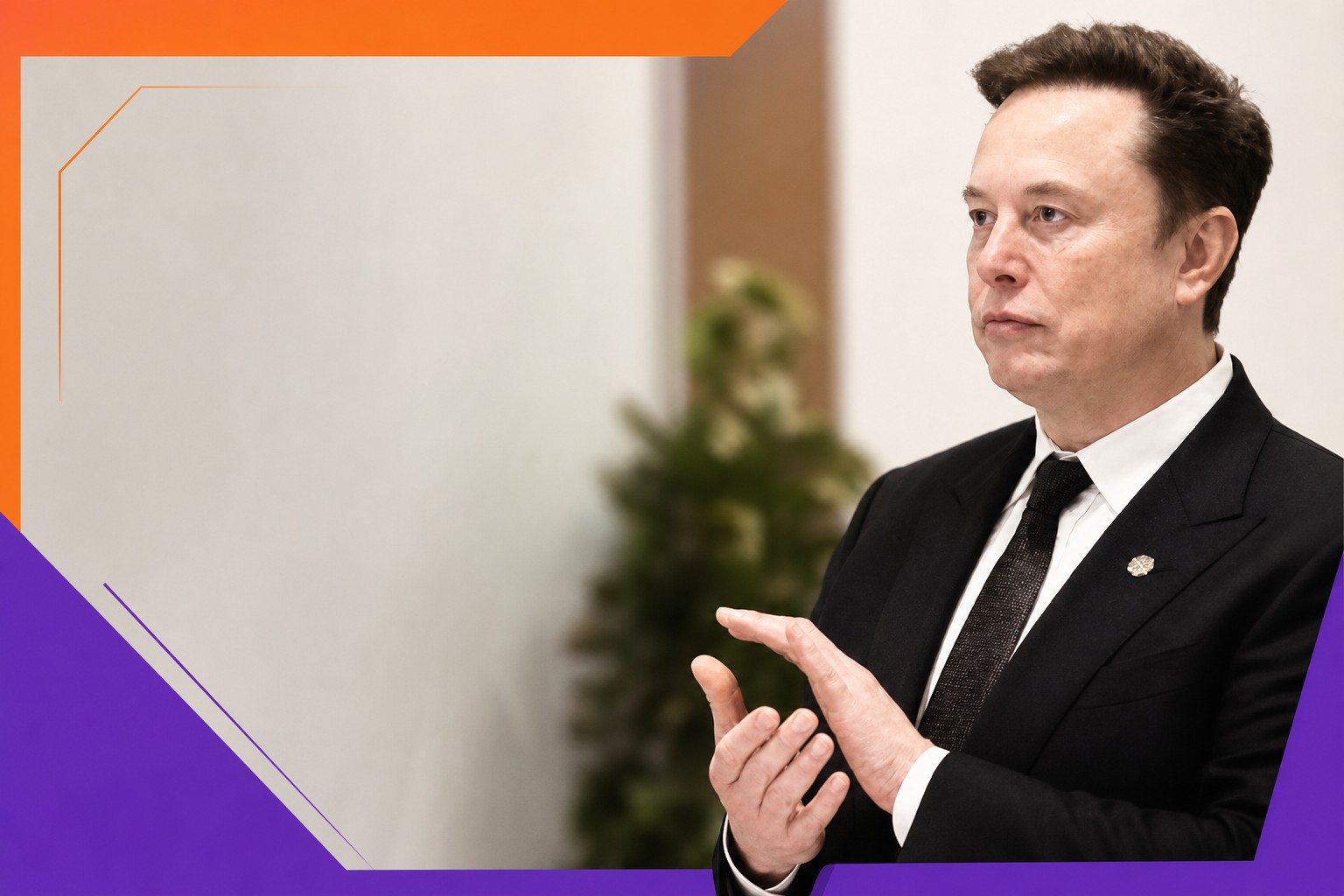
OpenAI has stopped selling its models to Cursor, a customer it internally projected at more than $1 billion in potential annual revenue. Sources told WIRED that Cursor ranked among OpenAI's five largest customers by revenue, and that the billion-dollar figure came from the partnership's performance at the time. In its own post, OpenAI said it was not confident that SpaceX, which now owns Cursor, would use its technology within the terms of service, and pointed to its experience with Musk's companies and their contract breaches. OpenAI declined to comment. SpaceX and Cursor did not respond promptly to WIRED.
Cursor had paid OpenAI for model access for a long time; those models ran inside its coding editor. The figures, previously unpublished, are the first real measure of what OpenAI will give up to avoid doing business with Elon Musk.
Measured against the rest of the company, the loss is absorbable. OpenAI is reported to take in more than $40 billion a year across three lines: subscriptions, advertising in ChatGPT, and sales of access to Codex, its coding tool. A billion dollars of potential annual revenue is under three percent of that. The same customer would have been close to irreplaceable at an earlier stage of the company; now it is a line item that can be written off for strategic reasons.
Those reasons include the public markets. OpenAI is preparing to go public and is trying to show investors a steadier business model, ideally one that does not rest on Musk's goodwill. A top-five customer controlled by the person suing you is the opposite of that.
The part of the bill that is not financial is developer trust. OpenAI conceded that ending the partnership could damage its relationship with developers, a community it has spent years courting, and Cursor was one of the larger doors through which developers reached OpenAI models.
Hours after the announcement, Cursor founder and chief executive Michael Truell, who now runs teams at SpaceX, replied on X that OpenAI's models serve only "about 5% of the request traffic from Cursor users." The number was evidently meant to show that OpenAI models are not especially popular with Cursor's developers and that switching them off changes little.
Thibault Sottiaux, OpenAI's head of core products, countered that token volume is not a measure of revenue or of value created, and asked Truell to publish the arithmetic behind the 5%.
Sottiaux has the better of that exchange. Share of requests and share of spend are different quantities, and Truell published the one that flatters him; a top-five revenue customer does not become one on five percent of anything cheap. The calculations he was asked for have not appeared.
The two companies have a longer history than this week's exchange suggests. OpenAI's venture fund was among Cursor's first investors and took part in its seed round, at a point when the idea of a young startup competing with Microsoft's GitHub Copilot looked close to unrealistic. WIRED has reported that OpenAI later floated a conversation about buying Cursor; the talks never reached an advanced stage. Truell was, by then, a visible face in OpenAI's marketing for the GPT-5 launch.
The commercial logic had been fraying before Musk arrived. As OpenAI built Codex into a serious AI coding business, it increasingly chased the same customers as Cursor, and for more than a year the two coexisted as partners and competitors at once. Ownership by SpaceX made that arrangement untenable: OpenAI may have concluded that the partnership no longer covered the risk of handing its best models to a rival that could train on their outputs. Its post recalled that Musk appeared to acknowledge, under questioning in his own suit against OpenAI, that xAI — now part of SpaceX — had used OpenAI models to train its own. That suit, in which he claimed Sam Altman and Greg Brockman stole the nonprofit the three of them created about a decade ago, was rejected by a federal jury.
Read together, the terms-of-service language is the polite version of a simpler position: OpenAI does not believe Musk will honor a contract, and has decided it would rather prove that point than keep collecting the revenue. That is a defensible read of the counterparty. It is also, conveniently, a story that lets OpenAI exit a partnership it was already competing against, and blame the exit on the other side.
The clearest evidence that the distillation argument is not the whole explanation comes from the company that stayed. Anthropic co-founder Tom Brown said after the announcement that Claude will keep serving Cursor users. Anthropic faces the same theoretical risk from the same owner — and it also depends on SpaceX to deliver $45 billion worth of data center capacity. Its record when that dependency was absent is instructive: Anthropic cut Windsurf off from its models on rumors alone that OpenAI would buy it, and Windsurf ended up going to Cognition instead. Co-founder Jared Kaplan said at the time that selling Claude to OpenAI would be strange.
So the same risk produces opposite decisions, and the variable that changed is not the risk. Selling Claude to Musk is acceptable where selling it to Altman was not, because one of those buyers is also Anthropic's landlord.