
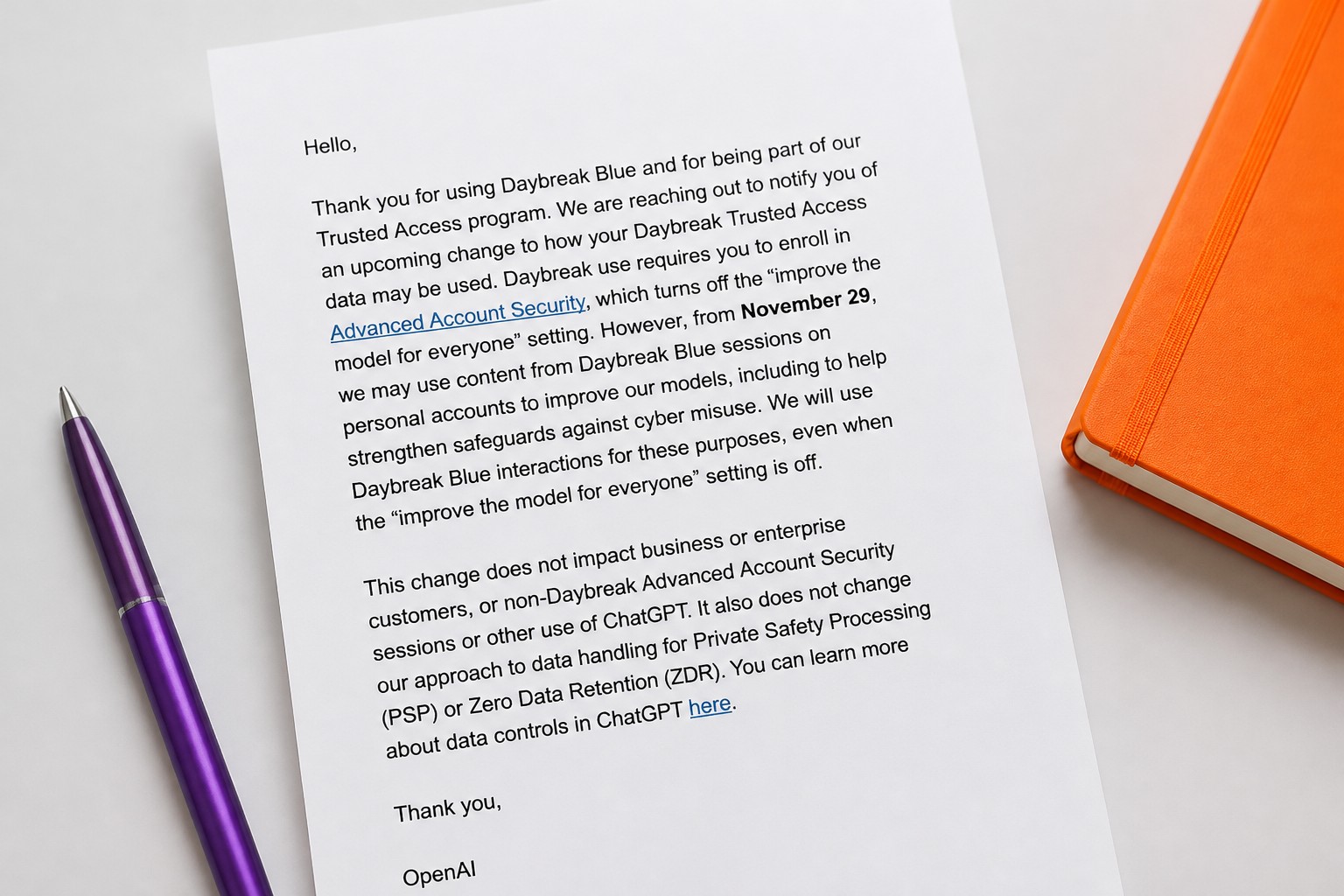
What changed
OpenAI plans to use data from Daybreak Blue sessions to train its models. The source does not say when the change takes effect or what safeguards will govern the data.
That omission matters because the data comes from cybersecurity sessions, where participants may share sensitive information while working through a problem. The announcement, as described here, does not clarify what participants are told, whether they can opt out, or how the material is separated from other training data.
The trust problem
The researchers’ concern draws on the Buckmaster and Alpöge episode. They uploaded draft equations to Codex; OpenAI later presented its own proof and denied using their material for training. The Russian report does not establish that the work was used. It says the suspicion alone was enough to make researchers consider what could follow.
I think the issue is less whether OpenAI can train on session data than whether contributors can understand what they are giving up when they share it. A policy change can be legitimate and still leave a trust gap if the boundaries are not clear.
What I’d want to know is how Daybreak Blue participants are informed, what control they have over their data, and whether OpenAI can show that training use stays within those terms. Without those answers, the change risks making every later overlap between a submission and a model’s output look like evidence, even when it is not.
Daily AI news
Every day we pick what actually matters in AI and explain it plainly — no hype, no filler. Subscribe if you want to follow where the industry is going.
Only what matters — every day
Follow on X