

The infrastructure argument
Osborne represents OpenAI to governments around the world and takes part in projects involving data centers and other infrastructure. He said that building a data center in Britain is exceptionally difficult because local residents consistently oppose such projects.
His comparison with transport infrastructure is politically useful. Roads and railways are treated as national necessities even when they disrupt local communities; data centers are being asked to earn the same status while their local costs remain visible and their public benefits are harder to measure.
Osborne pointed to Ohio, Georgia and Michigan, where most new data center projects are currently being developed. If Britain does not allow similar construction, he argued, the facilities will appear elsewhere and London will lose some control over where this infrastructure is physically located.
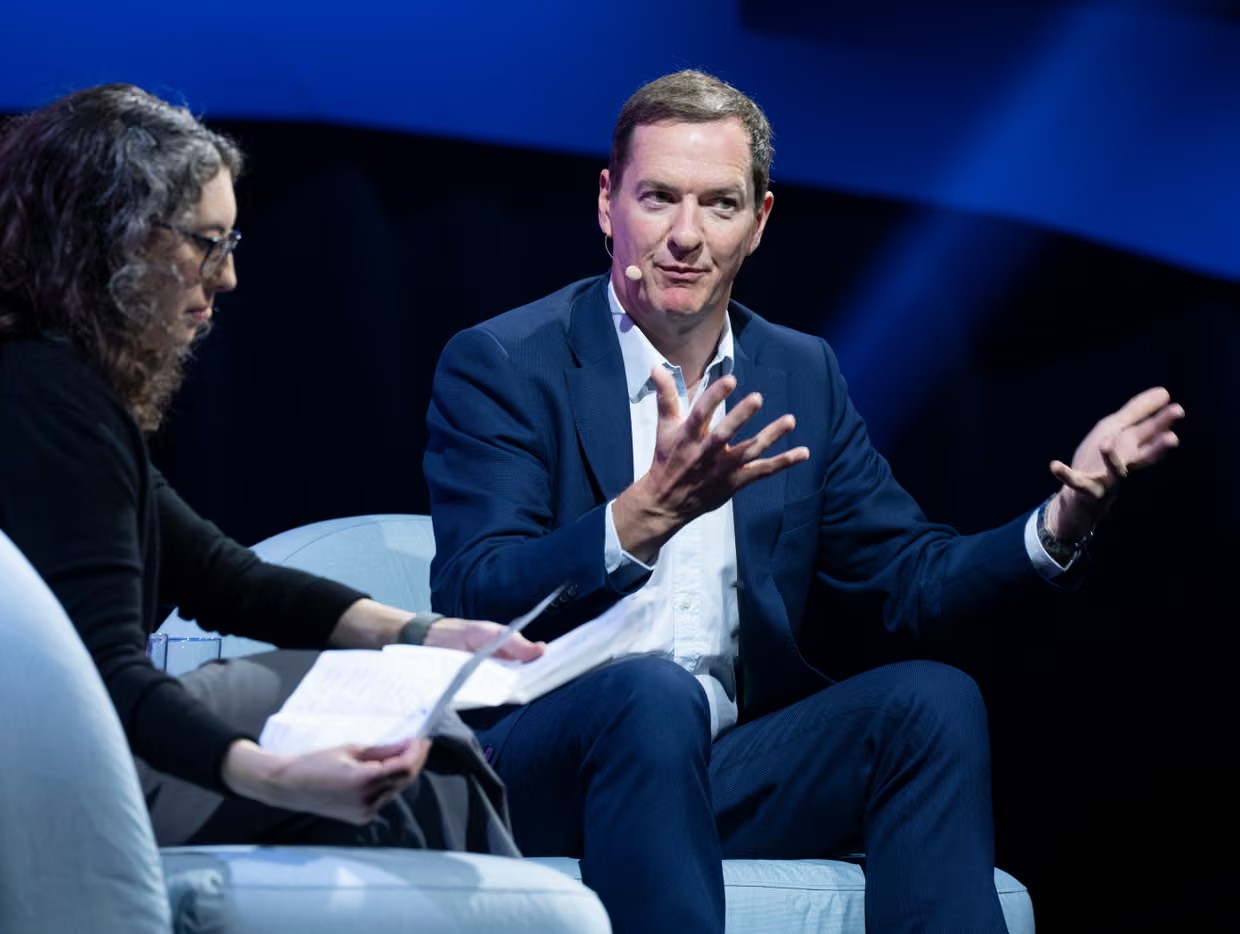
George Osborne, who was Britain’s chancellor in David Cameron’s cabinet, now leads OpenAI’s relationship-building with governments around the world. Photograph: Christinne Muschi/The Canadian Press/AP
Source: theguardian.com
The British government has classified AI data centers as critical national infrastructure, a move intended to speed up construction. The Green Party in England has instead called for a moratorium.
The local costs
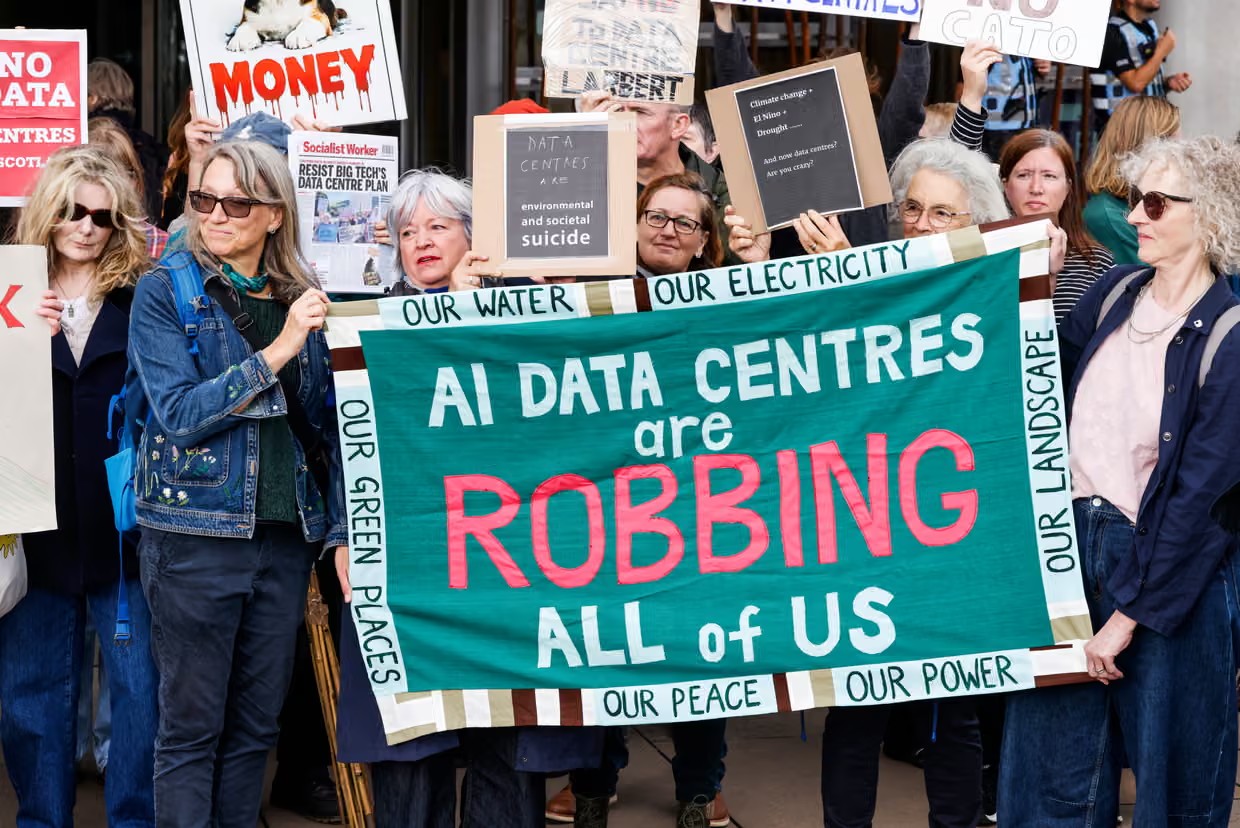
Protests against data centers are taking place across the United Kingdom:
Residents say large buildings damage the landscape, question how many jobs they create and fear that data centers will absorb investment and land that could be used for affordable housing. Other objections focus on their enormous use of water and energy.
Osborne dismissed these concerns as a version of not-in-my-backyard politics. He also said the United States is experiencing a major data center construction boom, even as political resistance there grows.
That comparison does not answer the British objections. It shows that the conflict is not simply between a pro-technology Britain and an anti-technology Britain. The same infrastructure push is producing the same local resistance in both countries.
The trust problem around AI
Verity Harding, head of the AI and geopolitics project at the University of Cambridge’s Bennett School of Public Policy, said the protests are about more than the buildings themselves. Data centers have become the most tangible target for wider frustration with AI, she argued, while people do not see anyone controlling events or assessing their consequences.
She also criticised public statements from technology executives. In her view, it is contradictory for industry representatives to warn that AI could destroy humanity and then appear at a major conference the following week urging companies to adopt it.
My read is that this is the harder problem for OpenAI’s infrastructure pitch. A promise of technological sovereignty may explain why governments want data centers, but it does not explain why a community should accept one. The announcement is quiet about the questions residents are actually raising: how many jobs will arrive, what land will be lost, and who will bear the water and energy costs.
From construction sites to the UN
This week, executives from OpenAI and Anthropic, two of the largest AI companies, will meet world leaders at the UN General Assembly in New York. The meeting comes amid disputes over the possible emergence of dangerous superintelligent AI and over whether, and how, it should be regulated.
Osborne said there should be no reason to worry about technology executives taking part in meetings with presidents and prime ministers at the UN Security Council. He said their participation instead shows that governments are beginning to use international institutions to discuss regulation of the new technology.
That creates a tension at the center of OpenAI’s message. The company wants governments to treat AI infrastructure as a national priority while also presenting its leaders as participants in the international debate over AI’s risks. Britain’s data center dispute is where those two arguments meet: the state is being asked to accelerate construction before the public has seen who is accountable for its costs.
Daily AI news
Every day we pick what actually matters in AI and explain it plainly — no hype, no filler. Subscribe if you want to follow where the industry is going.
Only what matters — every day
Follow on X